

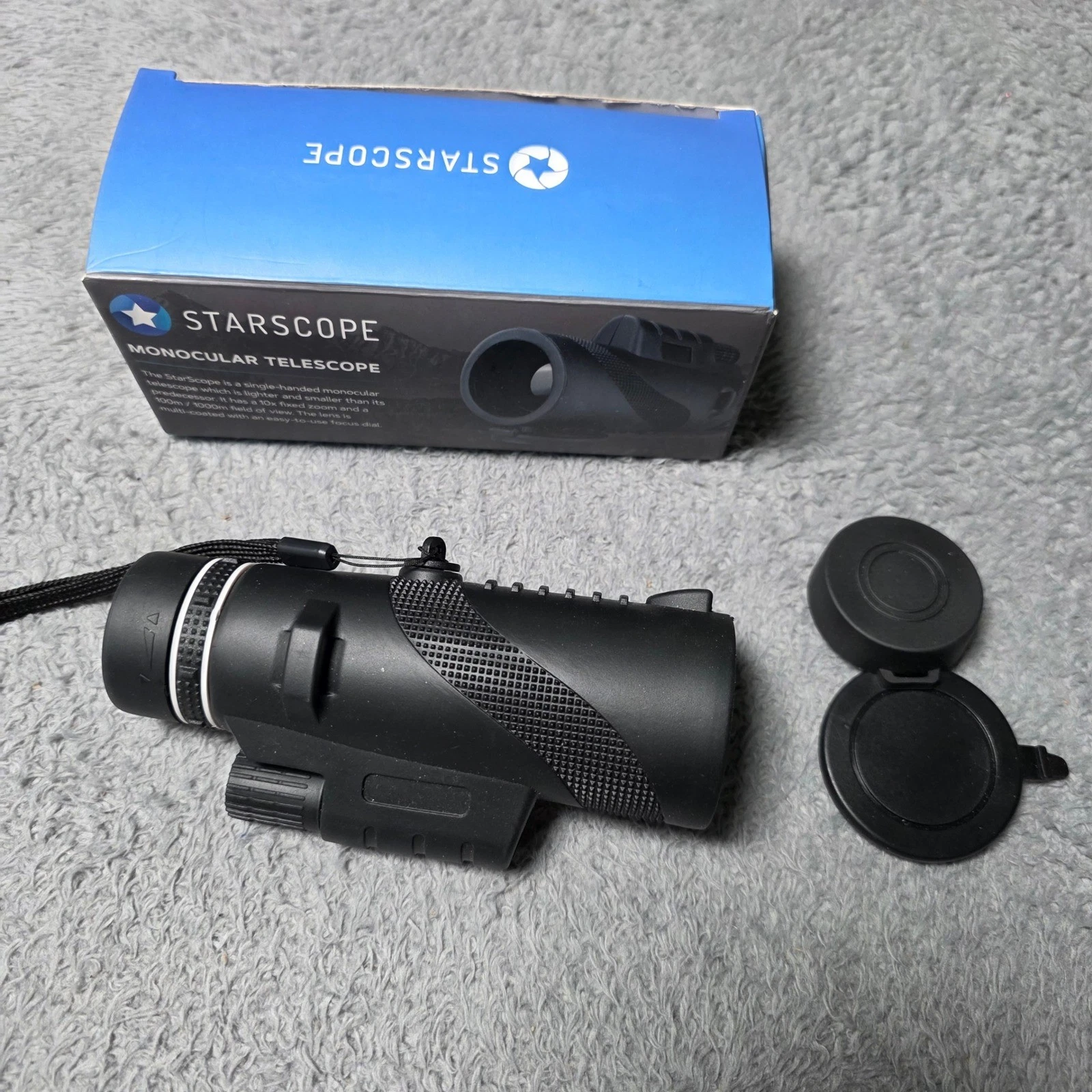
The first thing that made me pause over the StarScope Monocular wasn’t the promise of 12x magnification. It was a smaller detail buried in the sales page. A testimonial presented as praise for StarScope switches to a different product name, the Scout Monocular. Farther down, the FAQ names one domain as the place to buy, while the order buttons point to another. Neither detail proves fraud. But if I’m being asked to buy a precision optical instrument from a website I don’t know, I want the page to be clear about which product it’s describing and who will handle my order. This one gave me more questions than answers.
My verdict is straightforward. I’d skip the StarScope offer I reviewed. The sales page makes ambitious claims about image quality, phone compatibility, and durability that I couldn’t verify independently for the exact unit. Separately, the Better Business Bureau posted a caution about a business listed as Starscope Monocular after it could not establish the business’s physical location. That BBB profile lists a different website from the sales page I reviewed, so I wouldn’t assume the two are operated by the same merchant. The distinction matters, especially if you’ve already ordered and need to work out who owes you a response.
I haven’t purchased or field-tested a StarScope Monocular, so this isn’t a hands-on review. I looked at what the page actually promises, compared those claims with established optics guidance, and examined what the BBB alert does and doesn’t say. “Scam alert” here means a buyer warning, not a finding that a crime occurred. A monocular can be a perfectly useful piece of equipment. My concern is whether this particular offer gives shoppers enough evidence to trust the advertising and enough information to deal with a problem afterward.
What Is the StarScope Monocular Supposed to Do?
A monocular is a handheld optical instrument you look through with one eye. The idea is simple and appealing. Instead of carrying binoculars around your neck all afternoon, you can pull out a single-barrel optic when you want a closer look at something. On a hike, that might be a bird sitting still across a clearing or a feature on a distant ridgeline. If you only expect to use it for a few seconds at a time, the compact format is a legitimate reason to shop for one.
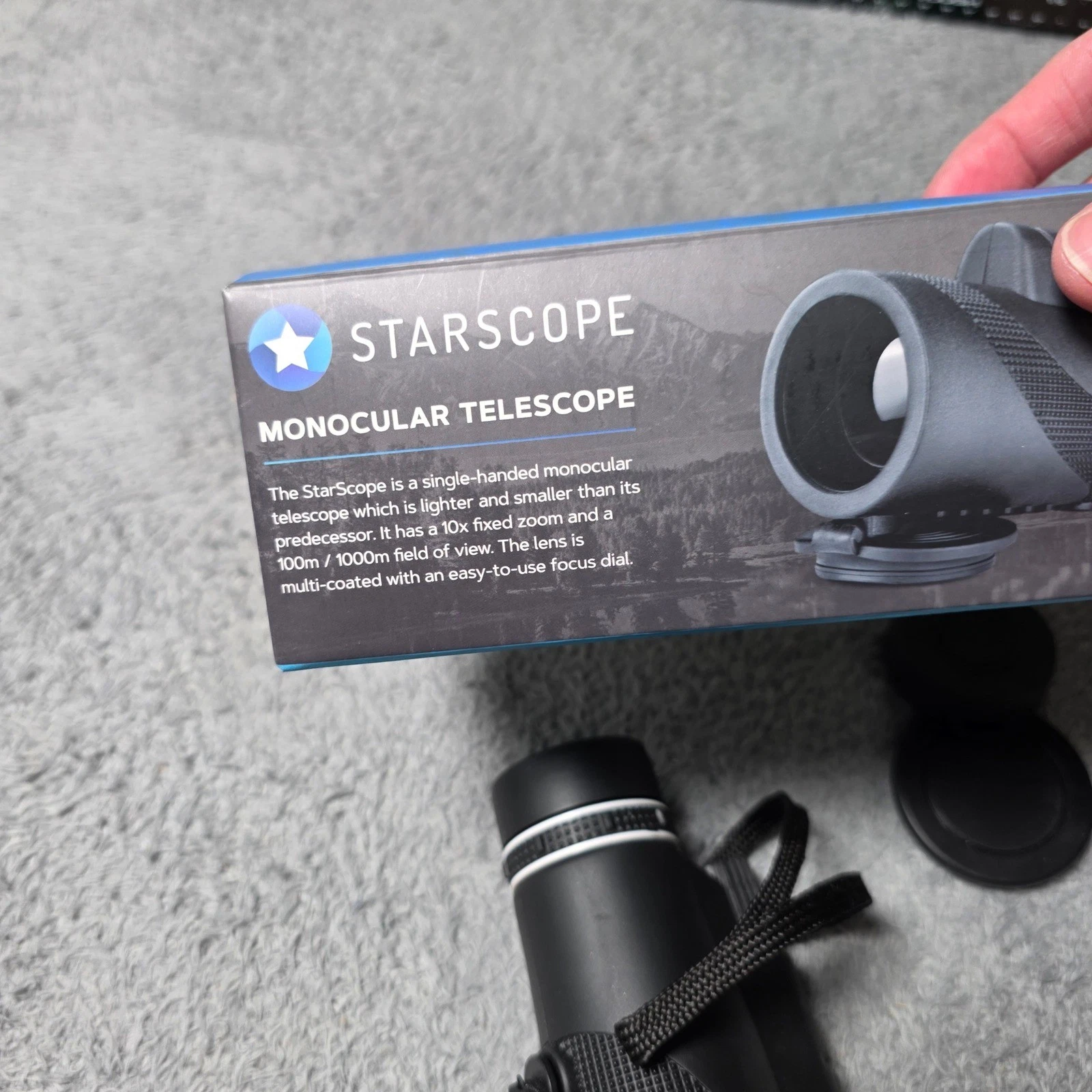
The StarScope sales page I reviewed takes that ordinary idea and builds a much bigger pitch around it. It advertises fixed 12x magnification, describes the device as waterproof, and suggests that it can rival high-end telescope optics. A phone holder is promoted as a way to shoot photos and video through the eyepiece, and the FAQ goes as far as claiming compatibility with any iOS or Android phone. The page also advertises light transmission of up to 99.5 percent and uses language suggesting the scope can stand up to demanding outdoor conditions. These are the page’s claims, not results from an independent test of the unit.
I’m not put off by a product being inexpensive or by a retailer using enthusiastic language. An affordable monocular only has to do a few things well to earn a place in a daypack. It needs to be easy to aim, give a clear enough view of the intended subject, and be comfortable to hold and focus. If phone photography is part of the purchase, the adapter needs to fit and stay aligned. What makes this particular pitch difficult to evaluate is that it treats those separate questions as if the 12x number and a handful of promotional descriptions answer all of them.
There’s also a basic distinction between seeing something better and photographing it better. A scope can be fine for reading a sign across a field and awkward for recording a bird moving between branches. The first job only requires holding the optic steady and looking through it. The second requires locating the subject, focusing the optic, aligning the active camera lens, and keeping the whole setup still. I’d decide which of those jobs I actually want to do before paying extra for a bundle built around the promise of doing both.
The BBB Alert and the Problem of Identifying the Seller
The Better Business Bureau’s profile for a business listed as Starscope Monocular showed an F rating, with unanswered complaints among the reasons it gave. The alert attached to the profile said that BBB received information that the address the business claimed was the address of a local post office. BBB said it had been unable to determine where the business was physically located and urged consumers to use caution when deciding whether to deal with a company whose physical address is unknown.
I take the warning seriously, but the details are worth reading closely. BBB did not say that it measured the product and found the magnification false. Its rating isn’t a government ruling, and it doesn’t tell us what proportion of purchases led to complaints. I also wouldn’t put much weight on the lack of BBB accreditation by itself. A business isn’t required to seek accreditation. The finding I care about is that BBB could not verify the physical location of the business it profiled, alongside the stated concerns about responsiveness.
Just as importantly, the BBB profile and the promotional page point to different web addresses. I couldn’t establish from those pages alone that they belong to a single seller. The BBB record is relevant if the business identified on your order matches the business in that record. It shouldn’t be used to assign the same rating to every store selling a product called StarScope. If I were considering a purchase, I’d compare the legal seller name and support information at checkout with the business details in the relevant profile, instead of relying on the product name alone.
That distinction can save you time even when there’s no dispute. The storefront name, business name, and payment descriptor are not always identical. A retailer can use a separate checkout service for perfectly ordinary reasons. What I want to see is a clear handoff that tells me who is selling the item, whose return policy applies, and who will answer my email once the charge goes through. If I can’t piece that together before paying, I’m taking a risk that has nothing to do with the quality of the glass.
Why the 12x Claim Doesn’t Tell Me How Well It Works
Fixed magnification isn’t the same as an optical zoom
The sales page uses the word “zoom” prominently but later describes the StarScope as having fixed 12x magnification. Those two descriptions create different expectations. In everyday advertising, “zoom” sometimes just means that something appears closer. In optical terms, a zoom instrument allows you to change magnification. A fixed-power monocular stays at the same optical magnification when you adjust the focus ring. That ring should help you bring a subject into focus, not move between a wide view and a tight one.
If the instrument performs at its advertised 12x, an object 600 metres away would appear roughly as large, in angular terms, as it would to the naked eye from 50 metres. That doesn’t mean the view will look as clear as it would if you actually walked to within 50 metres. There’s still 600 metres of air between you and the subject. Haze, heat shimmer, poor contrast, and hand movement can all make details harder to see. Magnification makes the image bigger. It doesn’t guarantee that the bigger image contains useful detail.
Twelve times magnification is plausible for an optical instrument. What I haven’t seen is an independent measurement confirming that the exact StarScope unit advertised on this page delivers it. I also wouldn’t confuse plausibility with suitability. Nikon’s optics guide explains that higher magnification makes hand movement more apparent and generally narrows the view. That’s an important trade-off for a product marketed as something you can pull out and use on the move. A more powerful view isn’t automatically more useful if it takes longer to find the subject or if you can’t hold the image steady enough to see what you came for.
Field of view affects how quickly I can find a subject
Picture a bird landing somewhere in the upper branches of a tree. With a generous field of view, I have enough surrounding branches and gaps to orient myself as soon as I lift the optic. With a narrow field, it’s easier to end up looking at the wrong cluster of leaves. That difference can be more important than extra magnification when I have only a few seconds to look. If the subject is a fixed landmark and I can brace my arms, there’s less pressure to find and follow it quickly.
I’d want a real field-of-view measurement in degrees, or a width stated at a clear distance, such as metres at 1,000 metres. A width at a stated distance is not a maximum viewing range. It tells you how much of the scene fits through the optic without moving it. I wouldn’t use the description “wide-angle” as a substitute for that measurement because it doesn’t let me compare the StarScope offer with another model. Two optics with the same advertised magnification can feel quite different when one lets you take in more of the scene.
A light-transmission percentage needs context
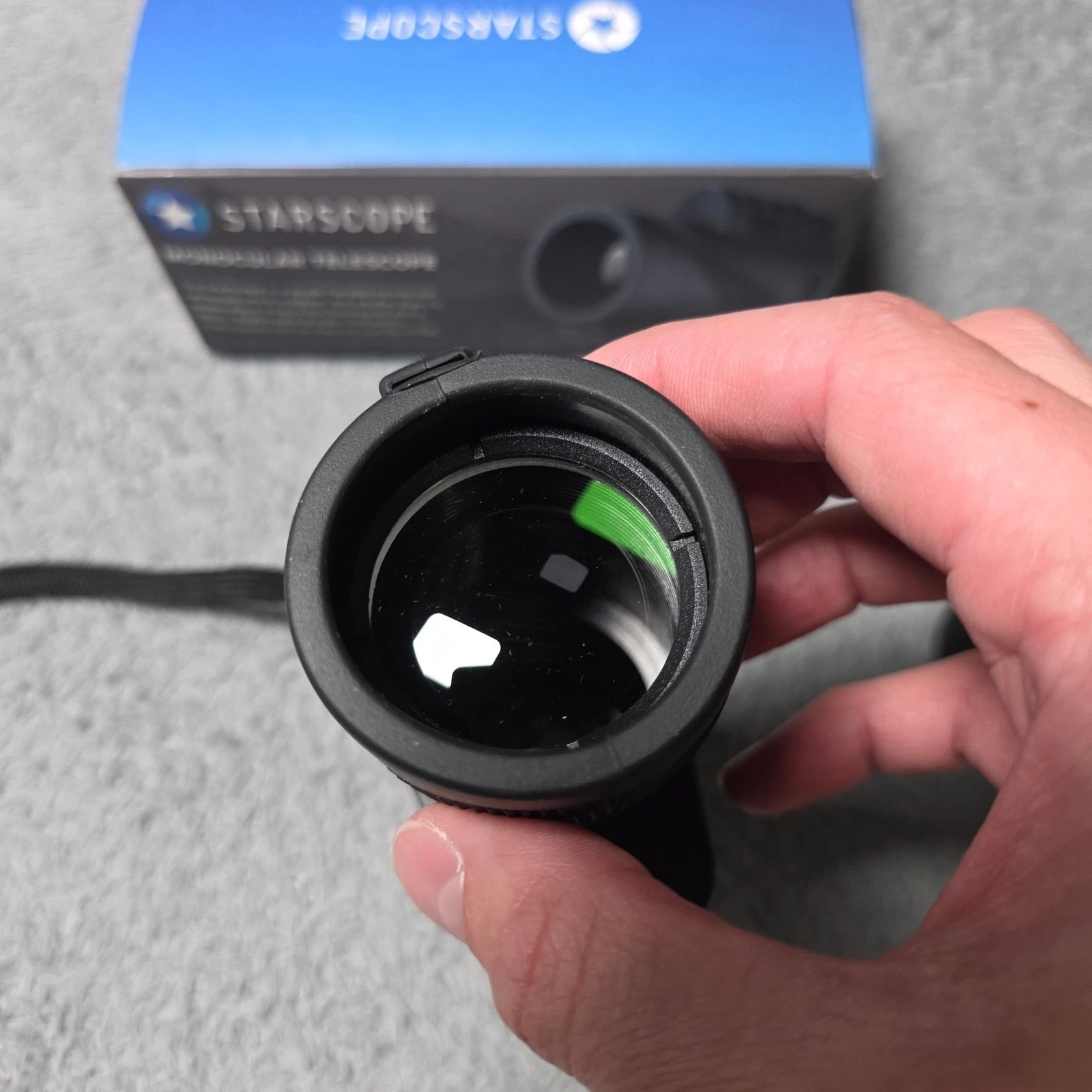
The claim of up to 99.5 percent light transmission is the example that makes me most wary of shopping by headline numbers. Light transmission is a property an optics lab can measure, but I’d need to know what was measured. Was it a particular lens or coating, or the complete instrument? Was it a peak reading at one wavelength or a measurement across a specified range? Those distinctions change what the figure tells me about the view I’m likely to get outside. I didn’t find a published test method for that claim on the sales page I reviewed.
Brightness is also tied to the effective objective diameter, meaning the usable front aperture, and to magnification. One useful specification is the exit pupil, the small circle of light that leaves the eyepiece. Nikon explains that its diameter is the effective aperture divided by magnification. As a mathematical example, a hypothetical 12x optic with a 36 mm effective aperture would have a 3 mm exit pupil. A hypothetical 8x optic with that same aperture would have a 4.5 mm exit pupil. Those are not measurements of StarScope. They show why a higher power number alone doesn’t promise a brighter or easier view at dusk.
I’d apply the same standard to terms such as “military-grade,” “waterproof,” and “shockproof.” If I’m buying an optic for use on a boat or in sustained rain, I want to know the actual test conditions and what the seller will stand behind. Handling a splash isn’t the same as surviving immersion. Likewise, a coating that helps with external fogging is a different matter from a sealed body that resists moisture getting inside. For casual use on a dry day, those distinctions may not affect the purchase much. For the rough outdoor use suggested by the advertising, they become part of what I’m paying for.
The Smartphone Adapter Is the Feature I’d Scrutinize Most
Mounting a phone behind an eyepiece can work. It’s a form of digiscoping, and I can see the appeal if the goal is to record a bird on a feeder or get a closer image of a stationary landmark. What makes me stop at a claim like “works with any iOS or Android model” is that compatibility is mostly a mechanical question. The operating system doesn’t tell me whether the clamp will fit around a thick case or whether the phone’s camera sits where the adapter can centre it over the eyepiece.
A multi-camera phone makes that question more concrete. If the adapter covers one camera and the phone switches to another, the image can go dark or show a large black border. Even if the phone stays on the intended lens, a small change in alignment can leave you with a circular image surrounded by black. Cropping away that border may make the photograph easier to share, but it doesn’t add detail. I’d put far more weight on a full, uncropped sample from the exact setup than on a tight image that leaves me guessing about what was cut out.
A tripod can help with shake, but I’d check what the bundle actually includes and how the phone and optic are supported together. A small tabletop tripod might be enough for a fixed subject from a bench. It’s a different proposition across an uneven trail or at a crowded event. I’d also confirm that the adapter doesn’t interfere with focusing once the phone is attached. It’s easy to describe a setup as portable when all the parts are packed. The real test is how quickly and comfortably they work once you’re trying to get a shot.
For phone photography, the demonstration I’d find convincing is fairly ordinary. Show the same subject from the same position, first with the phone alone and then through the exact monocular and mount being sold. Tell me which phone and camera were used, whether the setup was braced or on a tripod, and whether the results were cropped or edited. A short sequence that shows how the operator found and focused the subject would tell me more than one exceptional frame. I didn’t find a comparison that gave me that level of confidence in the StarScope offer.
How the StarScope Offer Compares With a Documented Optic
I’d compare StarScope against a compact monocular sold with a full specification sheet and a clearly identified retailer. That keeps the comparison fair. A small monocular shouldn’t have to outperform a full-size spotting scope to be useful. It should, however, tell me enough about what I’m buying to decide whether it will suit my use. The points below compare what the sales material lets me verify, not the results of a side-by-side test I didn’t conduct.
| Buying criterion | StarScope offer I reviewed | Compact monocular with published specifications |
|---|---|---|
| Optical power and usable detail | The page advertises fixed 12x power and makes a comparison with high-end optics. It doesn’t give me an independent, model-specific measurement that supports the performance comparison. | A clearly named model gives me a fixed magnification and an effective objective diameter to compare. Sample views or independent tests can then show how well it resolves detail. |
| Finding and following the subject | The page describes a wide-angle lens. I wouldn’t infer how much of the scene fits in the view or how easily I could follow a moving subject from that phrase. | A stated field of view lets me compare the width of the scene at the same distance. A lower-power option with a wider field may be a better fit for quick birdwatching. |
| Comfort and use with glasses | Compact construction is emphasized, but it doesn’t tell me whether I can see the full field with my glasses on or keep the view comfortably aligned. | Published eye relief and a description of the eyecup give me a starting point. Trying it with my own glasses or buying with an uncomplicated return policy is better still. |
| Phone photography | Broad compatibility is advertised, but I’d verify the holder, exact bundle contents, and the fit with the phone and case I actually use. | If a phone adapter is available, I’d look for its opening range, how it attaches, and whether it can centre on the relevant camera. If photography isn’t part of the plan, I wouldn’t pay for it. |
| Weather protection and returns | The page makes durability claims and advertises a money-back guarantee. I’d need the test basis for the durability claims and the actual merchant’s written return terms. | A specific water-resistance standard or test description helps define the conditions it can handle. A retailer with published return instructions tells me what happens if the optic doesn’t suit me. |
The biggest difference for me is what happens after something disappoints. If I buy an optic with a stated field of view and eye relief, I can check whether the issue is how I’m holding it, how it fits with glasses, or a mismatch with the description. When I buy on phrases like “military-grade” or “high-end,” I have little to compare against. Good documentation doesn’t guarantee good optics, but it makes the purchase easier to evaluate and the return easier to justify.
The Cornell Lab of Ornithology’s head-to-head testing of 8×42 binoculars shows the sort of evidence I prefer. Its reviewers account for image quality, comfort, and perceived build quality, rather than awarding a win to the highest magnification. That test isn’t about StarScope and full-size binoculars aren’t a direct substitute for a pocket monocular. But the method makes a useful point. Sharpness across the view, the feel of the focus wheel, and how comfortably the instrument sits in your hand can matter as much as the number printed on the box.
What I’d Verify Before Putting in My Card Details
The StarScope page I reviewed advertised a 30-day money-back guarantee and a two-year warranty. I wouldn’t treat either banner as a complete policy. A return window concerns whether you can send the item back, often because it doesn’t suit you. A warranty generally concerns eligible problems with the item over a longer period. For someone who buys the optic for a trip, finds the phone holder doesn’t fit, and wants their money back, the first policy is likely to be much more important than the second.
The fine print I’d want is practical. Do the 30 days run from the order date or the delivery date? Can I open the box and try the optic? What does it cost to return, and where does it go? Is the refund based on the full amount paid or just the item price? For an international order, a return address in another country can make a nominally simple guarantee expensive to use. A countdown or a limited-stock message wouldn’t change how long I spend answering those questions. The U.S. Federal Trade Commission’s online-shopping guidance similarly recommends checking the total cost and return conditions before purchasing and keeping records of what was promised.
- Identify the seller that will appear on the order. I’d note the merchant name shown at checkout and look for a customer-service contact and return instructions tied to that business. If the page directs me to another domain, I’d check that the new page clearly explains the relationship and shows who is taking payment.
- Save the exact offer and check what’s in the cart. I’d capture the listing, bundle description, delivery estimate, and refund terms. Then I’d check whether the phone holder or tripod is included, whether I selected one unit or a multipack, and whether any add-on appears in the final total that I didn’t intend to buy.
- Ask one specific question before placing the order. If phone photography is the reason I’m buying, I’d ask whether my exact model and case fit the adapter offered in that bundle. If the ability to return an opened unit matters more, I’d ask about that. A written answer gives me something to refer back to, and a vague reply is a good reason to keep shopping.
I’d use a payment method that offers a clear way to dispute a problem and keep the confirmation email. The FTC recommends paying by credit card when possible for U.S. online purchases because of the protections that can apply. The details vary with the country, card issuer, and circumstances, so I wouldn’t assume a dispute is guaranteed to succeed. I’d also avoid relying on a credit-card dispute to do the job of a return policy. I want to understand both before ordering.
If I’d Already Ordered, Here’s What I’d Do
If the package hadn’t shipped and I had second thoughts, I’d send a written cancellation request through the original purchase channel. I’d include the order number, state clearly that I’m asking to cancel, and save the message and any reply. If the order were already moving, I’d ask for the return procedure instead of assuming that refusing delivery automatically triggers a refund. I’d check the dates on the written terms and contact the seller promptly, especially if I was getting close to the end of any stated return window.
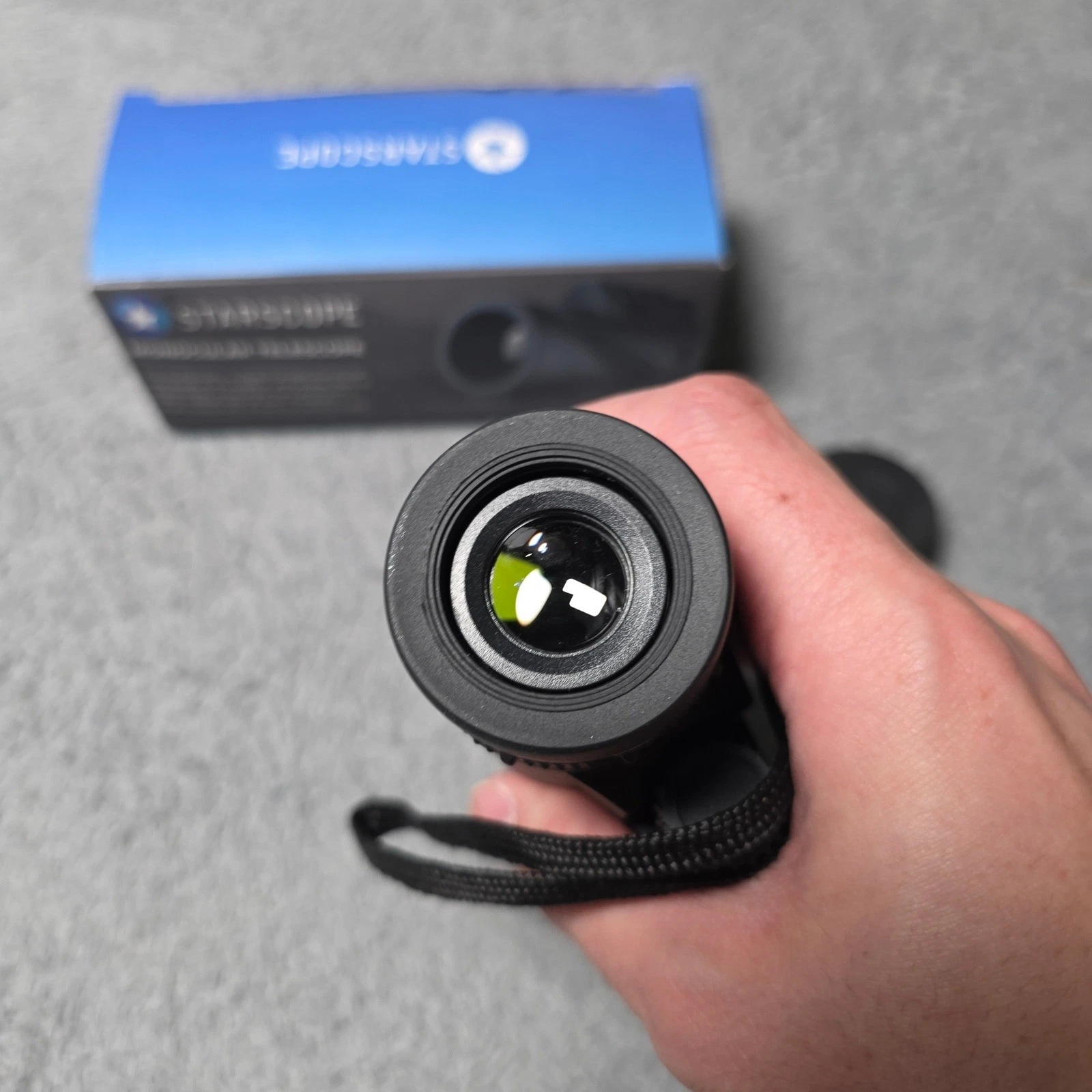
If the package had arrived, I’d check the box contents against my order before taking it on a trip. If testing the optic is allowed under the return policy, I’d try it first on a fixed subject in good daylight. A distant sign, fence, or textured building can make it easier to see whether the image comes into focus and whether the focus ring works smoothly. Then I’d test the phone holder with my normal case on and check whether I can keep the active lens centred. That’s a check for fitness and defects, not a laboratory measurement of magnification or light transmission. I wouldn’t try to prove water resistance by deliberately submerging it.
If the problem were a missing holder, I’d say exactly that in my message and attach the part of the order confirmation showing it was included. If the listing advertised compatibility with my phone but I couldn’t fit it after following the supplied instructions, I’d document that with photos. A specific description gives the seller a chance to fix the right issue and gives the marketplace or payment provider something concrete to review if the seller doesn’t respond. A copy of the offer and proof of contact are more useful in a dispute than a broad accusation.
My Verdict on the StarScope Monocular
I’d choose a different listing rather than buy StarScope on the strength of the 12x pitch. The advertised power is not implausible, and a compact one-eye optic is a sensible idea for the right use. The problem is the gap between what the page suggests you’ll get and what it gives you enough information to verify. The fixed-power optic is sold using zoom language, the broad phone claim skips the details that determine fit, and the page doesn’t make the seller handoff clear enough for me. The BBB warning, while limited to the business it profiled, is an additional reason to identify the merchant instead of trusting a familiar product name.
If I wanted something to carry on walks, I’d start with a compact optic that gives me a stated field of view, usable eye relief, and a clear return policy. If I wanted to follow birds for more than a quick glance, I’d also try a pair of moderate-power binoculars before deciding which form I prefer. And if I mainly wanted better phone photos, I’d make the adapter and sample images the centre of the decision. In each case, I’d rather buy something with a clearly described job than pay for a promise that one pocket-sized gadget does all three equally well.
Disclaimer
This article is an editorial buyer’s guide based on public sales material, a Better Business Bureau profile and alert, and published optics and consumer guidance. I did not purchase or independently test the StarScope Monocular. The words “scam alert” describe the purchasing concerns discussed here and do not assert a finding of fraud or criminal conduct. The BBB alert applies to the business identified in its profile. Product listings, checkout operators, bundle contents, and return terms may differ by seller and location.
References
- StarScope promotional sales page. StarScope | The Most Innovative Companion for Visual Exploration. The primary source for the advertised 12x fixed magnification, light-transmission figure, smartphone compatibility, and guarantee. It is included to document the claims under review, not to verify them.
https://getstarscope.com/ - Better Business Bureau. Starscope Monocular — Information and Alerts. The BBB record explains its rating and gives the details of its caution about not being able to establish a physical business location. It concerns the business identified in the profile and is not an optical test or a government finding.
https://www.bbb.org/us/ca/san-diego/profile/photographic-equipment-repair/starscope-monocular-1126-1000082239/more-info - Nikon Sport Optics. Choose by Specifications. This technical guide explains magnification, effective objective diameter, exit pupil, field of view, and eye relief. Although written for binocular buyers, the optical principles are relevant to a handheld monocular. The guide does not assess StarScope.
https://imaging.nikon.com/sport-optics/guide/binoculars/choosing/choosing_02/ - Marc Devokaitis and Hugh Powell, Cornell Lab of Ornithology. The Cornell Lab Review: Affordable Full-Size 8×42 Binoculars. The lab’s comparative testing considers image quality, comfort, and perceived build quality. It offers a useful example of how optics can be evaluated beyond the advertised magnification, but it did not test StarScope.
https://www.allaboutbirds.org/news/the-cornell-lab-review-affordable-full-size-8×42-binoculars - U.S. Federal Trade Commission. Online Shopping. This consumer guidance covers evaluating sellers, checking delivery and refund policies, using payment methods with dispute protections, and saving purchase records. It supports the checkout and return advice and makes no finding about StarScope.
https://consumer.ftc.gov/articles/online-shopping