

The first thing I’d check before buying Power Pro Genius isn’t my electric bill. It’s the calendar. In the seller’s FAQ, one answer says improvements in electricity use typically appear within two to four billing cycles. Its returns page, meanwhile, advertises a 60-day money-back guarantee. On a monthly billing schedule, even two complete cycles can use up most or all of that window. Wait for a third or fourth bill, and you could be trying to judge the product after the advertised return period has passed. That’s a practical reason to hesitate before getting anywhere near the electrical claims.
I wouldn’t buy Power Pro Genius to lower my electricity bill. I didn’t find an independent test showing that the exact device reduces the kilowatt-hours a typical household pays for. The seller talks about filtering electrical noise, smoothing current, and reducing power spikes. Those are different claims from showing that your refrigerator, water heater, or air conditioner uses less energy. Even if a test confirmed that the plug changed something about the electrical supply, I’d still want to know whether it changed the number on the utility meter.
This article is about the Power Pro Genius Electricity Optimization Device, the plug sold on the promise of reducing household energy waste. It isn’t about similarly branded heaters or other appliances. I didn’t buy or bench-test the device. I reviewed the seller’s own materials, a federal engineering analysis of plug-in power-factor correction, and a safety notice for a different product in the category. I use “scam alert” as a warning about the buying proposition, not as a claim that a court or regulator found this seller committed fraud. The evidence is enough for me to recommend passing on the plug without making an accusation it doesn’t support.
The Guarantee Could Run Out Before the Suggested Trial Ends
A money-back guarantee is supposed to take some of the guesswork out of a purchase. With a jacket, I can try it on the day it arrives. With a device sold on the promise of lower energy use, the seller’s suggested way of judging the result takes much longer. The Power Pro Genius FAQ recommends comparing kWh across the next two or three bills in one answer and says improvements typically show up within two to four billing cycles in another. Its written return policy says buyers have 60 days to try the product and should contact customer service to request a refund. The policy describes an approval process before a refund is issued.
Here’s how those pieces can fit together in practice. Suppose my billing cycle changes over on the first of each month and the device arrives on the twentieth. The next statement includes only a short period with the plug in use. If I want two full statements covering complete months after installation, I may not have the second one until more than 60 days after delivery, depending on when the bill is issued. If the guarantee starts on the order date instead, shipping can shorten the time I have even further. I wouldn’t assume which date applies without checking the terms for my order.
There’s a second issue buried in that timeline. The more months I wait, the more likely it is that the weather or the household routine changes. A plug installed at the end of a hot summer may get credit for a cooler autumn, when the air conditioner naturally runs less. Install it in the opposite season and heavier air-conditioning use could hide a change in the other direction. A long trial doesn’t solve the comparison problem. It can make the bill harder to interpret at the same time that it makes my return options less certain.
I wouldn’t describe the guarantee as worthless or assume the seller refuses refunds. The written policy does give customers a route to request one. But I would separate the headline promise from the details I’d need to use it, including the exact start date, whether I must request or complete the return by the deadline, who pays return shipping, and what happens to any optional extras. In my view, a guarantee is a weak reason to try this particular product when the suggested way of judging it may take longer than the time I have to send it back.
What Power Pro Genius Claims to Do in the Home
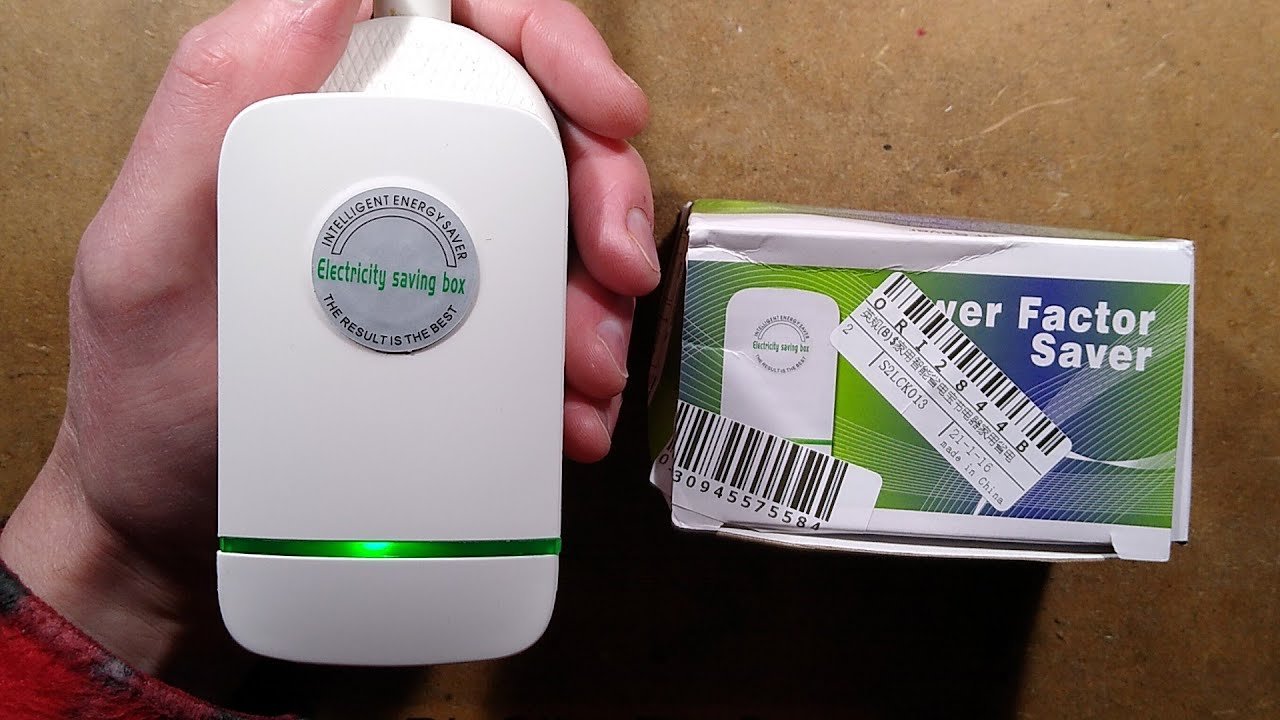
The seller describes Power Pro Genius as a small device that plugs into an ordinary wall outlet and stays connected continuously. It’s marketed as doing its work in the background without rewiring, settings, or changes to how you use your appliances. The FAQ says it’s designed to stabilize voltage, reduce power spikes, and filter what it calls “dirty electricity.” The implied benefit is that appliances operate more efficiently and the household wastes less electricity. I understand the appeal. Most people I know would happily avoid a weekend of weatherstripping, a call to the utility, or the cost of replacing a major appliance if a plug could deliver the same result.
What I don’t see in the FAQ is a clear account of how much billable energy the device saves under repeatable conditions. When asked how much money a customer can save, the seller says results vary. That’s fair enough in isolation, since household energy use really does vary. But the answer points shoppers back to their own bills without giving them independent test data for the model. Asking a buyer to see whether a number goes down after purchase is not the same as showing, before purchase, that the plug caused it to go down.
The seller also recommends more units for larger properties. Its coverage guide goes from a single unit for smaller homes to as many as six for larger ones. I find that advice more specific than the evidence offered to support it. Two houses with the same floor area can have very different electrical loads. One could have gas heating and hot water, while the other relies entirely on electricity. Their appliances, usage schedules, and wiring layouts can differ too. Square footage doesn’t tell me how much energy a plug can save, let alone why a second or fourth unit would save more than the first.
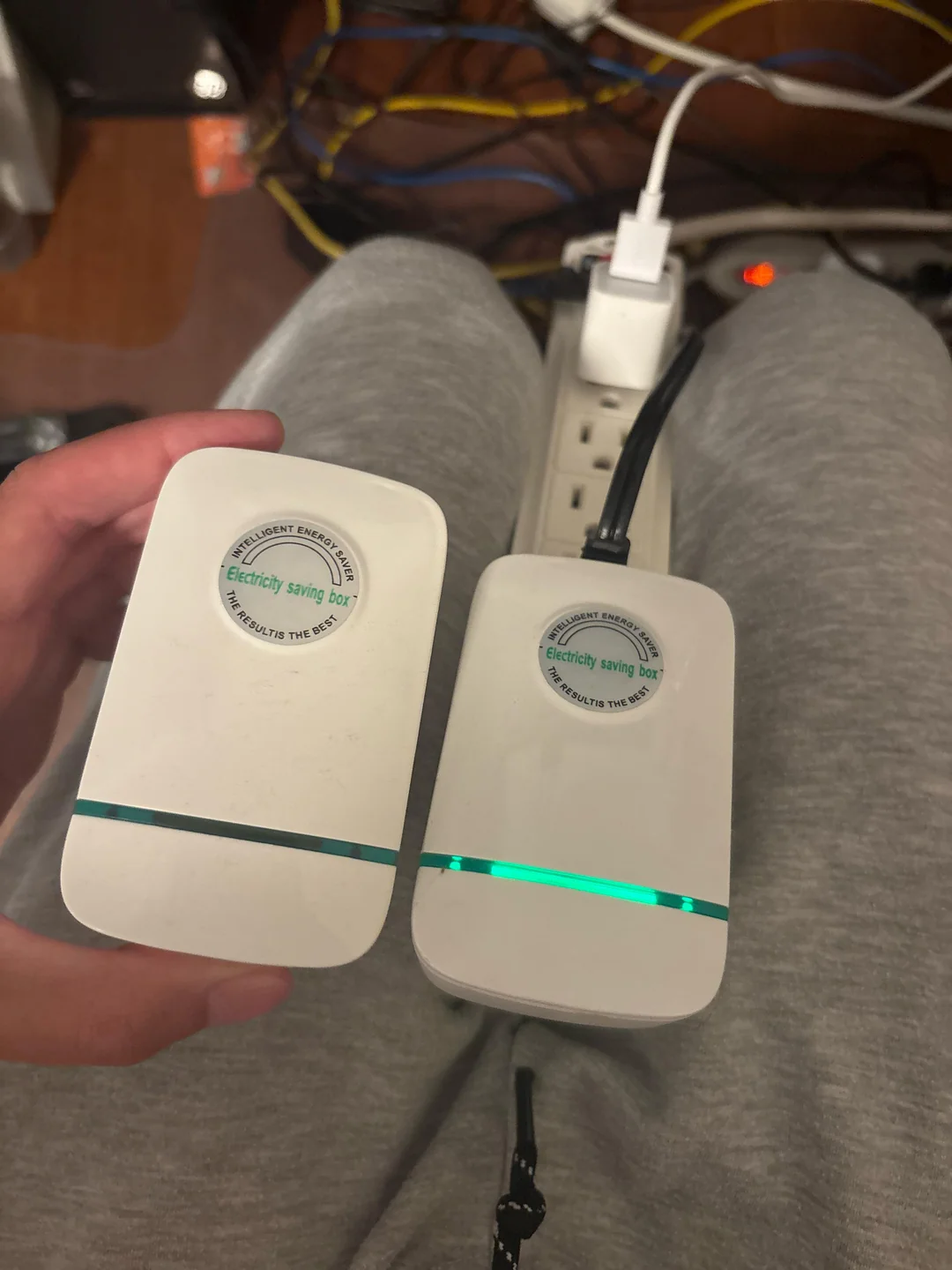
The green light mentioned in the FAQ is another detail I’d put in context. According to the seller, it indicates that the unit is active. It isn’t a readout of watts saved, an indication that a surge was stopped, or evidence that appliances on other circuits are consuming less. That distinction can be hard to hold onto when a device has no other display and you’ve been told to leave it running for weeks. An indicator tells me something about the state of the device. It doesn’t tell me that the benefit I paid for is happening.
The Physics Behind My Decision Not to Buy
A cleaner-looking signal isn’t a lower electricity bill
I don’t dismiss power quality as an invented problem. Electrical interference and voltage disturbances are real, and engineers have ways to measure and address them. What I question is the leap from “this may change an electrical measurement” to “this will reduce the energy my household buys.” A device could reduce a particular kind of electrical noise without making a clothes dryer run for fewer minutes or a water heater use less energy to heat the same amount of water. Proving one effect doesn’t prove the other.
Heaters make that difference easy to picture. Suppose a portable electric heater draws 1,500 watts while its heating element is on. Two hours of actual heating at that power use 3 kilowatt-hours, whether the heater runs continuously for those two hours or cycles on and off over a longer period. If I reduce the time the element is on from two hours to one under otherwise comparable conditions, I know where the energy savings came from. If I leave the heater doing the same work and plug a separate box into another outlet, I need an actual energy measurement before I’d credit the box with a reduction.
The same question applies in less obvious cases. A refrigerator may run longer because the room is hotter, the doors are opened more often, or warm food has just been put inside. If it runs less often the next day, that might have nothing to do with a device plugged into the kitchen wall. A valid comparison would keep the relevant conditions similar and measure energy over enough time to capture the appliance’s normal cycles. A photo of an electrical reading at one moment doesn’t tell me whether the refrigerator used less energy over the day.
Lower amps don’t necessarily mean fewer kilowatt-hours
The National Institute of Standards and Technology examined one mechanism often invoked for products in this category, capacitor-based power-factor correction. In the situation NIST models, a correctly chosen capacitor can reduce current drawn from the supply while increasing the power factor. The two change together, so the real power used by the load remains essentially the same. A typical residential electricity customer pays for real energy over time, measured in kilowatt-hours, rather than being billed for the current reading by itself.
That gives me a simple way to evaluate a convincing-looking demo. If a video shows a clamp meter reading fewer amps after someone plugs in a box, I’d ask what happened to real watts, and then what happened to total kWh over a comparable period. The lower reading may be genuine and still not support the savings claim. NIST’s technical note is a category-level explanation, not a teardown of Power Pro Genius. I don’t know from that source which components the current unit contains, and I wouldn’t claim that NIST tested it.
There are also situations where power factor has a financial effect. Some commercial or industrial customers can face charges for poor power factor, and a properly engineered correction can be worthwhile for those customers. A utility may also see lower losses on part of its distribution system if it supplies less current. Neither example is a reason to assume an ordinary residential customer will pay less for the same amount of work done by their appliances. The important question is what your tariff charges you for, not whether engineers use a related technique somewhere else.
A higher energy bill isn’t a diagnosis
A promotion that blames vague electrical waste gives buyers one explanation for a problem that can have several. On my bill, an increase might mean a higher rate, a longer billing period, a cost adjustment, or more electricity use. In the house, it might mean an electric water heater working harder, more hours of air conditioning, or equipment running when nobody needs it. I wouldn’t buy a remedy before narrowing down which of those problems I actually have. The seller’s language about electrical noise doesn’t tell me that any of them is present.
For a substantial household savings claim, I’d want independent testing on the exact model, with the appliances doing the same work under comparable conditions. It would need to report net kWh, including any energy the plug itself consumes, and explain how the test accounted for changing loads and other sources of variation. If the seller recommends several units, I’d want to see what each additional unit changed. Those are reasonable questions when a product asks people to buy one box for a small home and several for a large one. I didn’t find that level of evidence for Power Pro Genius.
How the Power Pro Genius Pitch Compares With a Home Energy Assessment
A home energy assessment approaches a high bill from the other end. Instead of starting with a device and looking for a result, it starts with the bill and works backward to find out where electricity is going. That can be as simple as checking daily usage and looking at which equipment runs for long periods, or it can involve a professional assessment if the issue is harder to pin down. The U.S. Department of Energy’s Energy Saver guide describes both do-it-yourself and professional approaches. Here’s how I’d compare the two options if my main goal were to spend less on electricity.
| What I want to know | Power Pro Genius plug-in offer | An assessment based on actual energy use |
|---|---|---|
| What problem does it identify? | The seller describes electrical noise, uneven current, and spikes in general terms. The plug doesn’t give me a diagnosis specific to my home. | I start with kWh, billing dates, rates, and usage patterns. That helps separate a price increase from a consumption increase and tells me where to look next. |
| What changes in the house? | The seller wants the device left plugged in, with more units suggested for some homes. I couldn’t verify that the exact device causes appliances to draw less real energy. | I make a targeted change if the evidence warrants it, such as cutting unnecessary runtime or addressing a problem found during an assessment. I know which change I’m trying to evaluate. |
| What can I measure afterward? | A green light shows the device is active according to the FAQ. The seller suggests watching later bills, but that alone can’t separate the plug’s effect from other changes. | I can compare daily kWh in similar conditions or measure a compatible individual load before and after a change. I can also see when the difference is too small or inconsistent to draw a conclusion. |
| How do I decide whether to spend more? | The coverage chart recommends more plugs based partly on square footage. I couldn’t find independent results showing what extra units add to household savings. | I spend where there’s a likely return. If I find that a large appliance is driving the increase, I can estimate whether a repair, a change in use, or saving the money makes more sense. |
The comparison matters because I might discover that I don’t need to buy anything. If my rate increased while my consumption stayed steady, a plug won’t undo the price change. If consumption rose only during the hottest part of the day, I have a better starting point than an outlet beside the TV. And if I find a modest load that can be switched off without inconvenience, I can estimate the benefit before paying for any equipment. The result might not be the dramatic discount suggested by a sales pitch, but at least I’ll know where it came from.
What I Make of the Safety and Surge-Protection Claims
I’d judge safety separately from savings. The seller’s FAQ refers to UL-recognized components in one answer and describes the device as UL-approved in another. I wouldn’t treat those phrases as interchangeable. A safety recognition for a component does not, on its own, establish certification of the finished product in the form a customer receives it. If I were going to leave an electrical device connected around the clock, I’d want the model number, the label on the unit, and a certification record that matches the finished product and its intended use.
The same distinction applies to the promise of appliance protection. Filtering interference, regulating voltage, and protecting equipment against surges are different jobs. Evidence that a circuit can do one of them isn’t evidence that it can do the others, or that it can protect appliances elsewhere in the house. If surge protection were my real concern, I’d look for a product designed and documented for that job rather than count it as a bonus feature of an energy-saving plug. If I were actually experiencing recurring electrical disturbances at home, I’d ask the utility or a qualified electrician to investigate the cause.
The UK Office for Product Safety and Standards recalled a different plug-in energy saver, the Motex SD008, after identifying serious fire and electric-shock risks. The regulator’s notice describes issues including weak plug pins and inadequately protected components. That recall does not name Power Pro Genius, and it does not show that this product has the same defects. I include it because it illustrates why the construction of a mains-powered device can’t be judged from a sales photo, familiar-looking enclosure, or indicator light.
I wouldn’t open the Power Pro Genius housing to find out what’s inside, and I wouldn’t leave it running unattended for weeks just to decide whether my bill eventually changes. If a device or outlet shows scorching, damaged pins, or other signs of an electrical fault, that’s a different problem from an unsatisfactory purchase. I’d stop using it and get appropriate help for the electrical issue rather than make further use part of a return experiment.
If I’d Already Bought Power Pro Genius, I’d Do This First
My first move would be to find the order confirmation, not to keep watching the meter. The merchant named on the receipt may be more useful than the name printed on the box. I’d check the written terms that applied when I ordered, identify the relevant dates, and save any promise that influenced the purchase. That matters especially if the page I saw quoted a different timeline from the seller’s current FAQ or if I bought from a reseller with its own return policy.
- Open the return request before the deadline. If I didn’t want to keep the device, I’d ask the original merchant in writing for a return or refund, quote the order number, and keep the timestamp. I wouldn’t wait for another bill just because one FAQ answer suggests the effect can take longer to appear.
- Get return instructions tied to the order. I’d confirm the address, check whether an authorization number is required, and ask what portion of the order will be refunded, including how shipping and any optional add-ons are handled. If instructed to return the unit, I’d keep the shipping receipt and tracking information.
- Keep the claim and the charge together. If the seller didn’t resolve the issue, I’d put the listing, invoice, return terms, support messages, and any tracking in one place. Then I’d ask the marketplace or payment provider what options are available and which deadlines apply to my transaction.
I wouldn’t claim a refund is guaranteed or that the rules are the same for every purchase. What I would avoid is letting the product’s suggested evaluation period determine when I act. There’s no need to conclusively disprove the device’s technology before asking whether I can return something I’m dissatisfied with. I’d make that decision while the return option is still available, rather than wait for a utility statement that may not settle the question anyway.
What I’d Check on My Electricity Bill Instead
I’d put three pieces of information side by side on my most recent bills. Those are the number of days covered, the kilowatt-hours used, and what I was charged for those units. If one bill shows 540 kWh over 30 days and another shows 504 kWh over 28 days, both average 18 kWh per day. The second bill uses fewer total units, but I haven’t cut my daily consumption. I’d also check whether either bill was based on an estimated reading or included an adjustment before interpreting a sudden jump or drop.
If daily usage really had gone up, I’d see whether my utility provides interval data. A pattern that peaks every afternoon points to a different set of questions than a steady increase day and night. The afternoon pattern might line up with cooling. The steady increase might follow a change in equipment or something left running. Neither pattern identifies the culprit by itself, but both are more informative than a generic assurance that my electricity needs to be “cleaned.” If the data don’t make sense, I’d ask the utility to explain the bill before buying a gadget to fix it.
For a compatible plug-in appliance, a properly rated energy monitor can help me see what it uses under normal conditions. I’d measure a cycling appliance over more than a few minutes, because catching it during an idle spell or while the compressor runs can give me the wrong impression. For hardwired equipment, large loads that aren’t suitable for a plug-in monitor, or a suspected fault, I’d use utility data or get professional help. The point isn’t to collect readings for their own sake. It’s to find a change I can connect to a meaningful reduction in energy use.
I’d also do the cost calculation before purchasing an upgrade. If I can safely switch off a device that draws 100 watts for five hours a day, that’s 0.5 kWh per day, or about 15 kWh in 30 days. At an illustrative flat rate of $0.20 per kWh, that’s about $3 off the usage portion of the bill. Perhaps that’s worth changing a routine, perhaps not. But if I find several loads or a bigger problem, I can see how the total adds up. I find that much more useful than being told to buy enough plugs to cover my square footage and check back in a few months.
My Verdict on Power Pro Genius
Don’t buy Power Pro Genius expecting it to lower your electric bill. The seller gives detailed instructions about how long to leave it plugged in and how many units to buy, but I couldn’t verify the central result for the exact device. The technical explanation for power-factor correction doesn’t support treating lower current as lower residential energy use. And the seller’s suggested evaluation period can outlast its advertised return window. To me, that puts too much of the burden on the buyer to discover whether the product delivers what made it appealing in the first place.
If a friend sent me the ad after getting a surprisingly high bill, I’d ask for the bill dates and kWh figures before I asked anything about their outlets. In a few minutes we could work out whether the problem was higher daily usage, a longer billing period, or a rate change. From there, we could decide whether it was worth looking at the heating, cooling, or another appliance. That doesn’t promise instant savings. It gives us something better to work with: a specific problem we can check before spending money.
Disclaimer
This article is an editorial assessment based on public seller materials, engineering research, and published government guidance. I did not buy or independently test the Power Pro Genius Electricity Optimization Device. “Scam alert” describes my concerns about the advertised savings and purchase terms and is not an allegation of criminal fraud. The Motex recall applies to the model named in that notice, not to Power Pro Genius. Electrical requirements, utility tariffs, return terms, and dispute options vary by location and purchase.
References
- Power Pro Genius. Frequently Asked Questions. This primary seller document records the marketing claims under review, including voltage stabilization, the multi-unit coverage guide, certification language, and the suggested timeline for detecting changes in electricity use. It is evidence of what the seller says, not independent proof that the device saves energy.
https://www.powerprogenius.com/faq.php - Power Pro Genius. Return, Replacement & Warranty Policy. The seller’s written policy describes the advertised 60-day guarantee and the process for requesting a refund. It is the source for comparing the stated return window with the evaluation period in the FAQ.
https://www.powerprogenius.com/refund.php - Martin Misakian, Thomas L. Nelson, and William E. Feero, National Institute of Standards and Technology. Regarding Electric Energy Savings, Power Factors, and Carbon Footprints: A Primer. NIST Technical Note 1654 explains why correcting power factor can lower supply current without lowering a typical household’s energy charge. It also distinguishes household billing from situations in which industrial customers may face power-factor penalties.
https://www.nist.gov/publications/regarding-electric-energy-savings-power-factors-and-carbon-footprints-primer - UK Office for Product Safety and Standards. Product Recall: Motex SD008 Plug-In Energy Saving Device (2204-0026). This model-specific notice documents the test failures behind the recall of a different energy-saving plug. It illustrates the importance of verifying electrical safety for the exact unit and does not establish any defect in Power Pro Genius.
https://www.gov.uk/product-safety-alerts-reports-recalls/product-recall-motex-sd008-plug-in-energy-saving-device-2204-0026 - U.S. Department of Energy. Energy Saver: Tips on Saving Money and Energy in Your Home. This guide explains how to assess household energy use and identify practical improvements in areas such as heating, cooling, and appliances. It supports the measurement-based approach described in the article and does not assess Power Pro Genius.
https://www.energy.gov/sites/default/files/2022-08/energy-saver-guide-2022.pdf