

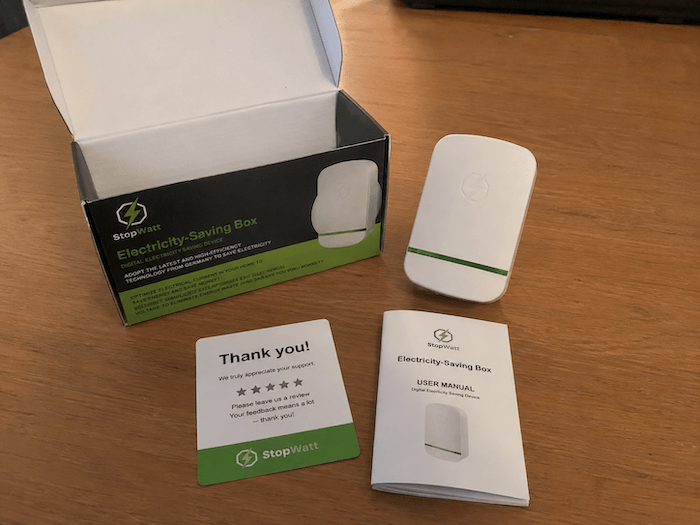
The pitch for StopWatt is easy to understand. Plug a small box into a wall outlet, leave your appliances and habits alone, and pay less for electricity. If you’ve ever opened a utility bill and wondered how it climbed that high, there’s something appealing about a fix that doesn’t involve replacing an air conditioner, arguing over the thermostat, or spending a Saturday looking for drafts. But the more I looked into StopWatt, the more I came back to a basic question. What does the box actually change that would make the electricity meter record less energy?
I wouldn’t buy StopWatt. The strongest reason is a September 2026 ruling from the UK’s Advertising Standards Authority, which examined a StopWatt listing on Amazon. The regulator found the ad misleading after the advertiser provided no evidence that the device saved electricity, reduced waste, or lowered bills. Then there’s the engineering. The National Institute of Standards and Technology explains why a reduction in electrical current through power factor correction doesn’t necessarily reduce the real energy a typical household pays for. Together, those findings give me a much better basis for a buying decision than an advertisement or a before-and-after bill screenshot.
I use “scam” to describe the misleading savings pitch, not to allege that a court found a crime or that every seller using the name is the same company. I didn’t buy or bench-test a StopWatt unit for this article. I reviewed the advertising ruling, the engineering behind this kind of claim, and the evidence a shopper can use to tell a legitimate energy-saving product from a convincing sales page. Here’s where the StopWatt pitch falls apart and what I’d do instead if the real problem were a high power bill.
What StopWatt Promises and What the Regulator Found
StopWatt is sold as a plug-in electricity saver. The Amazon listing examined by the Advertising Standards Authority promoted a two-pack for home and office use and claimed the product could optimize electricity use, reduce waste, and lower monthly costs. To me, that wording makes a practical promise. A customer should be able to put the box in an outlet and see a meaningful drop in electricity use without doing anything else. Otherwise, the product isn’t solving the problem the listing asks people to pay it to solve.
On September 30, 2026, the ASA upheld the complaint. It said Esaverwatt.com, trading as StopWatt, did not respond to its inquiries and provided no evidence to substantiate the savings claims. The regulator also explained why it considered meaningful savings highly unlikely for a device of this type. It didn’t turn appliances off, cut their running time, or otherwise directly control how much electricity they consumed. The ASA instructed the advertiser not to run the ad again in the form reviewed and not to repeat the claims that the product could save electricity, reduce waste, or lower energy bills.
What stands out to me is that the ad didn’t need to promise a spectacular percentage to mislead shoppers. Even an ordinary claim that a product lowers bills needs evidence. Some online promotions in this product category have gone further with dramatic savings figures and celebrity stories, but those aren’t necessary to make the case against buying StopWatt. The regulator examined a listing for the named product and found that its basic selling point wasn’t substantiated. That’s more useful than trying to chase down every version of the pitch.
The ruling is also narrower than saying every plug-in energy product is worthless. A plug-in timer can switch off a compatible appliance. An energy monitor can tell you how much electricity a device uses. Both have a job you can identify and check. StopWatt was advertised as getting the household to a lower bill without showing that it changed the work any appliance did or the energy it needed to do it. That missing connection is what I’d want a seller to explain before taking my money.
The Electrical Detail That Makes the Difference
When I look at an electricity bill, the first figure I check is kilowatt-hours, or kWh. A watt measures power at a given moment. A kilowatt-hour measures energy used over time. A device drawing 1,000 watts for one hour uses 1 kWh. Run it for half an hour at that same power and it uses 0.5 kWh. That’s the straightforward part. A clamp meter showing fewer amps, however, does not on its own tell you that you’ve used fewer kilowatt-hours.
In an alternating-current circuit, voltage and current don’t always line up. Some loads, including certain motors, can draw current that is out of step with the voltage. Power factor describes the relationship between real power, measured in watts, and apparent power, measured in volt-amperes. Under suitable conditions, a properly chosen capacitor can improve power factor and lower the current drawn from the supply without making the appliance perform the same job using substantially less real power. NIST’s technical primer models exactly that distinction. It’s legitimate electrical engineering, but it isn’t a loophole in the way a typical household is billed.
Here’s a simplified example I find useful. Imagine a 120-volt load drawing 5 amps at a power factor of 0.80. Its real power is 480 watts. Now suppose the supply current falls to 4 amps while the power factor rises to 1.00. Its real power is still 480 watts. Run that load for an hour in either case and it uses 0.48 kWh. The current reading falls by 20 percent, which would look impressive in a video. But the real energy recorded for that hour hasn’t fallen at all. These are illustrative numbers, not measurements from a StopWatt unit.
There’s a worthwhile exception to understand. Some industrial customers with large electrical loads may face utility charges tied to poor power factor. For them, professionally designed correction can make financial sense under the right tariff. Lower current can also reduce some losses in the utility’s distribution lines. Neither fact shows that a small box in a living-room outlet lowers the kWh recorded for a typical household, and NIST specifically distinguishes possible utility-side savings from savings on the homeowner’s bill. If someone invokes factories or grid efficiency to sell a device for your house, I’d ask them to show where the same charge appears on your tariff.
The easiest way to keep all this straight is to think about the job an appliance is doing. A dryer still needs to heat and move air to dry a load of laundry. An air conditioner still has to move heat out of the building. An electric water heater still needs energy to bring water up to temperature. There are real ways to make those jobs take less energy, such as running equipment for less time when it isn’t needed or using more efficient equipment. A current reading elsewhere in the house doesn’t establish that any of those jobs suddenly became cheaper to do.
What I’d Accept as Evidence of Electricity Savings
A good demonstration would start with the product’s exact model and a clear description of what was measured. For a whole-home claim, I’d want to see real energy in kWh, with comparable loads and conditions before and after the device was connected. I’d also want the test to account for any energy used by the device itself. A shot of a meter without its units visible tells me very little. Even if the units are visible, a reading taken at the instant an appliance starts or stops isn’t a reliable measure of what it uses over a day. The test needs to match the promise.
Comparing two electricity bills sounds more persuasive, but it’s surprisingly easy to get wrong. One period might include a heat wave and the next a run of mild nights. A family may travel, have visitors, change work schedules, or use a different amount of hot water. One bill can cover more days than another. A lower total is worth noticing, but without the dates, usage figures, tariff details, and a reasonable account of what changed in the home, I can’t tell why the total moved. A genuine screenshot can still be used to draw the wrong conclusion.
Consider two hypothetical bills. The first shows 620 kWh over 31 days. The second shows 560 kWh over 28 days. At a glance, the second month looks almost 10 percent better. Divide each by the number of billing days, though, and both come to 20 kWh per day. In that example, the household didn’t improve its daily energy use at all. If the total amount due also fell, there might be nothing more mysterious going on than a shorter billing period. That’s the kind of check I’d run before giving a new gadget credit for a lower bill.
The comparison below is how I separate a device sold on a savings promise from a tool that helps me investigate an actual bill. A correctly rated plug-in energy monitor won’t cut my costs just by being there. Its value is that it gives me something I can measure and act on. For equipment that isn’t suitable for a plug-in monitor, I’d look at the utility’s meter data or ask a qualified professional instead.
| What I want to know | StopWatt plug-in electricity saver | A correctly rated plug-in energy monitor |
|---|---|---|
| What does it do for me? | The listing reviewed by the ASA claimed that plugging it in would reduce waste and lower costs. The advertiser did not provide evidence supporting those claims. | It measures the energy used by a compatible appliance connected through it. The readings can help me decide whether changing how I use that appliance is worth the effort. |
| What number can I check? | A light or a change in current alone can’t establish a reduction in billed kWh. I’d need a valid real-energy test for the exact model. | I can record the appliance’s kWh over a representative period, change one habit or setting, then measure again under similar conditions. |
| Where would savings come from? | The pitch depends on the plug reducing household electricity use even though it doesn’t directly control appliance operation. The ASA considered meaningful savings highly unlikely. | Savings come from what I do with the information. I might shorten the runtime of equipment I don’t need, deal with a costly standby load, or compare operating costs before replacing an appliance. |
| What are the limits? | The ad ruling addresses a specific listing and its claims. It isn’t a lab test of every unit sold under a similar name. | A monitor measures the compatible load attached to it, not the whole house. I’d use utility data for whole-home trends and follow the monitor’s ratings and instructions. |
One detail I pay particular attention to is whether the advertised percentage applies to energy use, the usage portion of a bill, or the entire bill. Imagine a plan with a fixed monthly charge and a separate per-kWh charge. A genuine 10 percent drop in usage would reduce the energy charge by 10 percent at a flat rate, but it wouldn’t erase 10 percent of the fixed charge. On a time-of-use plan, the hour when electricity is consumed may also affect the price. Without that context, a big percentage in an ad tells me almost nothing about what would happen to my bill.
The Elon Musk Story Doesn’t Prove Anything About the Plug
One of the more memorable selling angles in this category is the supposed involvement of Elon Musk or Tesla. AFP investigated promotions for a device sold as Pro Power Save and documented related marketing under names including Stop Watt. The campaign it examined used a site styled to resemble Fox News, altered photographs, and a story that the U.S. Department of Justice had tried to stop Musk from releasing the device. Fox News told AFP it hadn’t published or broadcast the story, and AFP found no evidence connecting Musk to the product or supporting the supposed lawsuit.
A specific detail made that investigation useful to me. One image that appeared to show Musk with a power-saving gadget traced back to a photograph from a 2020 satellite conference. The photograph was real. The context and the product placement weren’t. That illustrates why a seemingly familiar picture isn’t much to go on, even before you get into whether the device performs as advertised. A recognizable face and a convincing image can make it feel as though someone else has already done the homework. In this case, checking the original photo told a different story.

I wouldn’t assume every StopWatt listing made the celebrity claim, and the ASA ruling isn’t about whether Musk was involved. Those are separate findings. AFP examined how a group of promotions borrowed credibility from public figures and news organizations. The ASA examined whether a named seller substantiated electricity and bill savings on a specific listing. Even if I ignored the celebrity story entirely and evaluated the product on the plain wording of that Amazon ad, I’d still reach the same buying decision.
The same principle applies to comments, testimonials, and star ratings. A review can tell me whether a package arrived or whether a plug fit a socket. It’s much harder for it to tell me whether a product caused a drop in electricity use. The reviewer may sincerely say the next bill was lower and still have no way of separating the gadget’s effect from the weather, a cheaper billing period, or a change in how the household used power. I don’t have to accuse the reviewer of making anything up to say the review doesn’t establish cause and effect.
Is StopWatt Safe to Leave Plugged In?
I can’t assess the electrical safety of every device sold under the StopWatt name, and the ASA ruling was about advertising, not a safety recall. There is a relevant caution from the UK’s Office for Product Safety and Standards, though. It recalled a different plug-in energy saver, the Motex SD008, after identifying serious fire and electric-shock risks. The regulator documented issues including weak plug pins that could break in an outlet and inadequately protected components. That is a finding about the named Motex model, not proof that StopWatt has the same defects.
What the recall does show is why I wouldn’t make a safety judgment from a product photo or an illuminated strip on the front. The electrical construction matters, and you can’t establish that two models are the same because the cases look alike. If I already owned a plug-in energy saver and wanted to check for recalls, I’d start with the manufacturer and exact model on the device or packaging and compare them with a notice from my local product-safety authority. If the unit matched the Motex recall, I’d follow the regulator’s direction to stop using it and contact the distributor.
I’d treat any advertised surge protection as a separate question, too. Protecting equipment against a voltage surge and lowering routine electricity use are different jobs. Good evidence for one wouldn’t establish the other. If my concern were protecting a computer or an appliance, I’d look for a product designed for that specific purpose, with verifiable specifications for the exact model. I wouldn’t leave an unverified plug in an outlet just to see whether my bill changed next month.
What I’d Do If I Already Bought StopWatt
If the unit had already arrived, I’d check the return window before running any sort of trial. A month of waiting for another utility bill can use up the time available to request a return, and the next bill still won’t prove what caused a change. I’d also check whether I bought it directly from a seller, through a marketplace, or from another retailer. The brand name on the box and the business that actually processed the order aren’t necessarily the same, and the order record is the clearest place to start.
- Save the order and the claim you relied on. I’d keep the receipt, confirmation email, and a copy or screenshot of the listing. If I were raising an issue about the advertising, I’d preserve the wording that influenced the purchase. Having the exact claim and order details makes it easier to explain the problem without getting sidetracked by promotions from unrelated sellers.
- Start the return through the original purchase channel. If the order appears in a marketplace account, I’d use the return option there and retain any tracking or confirmation. If it was a direct purchase, I’d use the contact information in the order confirmation and ask for the return address and instructions in writing. That gives me a record if there’s confusion about the date or what the seller said.
- Escalate if the seller doesn’t resolve the problem. I’d check the marketplace’s buyer-protection process or ask the payment provider what options and deadlines apply to my transaction. If I wanted to report the ad as well, I’d give the platform or local consumer authority the specific listing and the wording I saw. A report about an ad and a request for my money back are separate steps.
I wouldn’t assume that a refund is guaranteed or that the same terms apply to every order. What I’d avoid is letting a promised improvement dictate the timeline. If a seller tells me to wait for several bills before judging the results, but the return window closes sooner, I’d base my decision on the return deadline and the evidence already available.
What I’d Do Instead to Lower a High Electricity Bill
Figure out whether the problem is usage or price
I’d start with two or three bills and write down the billing days, total kWh, and price per kWh where it’s shown. Then I’d look separately at fixed charges, credits, and any change to the rate. If daily kWh is flat but the total cost rose, I may be looking at a rate or billing change. If daily consumption rose, I’d look at what the home did differently during that period. Either finding gets me closer to the source of the problem without spending anything on equipment.
If my utility provides daily or hourly readings, I’d look for a pattern before guessing. Higher use every hot afternoon suggests a different starting point from a steady overnight load. A weekend spike may line up with laundry or cooking. A persistent change that started when I brought home a second freezer is worth investigating too. The readings don’t identify an appliance all by themselves, but they can narrow the search enough to make the next step useful. The U.S. Department of Energy’s home energy guide discusses how utility data and energy monitoring can support that kind of assessment.
Prioritize the loads that can change the total
I’d give more attention to equipment that draws a lot of power, runs for long periods, or does both. In a home with electric heating or cooling, thermostat schedules, drafts, or equipment maintenance may turn out to be more important than the small electronics on a nightstand. In another home, an electric water heater, a dehumidifier running around the clock, or an old second refrigerator might deserve a closer look. The point isn’t to assume one appliance is always the culprit. It’s to let the home’s equipment, climate, and usage patterns guide the investigation.
For compatible plug-in equipment that cycles on and off, I’d measure over a period that reflects normal use. Watching a refrigerator for ten minutes might catch the compressor running the entire time or miss it completely. Measuring over several normal days is more useful. For central air conditioning, hardwired equipment, or loads outside a monitor’s rating, I’d use utility data or get professional help rather than improvise with an adapter. The information is only useful if the tool is appropriate for what I’m measuring.
Check the payback before spending money
Suppose I find a device that draws a steady 50 watts and can safely be switched off for eight hours every day without losing a function I need. That change would save 0.4 kWh per day, or about 12 kWh over 30 days. At an illustrative flat rate of $0.20 per kWh, that’s $2.40 off the usage portion of the bill. It’s not a dramatic number, but I can check the calculation and decide whether a timer is worth buying or whether I’d rather just turn the device off myself.
I’d use the same approach with a larger purchase. If I were choosing between two suitable new refrigerators, for instance, I could compare their estimated annual kWh on the EnergyGuide labels and apply my own rate to the difference. What I wouldn’t do is replace a working refrigerator solely because the new one has a lower energy figure without checking whether the savings justify the cost. Sometimes the sensible decision is to adjust how I use what I own and save the efficiency comparison for when the appliance needs replacing anyway.
My Verdict on StopWatt
Don’t buy StopWatt to lower your electricity bill. The central claim is the part of the offer that would have to be strongest, and it’s the part that failed scrutiny. A regulator found the specific StopWatt listing misleading after the advertiser provided no evidence for its savings claims. NIST’s engineering analysis also explains how the kind of current reduction highlighted in this category can leave a household’s billable energy essentially unchanged. Those are two distinct reasons to pass, and neither depends on assuming that every seller or every plug is identical.
The advice I’d give a friend is to pull up the bill before pulling out a credit card. Compare kWh per day across billing periods, check whether the rate changed, and investigate the appliance or pattern that looks most likely to explain the increase. You may find a change that saves money or discover that your household used no more electricity than before. Either answer is more useful than a light glowing in an outlet with no reliable way to tell what it’s doing for the bill.
Disclaimer
This article reflects my editorial assessment of public advertising findings, engineering research, and product-safety records. I did not independently test a StopWatt unit. The term “scam” refers to my assessment of the misleading savings pitch and is not an allegation of criminal conduct. The Motex recall applies to the specific model named in the notice. Electricity tariffs, product-safety requirements, return rights, and dispute options vary by location and transaction.
References
- UK Advertising Standards Authority (2026). ASA Ruling on Esaverwatt.com t/a StopWatt. The primary source for the September 30 ruling. It identifies the Amazon listing reviewed, details the advertiser’s lack of substantiation, and explains why the ASA found the ad misleading.
https://www.asa.org.uk/rulings/esaverwatt-com.html - Martin Misakian, Thomas L. Nelson, and William E. Feero, National Institute of Standards and Technology (2009). Regarding Electric Energy Savings, Power Factors, and Carbon Footprints: A Primer. NIST Technical Note 1654 models how capacitor-based power factor correction can reduce current without reducing the real energy billed to a typical household. It also distinguishes residential billing from industrial power-factor penalties.
https://www.nist.gov/publications/regarding-electric-energy-savings-power-factors-and-carbon-footprints-primer - Daniel Patrick Galgano, AFP Fact Check (2024). No evidence Elon Musk backed unproven “energy-saving” product. This investigation traces the celebrity, lawsuit, and fake-news claims surrounding Pro Power Save promotions and documents related marketing under the Stop Watt name. It is evidence about the promotional campaign, not a laboratory performance test.
https://factcheck.afp.com/doc.afp.com.36GM97X - UK Office for Product Safety and Standards (2022). Product Recall: Motex SD008 Plug-In Energy Saving Device (2204-0026). This model-specific notice documents the electrical faults behind the Motex recall and identifies the corrective action required. It does not establish that StopWatt was recalled.
https://www.gov.uk/product-safety-alerts-reports-recalls/product-recall-motex-sd008-plug-in-energy-saving-device-2204-0026 - U.S. Department of Energy (2022). Energy Saver: Tips on Saving Money and Energy in Your Home. This technical consumer guide covers home energy assessments, utility data, heating and cooling, and appliance operating costs. It supports the practical alternatives described in the article, from tracking consumption to comparing annual energy use.
[https://www.energy