

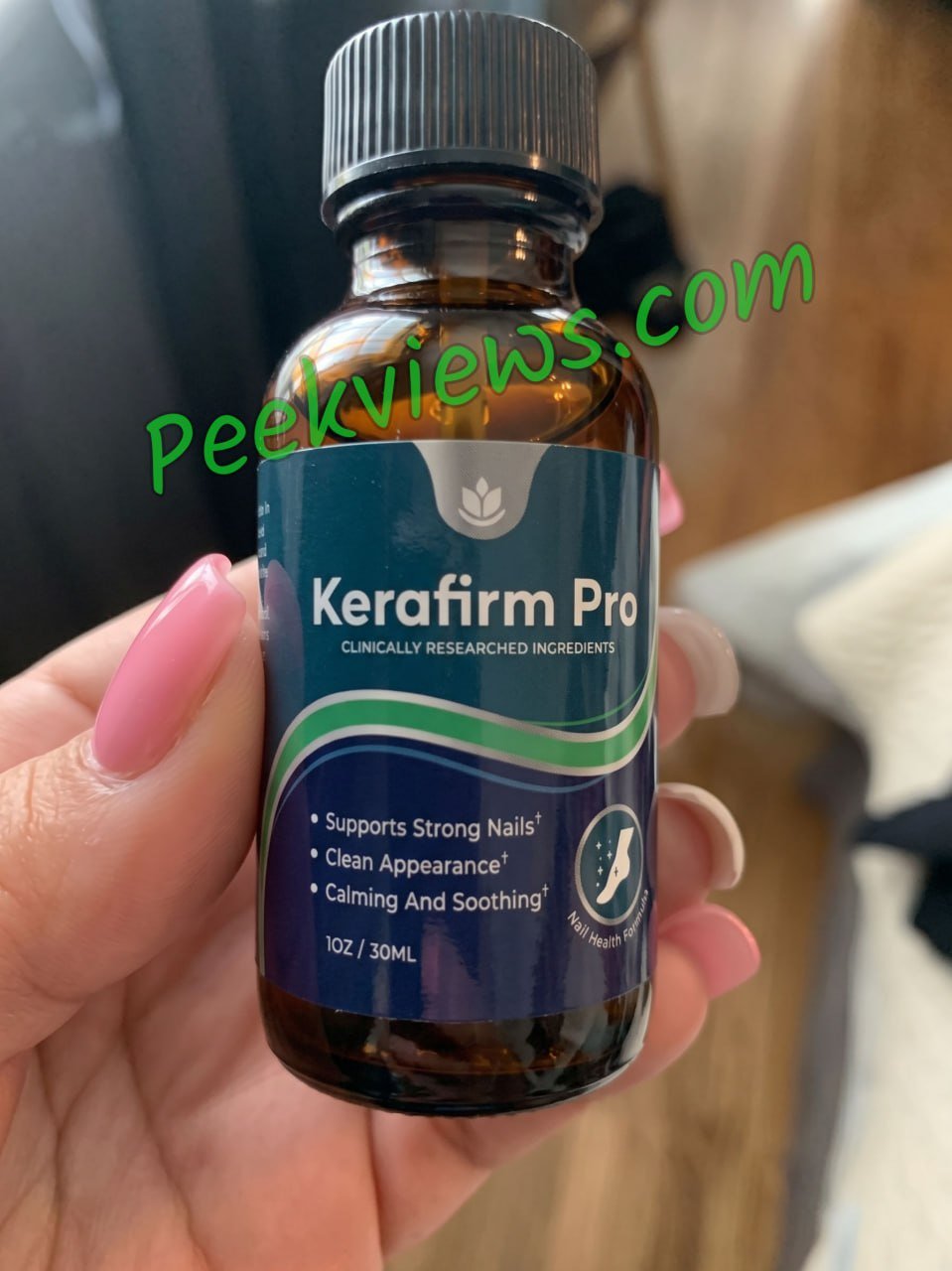
Toenail fungus is one of those problems that can quietly become frustrating. What begins as a small yellow spot may eventually develop into a thickened, brittle, discolored nail that becomes difficult to trim. The medical condition, known as onychomycosis, occurs when fungi invade the nail or surrounding nail tissue. Because toenails grow slowly and fungal organisms can survive beneath the nail plate, successful treatment often requires considerable patience.
According to the American Academy of Dermatology, even after a fungal infection has been successfully treated, a damaged toenail may take 12 to 18 months to grow out completely. This explains why products promising dramatic overnight improvements deserve careful examination. Thickened nails also create a practical challenge because topical ingredients must reach the affected tissue to be effective.
After years of writing about wellness and personal care products, I’ve learned to examine the ingredients, application method, safety considerations, and available research before deciding whether something deserves attention.
This is my detailed Kerafirm Pro review, covering what I discovered about its formula, the official customer testimonials, potential complaints, side effects, ingredients, recommended dosage and application routine, and whether Kerafirm Pro appears legitimate or raises concerns worth knowing before purchasing.
Kerafirm Pro Overview: Essential Product Information
Before examining the formulation, I’ve organized the important details about Kerafirm Pro into a convenient reference table.
| Product Details | Information |
|---|---|
| Product Name | Kerafirm Pro |
| Product Category | Topical nail and cuticle care solution |
| Primary Purpose | Supports healthier-looking nails and conditions surrounding skin |
| Formula | Botanical oils, undecylenic acid, moisturizing ingredients |
| Key Ingredients | Tea Tree Oil, Clove Bud Oil, Manuka Oil, Undecylenic Acid, Aloe Vera, Vitamin E |
| Total Listed Ingredients | 13 |
| Application Method | Precision brush and cotton swab |
| Recommended Frequency | Four applications daily |
| Intended Users | Adults experiencing rough, brittle, or discolored-looking nails |
| Main Advantages | Targeted application, moisturizing oils, convenient topical format |
| Important Limitation | Clinical effectiveness of the finished formula against nail fungus remains unestablished |
| Customer Feedback | Positive testimonials advertised by the seller; independent verification is limited |
| Money-Back Guarantee | Advertised 60-day guarantee, subject to merchant terms |
| Availability | Official online ordering |
| My Editorial Rating | ★★★★☆ 4.7/5 for formulation concept and usability, not clinically established treatment effectiveness |
| Official Website | ✅ Click Here |
What Exactly Is Kerafirm Pro?
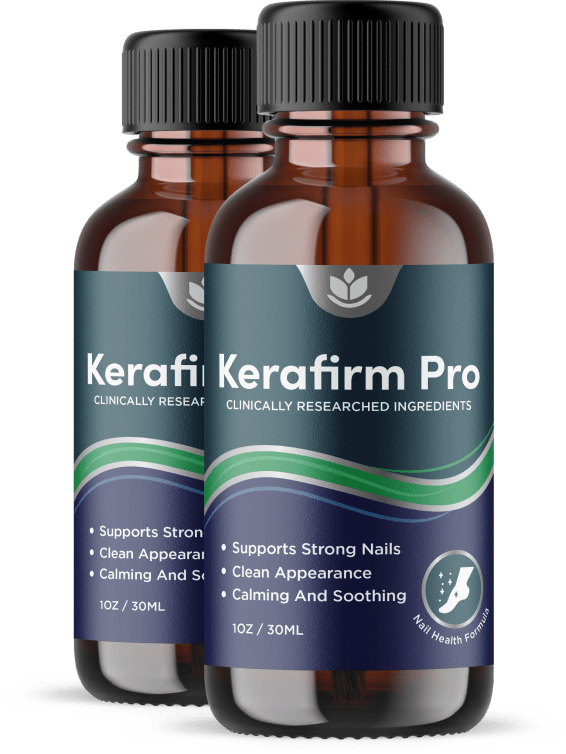
Kerafirm Pro is a brush-on topical solution developed for nail care, particularly nails affected by discoloration, rough texture, brittleness, and cosmetic changes associated with possible fungal problems.
Its formula combines plant-derived oils, skin-conditioning ingredients, and undecylenic acid, a substance with recognized antifungal applications. The product is applied externally, making it distinct from oral antifungal medicines that act throughout the body.
What interests me most is its attention to the nail and cuticle together. The precision brush allows controlled coverage, while the cotton swab helps distribute the liquid around accessible nail edges.
However, Kerafirm Pro should not be confused with a clinically proven prescription treatment for onychomycosis. Its cosmetic and conditioning properties are more readily supported by its ingredient profile than claims that it can eliminate established infections.
The Science Behind Kerafirm Pro: What Research Actually Supports
The scientific foundation of Kerafirm Pro comes primarily from research involving individual ingredients rather than clinical testing of the completed formulation.
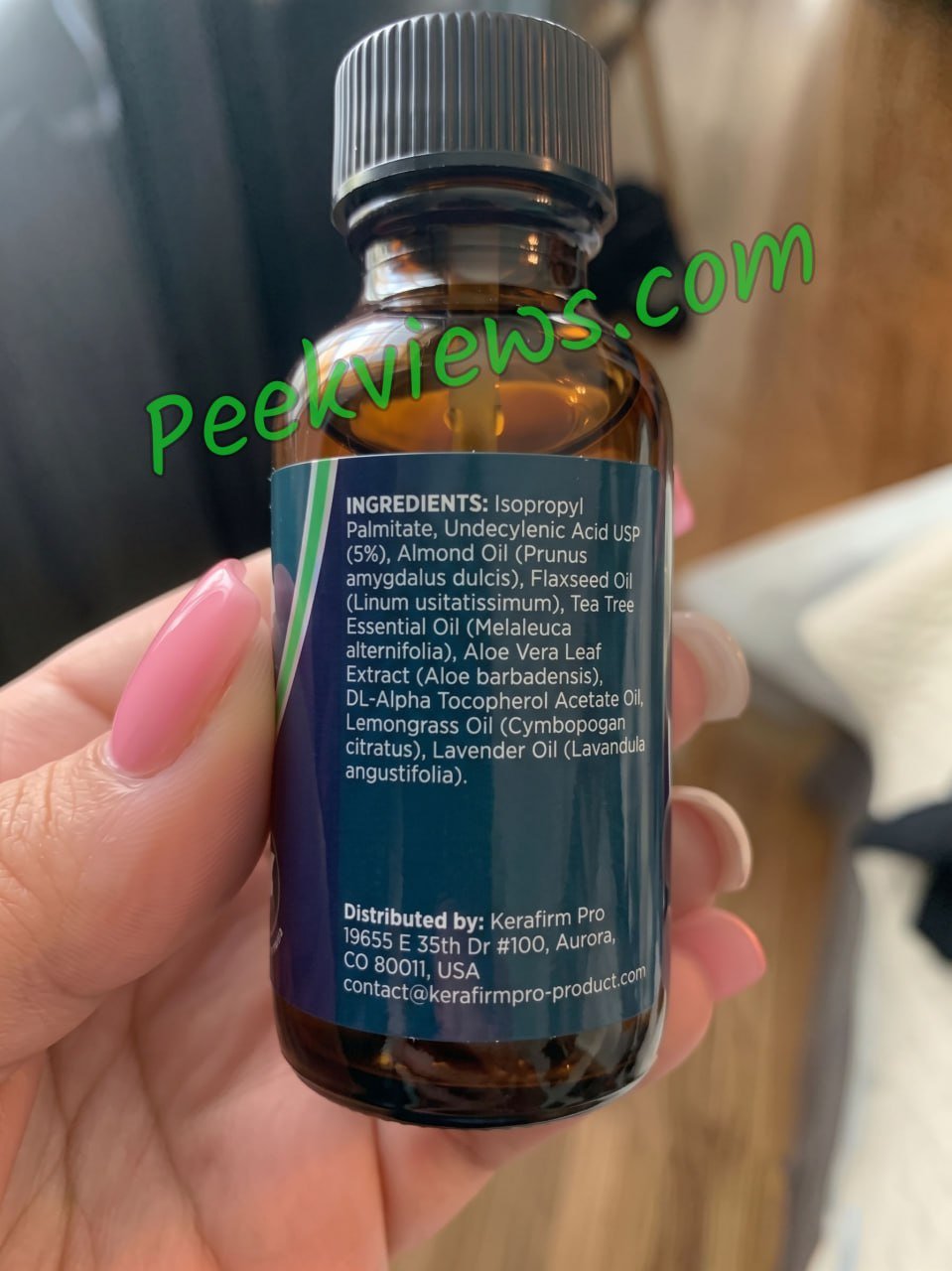
Undecylenic acid has recognized antifungal activity. The FDA’s over-the-counter topical antifungal monograph identifies undecylenic acid and related compounds at specified concentrations of 10% to 25% for certain fungal skin infections. A publicly discussed Kerafirm Pro label lists 5%, which should not be considered equivalent to those established concentrations or proof of effectiveness against nail infections.
Tea tree oil also has some clinical research behind it. A randomized study involving 117 participants compared pure tea tree oil with topical clotrimazole for toenail fungus over six months. Although improvements were reported, complete culture-confirmed clearance rates remained relatively low.
The important distinction is that this study examined 100% tea tree oil, not the diluted concentration present in Kerafirm Pro.
Other botanical ingredients have laboratory evidence suggesting antimicrobial or skin-conditioning properties. Nevertheless, laboratory activity does not necessarily translate into successful treatment beneath a thickened human toenail.
My assessment is that the formulation has a plausible scientific rationale for nail and cuticle care, but I found no convincing published clinical trial demonstrating that the finished Kerafirm Pro formula cures toenail fungus.
How Kerafirm Pro Is Designed to Work
The approach behind Kerafirm Pro combines targeted delivery with nail conditioning.
First, its brush applicator spreads the formula over the nail surface. The inclusion of undecylenic acid and essential oils gives the product its fungus-focused positioning, although the actual ability of this formulation to penetrate infected nail tissue has not been established.
Second, almond, chia, flaxseed, and walnut oils help condition the nail surface and surrounding cuticles. These ingredients may improve dryness and make rough-looking nails appear better maintained.
Finally, continued use encourages a structured nail-care routine. Keeping nails clean, appropriately trimmed, and dry can support overall foot hygiene.
The realistic expectation is improved nail care and potentially better cosmetic appearance, while confirmed fungal infections may require medically established treatment.
Kerafirm Pro Ingredients: A Closer Examination of the Formula
Before examining individual ingredients, I want to emphasize that natural botanical oils are not automatically irritation-free. Several essential oils contain compounds capable of triggering allergic contact dermatitis, particularly on damaged or sensitive skin.
Anyone with known plant, fragrance, or nut allergies should examine the complete label carefully. Ingredient concentrations, formulation stability, and personal sensitivity all influence tolerability.
🍃 Clove Bud Oil
Clove bud oil contains eugenol, an aromatic compound investigated for antimicrobial activity. Its inclusion contributes to the formula’s botanical approach to nail hygiene, although research involving isolated eugenol cannot establish that Kerafirm Pro treats fungal nails.
The principal concern is irritation. Concentrated clove oil can cause burning or allergic reactions, making proper dilution especially important when applying it around sensitive cuticles.
🍃 Manuka Oil
Manuka oil comes from the New Zealand manuka plant and contains compounds that have demonstrated antimicrobial activity in laboratory investigations. It adds another botanical component to the product’s fungus-focused formulation.
Although scientifically interesting, there is insufficient clinical evidence that manuka oil in this particular solution clears onychomycosis. Its practical value remains dependent on concentration, delivery, and tolerance.
🍃 Undecylenic Acid
Undecylenic acid is arguably the most medically relevant ingredient because it has a recognized history in topical antifungal preparations. It acts against susceptible fungi under appropriate conditions and concentrations.
However, the concentration is crucial. A reported 5% formulation does not meet the FDA monograph’s 10% to 25% range for covered antifungal skin products, and this distinction limits the conclusions I can draw about treatment effectiveness.
🍃 Sweet Almond Oil
Sweet almond oil primarily serves as an emollient, helping soften and condition dry skin around the nails. Its fatty-acid content makes it useful in cosmetic formulations intended to reduce a rough, neglected appearance.
It should not be regarded as a clinically established nail-fungus treatment. Individuals with almond allergies should also verify suitability before using a product containing this ingredient.
🍃 Aloe Vera
Aloe vera is widely used in topical skincare because of its moisturizing and soothing characteristics. Around dry cuticles, it may help make the application experience more comfortable.
Its presence makes sense in a product designed for repeated use, although the amount and preparation influence its effects. Aloe vera does not independently establish antifungal effectiveness.
🍃 Walnut Oil
Walnut oil contains fatty acids that contribute to skin conditioning and moisture retention. In nail-care formulations, these properties may help improve the appearance of dry cuticles and surrounding skin.
The ingredient is primarily supportive rather than a proven treatment for nail infections. Anyone with walnut allergies should check the label and consult a healthcare professional when uncertain.
🍃 Vitamin E
Vitamin E is a fat-soluble antioxidant frequently included in cosmetic oils. It can contribute to formulation stability and help condition dry skin when delivered in a suitable topical preparation.
Although often promoted for stronger nails, strong clinical evidence supporting significant nail regeneration from topical vitamin E remains limited. I consider it a complementary conditioning ingredient.
🍃 Chia Seed Oil
Chia seed oil contains fatty acids, including alpha-linolenic acid, which contribute to its emollient properties. Its role is consistent with maintaining a conditioned nail and cuticle surface.
There is little direct clinical evidence establishing chia seed oil as a treatment for nail fungus. Its inclusion is better understood as part of the moisturizing portion of the formula.
🍃 Menthol
Menthol produces a cooling sensation when applied to the skin. This sensory effect can make a topical product feel refreshing, particularly around feet that experience heat or discomfort.
Cooling should not be mistaken for evidence that an infection is disappearing. Menthol can also cause irritation in sensitive individuals, especially when applied excessively.
🍃 Camphor Oil
Camphor provides a recognizable aromatic sensation and is used in certain topical preparations for its sensory effects. Within Kerafirm Pro, it contributes to the overall essential-oil composition.
Its concentration matters because camphor can irritate skin and may be toxic if swallowed. The solution should therefore be kept away from children and used externally only.
🍃 Tea Tree Oil
Tea tree oil is among the better-researched botanical ingredients associated with fungal skin conditions. Its constituents have demonstrated antifungal activity, while limited human studies suggest possible usefulness in certain topical applications.
Nevertheless, tea tree oil can trigger allergic contact dermatitis, particularly when oxidized. The clinical findings involving pure tea tree oil cannot automatically be applied to this multi-ingredient formula.
🍃 Flaxseed Oil
Flaxseed oil provides fatty acids that may help condition rough skin and improve surface softness. This makes it suitable for a formula emphasizing nail and cuticle maintenance.
Its nutritional reputation should not be confused with topical medicinal effectiveness. Evidence supporting flaxseed oil as a direct treatment for established nail infections remains insufficient.
🍃 Lavender Oil
Lavender oil contributes fragrance and botanical complexity to the formula. Laboratory research has explored its antimicrobial properties, but convincing clinical evidence for eliminating toenail fungus is lacking.
Lavender is also a recognized potential contact allergen. Individuals with fragrance sensitivities should approach products containing it cautiously despite its familiar association with gentle skincare.
Six Potential Benefits of Kerafirm Pro
The benefits advertised for Kerafirm Pro deserve to be separated into realistic conditioning advantages and outcomes that still require clinical proof.
⭐ 1. Supports Clearer-Looking Nails
Discoloration can make otherwise healthy feet appear poorly maintained. A consistent nail-care routine, combined with conditioning ingredients, may improve the cosmetic presentation of rough or dull-looking nails.
However, clearer-looking nails and elimination of fungal infection are different outcomes. Persistent yellowing or thickening warrants professional assessment rather than relying on appearance alone.
⭐ 2. Helps Condition Brittle Nail Surfaces
Brittle nails often have rough edges and an uneven appearance. Kerafirm Pro contains several emollient oils intended to improve surface conditioning, particularly where dryness contributes to an unhealthy appearance.
These ingredients may make nails feel better maintained, but they cannot be assumed to reverse structural damage caused by infection. Improvement also depends on the growth of new nail tissue.
⭐ 3. Moisturizes Dry Cuticles
Dry cuticles may become uncomfortable, flaky, or visually prominent. Aloe vera, vitamin E, and plant oils provide a reasonable cosmetic foundation for addressing this concern.
Moisturizing the surrounding skin may also make routine grooming easier. Application should remain gentle, especially when the skin is cracked or already inflamed.
⭐ 4. Offers Precision Application
The enclosed brush makes it easier to coat individual nails without spreading large amounts of product across the foot. For someone treating several affected-looking nails, controlled application can simplify the process.
The accompanying cotton swab helps reach accessible areas around the cuticle. Precision improves application control, although it does not establish that ingredients penetrate deeply enough to eliminate a fungal infection.
⭐ 5. Encourages Consistent Nail Maintenance
Nail problems frequently require sustained attention, and the prescribed application schedule creates a regular opportunity to inspect nail condition.
Maintaining clean, dry feet and monitoring new nail growth can be useful alongside appropriate treatment. However, four daily applications may be inconvenient for people with demanding schedules.
⭐ 6. Provides a Non-Oral Nail-Care Option
Some consumers prefer an externally applied product because they do not want to swallow tablets for a cosmetic concern. Kerafirm Pro accommodates that preference through its brush-on format.
Topical application generally involves different exposure considerations from oral medication, but it is not automatically risk-free. Anyone with confirmed or advanced onychomycosis should discuss proven treatment options with a clinician.
Kerafirm Pro vs Popular Nail-Care Brands: A Detailed Comparison
Comparing Kerafirm Pro with mainstream nail-care products reveals several meaningful differences. I have focused on broad characteristics common among popular retail formulations rather than attributing specific features to unnamed products.


| Comparison Area | Kerafirm Pro | Popular Retail Nail-Care Products |
|---|---|---|
| Formulation Approach | Combines undecylenic acid, essential oils, and conditioning ingredients in one topical solution. | Formulas vary widely, including cosmetic nail conditioners, antifungal skin treatments, and medically approved prescription products. |
| Application Design | Precision brush allows direct coating of nails, while a cotton swab assists with cuticle application. | Brushes, droppers, pens, sprays, and creams are available, depending on the formulation. |
| Botanical Ingredients | Includes multiple plant oils intended to complement nail and skin conditioning. | Some emphasize botanical oils, while others use fewer ingredients or conventional active compounds. |
| Moisturizing Support | Almond, chia, walnut, and flaxseed oils provide a distinct conditioning component. | Cosmetic nail-repair products may offer comparable conditioning through different emollients or keratolytic ingredients. |
| Antifungal Evidence | Contains an ingredient associated with antifungal activity, but the complete formula lacks established clinical efficacy for onychomycosis. | Evidence ranges from cosmetic-only claims to FDA-approved prescription treatments supported by controlled trials. |
| Application Frequency | Four times daily according to the supplied directions, requiring consistent scheduling. | Many products use once-daily or twice-daily schedules, potentially offering greater convenience. |
| Treatment Expectations | Best assessed as a targeted nail-conditioning formula until product-specific clinical evidence becomes available. | Certain prescription products have demonstrated antifungal effectiveness, while ordinary cosmetic products have more limited purposes. |
| Buying Experience | Promoted through direct online ordering with an advertised 60-day guarantee. | Many products are available through pharmacies and established retail platforms, with return policies varying by seller. |
| Best Practical Advantage | A combined botanical and moisturizing formula in a controlled brush-on format. | Greater selection, easier local availability, or stronger clinical evidence, depending on the individual product. |
My conclusion from this comparison: Kerafirm Pro distinguishes itself through its botanical composition and combination of nail and cuticle conditioning ingredients. Those are legitimate reasons someone might prefer its format.
I would not claim it is clinically superior to established antifungal treatments. Its strongest competitive position is convenience and cosmetic formulation, while prescription alternatives have a substantially stronger foundation for treating confirmed fungal nail infections.
Kerafirm Pro Bonuses



My Kerafirm Pro Rating: 4.7 Out of 5
For my editorial evaluation of Kerafirm Pro, I considered formulation design, application convenience, ingredient rationale, cosmetic usefulness, and purchasing considerations.
Overall Editorial Rating: 4.7/5 — ★★★★☆
| Evaluation Category | Rating | My Assessment |
|---|---|---|
| Ingredient Selection | ★★★★★ 4.8/5 | Diverse botanical oils and conditioning compounds provide a coherent cosmetic nail-care formulation. |
| Application Design | ★★★★★ 4.9/5 | The brush and swab allow controlled coverage, although actual nail penetration remains unproven. |
| Nail Conditioning Potential | ★★★★★ 4.7/5 | Emollient ingredients offer a reasonable basis for improving dryness and surface appearance. |
| Routine Convenience | ★★★★☆ 4.4/5 | Easy individual applications are offset by the relatively demanding four-times-daily schedule. |
| Formula Versatility | ★★★★★ 4.8/5 | Addresses nail-surface care and surrounding cuticle conditioning within one product. |
| Overall Editorial Score | ★★★★☆ 4.7/5 | A favorable assessment of the product concept, not a verified antifungal success rate. |
I find the product’s design appealing, especially for people seeking a dedicated nail-conditioning solution. The ingredient selection is more varied than many basic cosmetic oils, and the applicator is practical.
The 4.7 rating reflects my editorial assessment of its design and potential usability. It should not be interpreted as a clinical effectiveness rating, a verified customer average, or proof that the product eliminates fungus.
How to Apply Kerafirm Pro Correctly
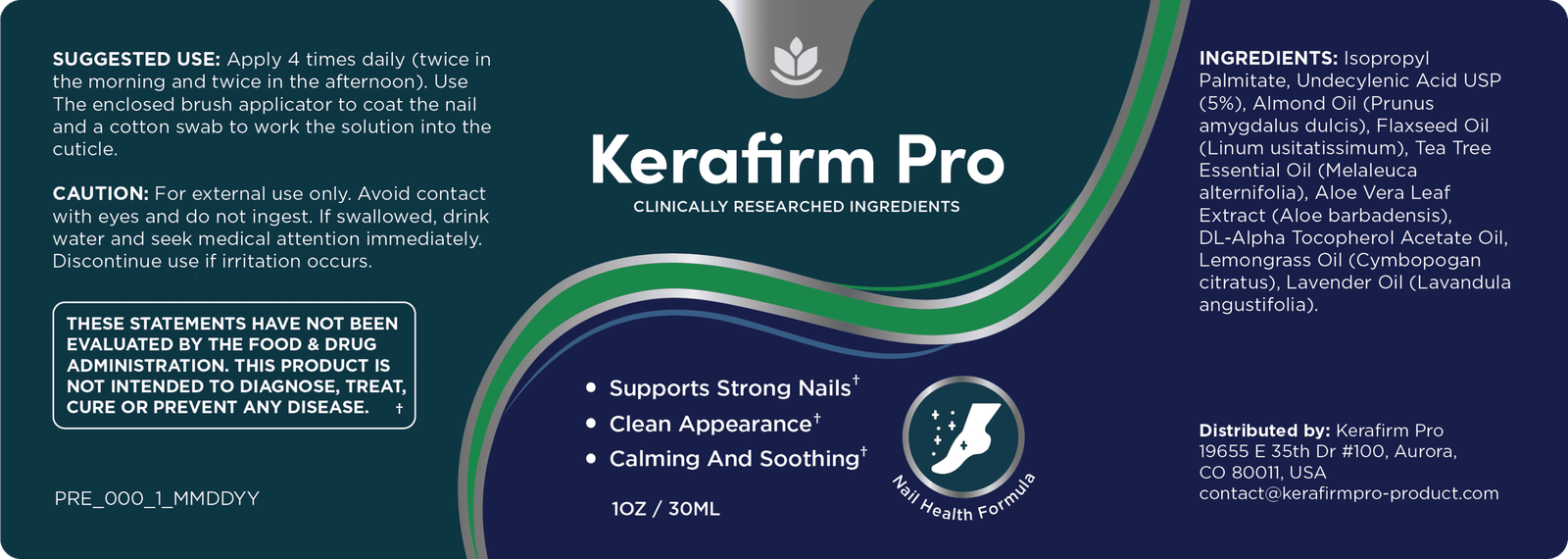
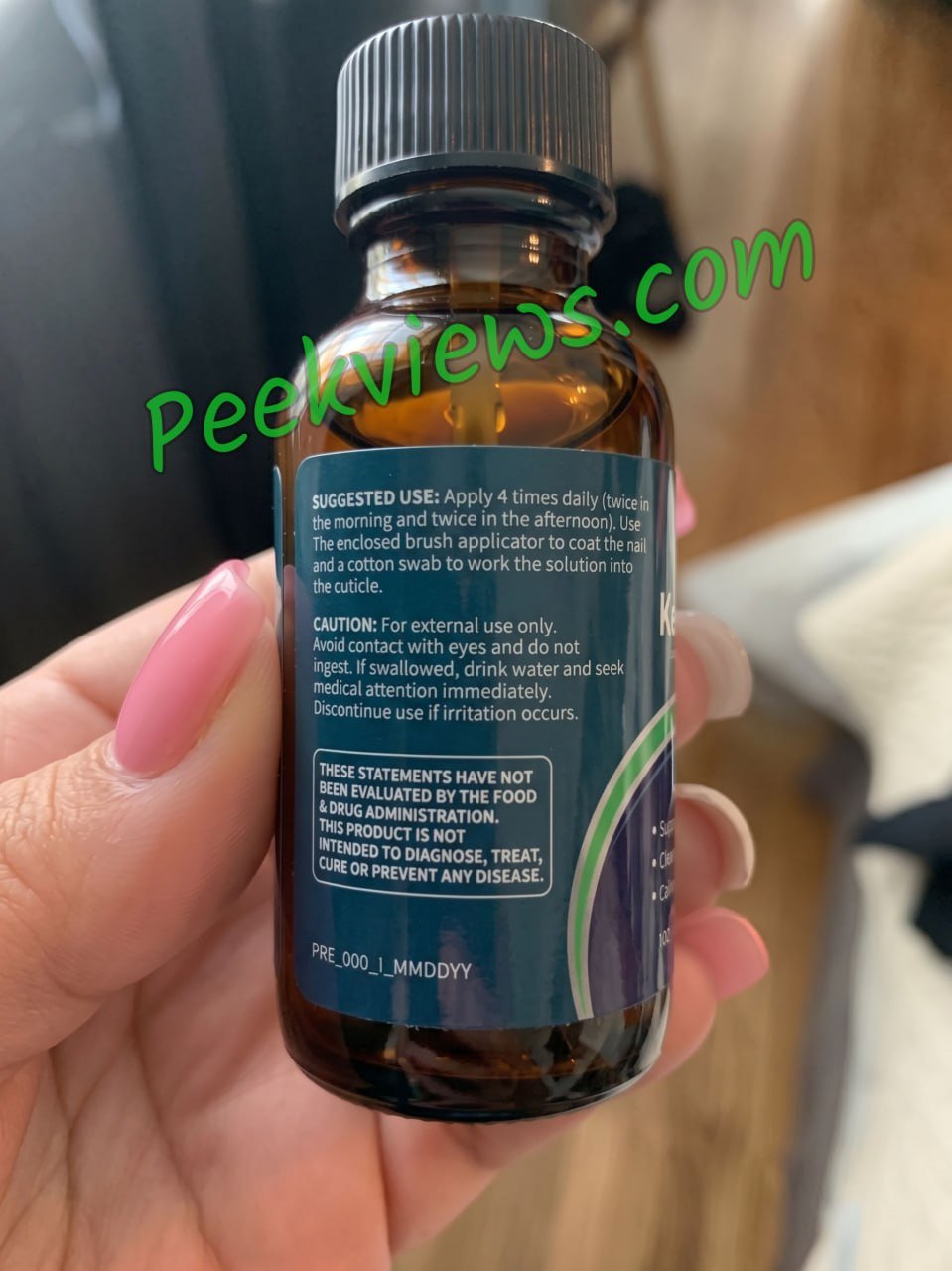
The supplied directions for Kerafirm Pro recommend four applications daily: twice in the morning and twice in the afternoon.
Begin with clean, completely dry nails. Use the enclosed brush applicator to coat the nail surface, distributing the solution evenly without excessive dripping.
Next, use a clean cotton swab to work the liquid gently around the cuticle and accessible nail edges. Avoid forcing the applicator beneath attached nail tissue or applying the solution to open wounds.
Allow the product to dry before covering your feet. Maintain good hygiene, follow the current package instructions, and stop application if irritation develops.
Kerafirm Pro Pros and Cons: The Details That Matter
Every product has limitations, and Kerafirm Pro is no exception. These are the practical strengths and drawbacks I consider most relevant.
| Pros | Cons |
|---|---|
| 1. Targeted Brush Application: Allows controlled coverage of individual nails and reduces the need to spread the formula over unaffected areas. | 1. No Established Finished-Product Trial: Ingredient research cannot establish that Kerafirm Pro itself successfully treats confirmed nail fungus. |
| 2. Extensive Botanical Formula: Combines oils with different conditioning properties, offering broader cosmetic support than a single ordinary carrier oil. | 2. Demanding Daily Schedule: Four applications per day may become inconvenient and make long-term consistency difficult. |
| 3. Cuticle Conditioning: Includes aloe vera and several fatty-acid-rich oils that may improve dryness around the nails. | 3. Potential Essential-Oil Sensitivity: Tea tree, lavender, clove, and other aromatic ingredients may irritate susceptible skin. |
| 4. External Application: Provides a nail-care option without swallowing tablets, appealing to consumers primarily interested in cosmetic maintenance. | 4. Limited Independent Verification: Product-specific clinical outcomes, ingredient concentrations, and advertised testimonials require greater independent substantiation. |
| 5. Convenient At-Home Format: The compact brush-on design requires no complicated equipment and can fit into a regular grooming routine. | |
| 6. Advertised Purchase Protection: A 60-day refund offer may reduce financial concern when the official merchant honors its stated conditions. |
Possible Kerafirm Pro Side Effects
Although Kerafirm Pro uses familiar botanical ingredients, adverse skin reactions remain possible.
The most relevant concerns include redness, itching, burning, dryness, contact dermatitis, or increased irritation around sensitive cuticles. Menthol and camphor may create noticeable sensations, while essential oils can provoke allergic reactions in susceptible individuals.
A cautious patch test on intact skin may help identify immediate sensitivity, although it cannot rule out delayed allergy. Discontinue use if persistent redness, swelling, blistering, or significant discomfort occurs. Seek medical advice for severe reactions.
Is Kerafirm Pro Safe for Regular Use?
The safety of Kerafirm Pro depends on personal sensitivity, ingredient concentrations, and proper external application.
Most importantly, use it only as directed, avoid broken skin, and never swallow the solution. People with nut allergies, fragrance sensitivity, or existing inflammatory skin conditions should obtain professional guidance before use.
I have not identified sufficient product-specific safety testing to guarantee that the complete formula is suitable for everyone. Natural ingredients can still cause adverse reactions.
Can Kerafirm Pro Be Used Alongside Medications?
Because Kerafirm Pro is applied externally, its potential interactions differ from those associated with oral antifungal drugs.
However, combining topical products can increase irritation, and applying multiple preparations together may change their absorption or performance. People already using prescription nail treatments should ask their pharmacist or dermatologist before adding another solution.
Do not replace prescribed antifungal medication with Kerafirm Pro without medical guidance.
Who May Benefit From Kerafirm Pro, and Who Should Avoid It?
I would position Kerafirm Pro primarily as a cosmetic nail-care option rather than a substitute for established fungal treatment.
Who May Consider It
- Adults with dry or rough-looking nails: The moisturizing ingredients may provide cosmetic conditioning and support a more maintained appearance.
- People experiencing dry cuticles: The oil-based formulation may help soften surrounding skin when used appropriately.
- Consumers who prefer brush-on products: The targeted applicator offers a practical alternative to applying conventional cosmetic creams.
- People maintaining their nails after professional treatment: It may be considered as cosmetic care when a clinician confirms compatibility with the treatment plan.
Who Should Avoid It or Seek Medical Advice First
- Individuals with known ingredient allergies: Multiple nut-derived and aromatic oils create potential sensitivity concerns.
- People with painful, swollen, or infected-looking nail tissue: These symptoms require assessment rather than further cosmetic application.
- Pregnant or breastfeeding individuals: Product-specific safety evidence is insufficient, so professional guidance is advisable.
- People with diabetes, poor circulation, or weakened immunity: Nail infections can carry additional risks and should receive appropriate medical attention.
What I Didn’t Like About Kerafirm Pro and Why
Despite its appealing design, Kerafirm Pro has limitations that deserve more attention than promotional descriptions typically provide.
- Limited clinical validation: I would prefer to see controlled testing of the complete formulation, including measurable improvements in culture-confirmed fungal infections.
- Uncertain ingredient concentrations: Knowing exactly how much of each major botanical ingredient is included would make evaluating safety and effectiveness easier.
- Repeated daily application: Four applications every day require more dedication than many consumers may initially expect.
- Reliance on seller testimonials: Positive official stories may be encouraging, but independently verified customer experiences would provide a stronger basis for evaluating typical results.
- Potential confusion about medical claims: The distinction between making nails look healthier and actually eliminating an infection should be communicated more clearly.
Is Kerafirm Pro a Scam?
I would not automatically describe Kerafirm Pro as a scam simply because its advertised benefits lack extensive clinical validation. It is marketed as a topical solution containing recognizable nail-care ingredients, and its brush-based concept is straightforward. However, the available evidence does not establish that it reliably cures onychomycosis.
My concerns center on the strength of the marketing claims, the limited independent verification of testimonials, and the absence of convincing finished-product clinical trials. I would classify Kerafirm Pro as a commercially marketed nail-care product with unproven antifungal treatment effectiveness, rather than treating promotional promises as verified medical outcomes.
Kerafirm Pro Alternatives Worth Considering
Consumers evaluating Kerafirm Pro can also consider established retail nail-care products commonly found through Amazon and other major retailers. Availability and formulations should be checked before purchasing.
1. Kerasal Multi-Purpose Nail Repair
Kerasal focuses primarily on the cosmetic appearance of damaged nails, including discoloration and rough texture. Its approach differs from Kerafirm Pro’s botanical oil blend, making it worth considering for appearance-focused nail maintenance.
Best suited for: Consumers whose main concern is improving how damaged-looking nails appear rather than treating a confirmed infection.
2. Fungi-Nail Maximum Strength
Fungi-Nail offers topical antifungal products intended for specified fungal skin conditions. Its product labeling and active ingredients should be examined carefully because a treatment for athlete’s foot is not automatically effective for fungus inside a toenail.
Best suited for: Consumers seeking a conventional topical antifungal product for an indication specifically covered by its label.
3. Dr. Scholl’s Fungal Nail Products
Dr. Scholl’s offers nail-focused care products with different formulations and purposes. Certain options emphasize appearance, while others have specific antifungal labeling, so individual package claims must be checked.
Best suited for: Buyers who prefer familiar pharmacy brands and convenient retail availability.
These alternatives offer different approaches rather than universally better outcomes. For confirmed onychomycosis, prescription medications remain the more evidence-supported options.
Kerafirm Pro 60-Day Money-Back Guarantee

One purchasing feature associated with Kerafirm Pro is its advertised 60-day money-back guarantee.
According to the provided offer information, this protection is associated with purchases made through the official website. Customers purchasing through unrelated third-party sellers should not assume those orders qualify.
Before ordering, I recommend reviewing the current refund conditions, saving the order confirmation, and checking whether return authorization, bottle returns, shipping charges, or other requirements apply. A guarantee is only as useful as its actual written terms and the merchant’s willingness to honor them.
For the advertised official-site guarantee, purchase through the authorized website and retain your documentation. The refund policy provides purchasing reassurance, but it does not establish clinical effectiveness.
Frequently Asked Questions About Kerafirm Pro
Q: How long does Kerafirm Pro take to produce noticeable results?
A: Changes in nail appearance depend on the original condition, application consistency, and normal nail growth. Cosmetic conditioning may become noticeable sooner than substantial changes in nail structure. Because toenails grow slowly, complete replacement of damaged nail tissue can take many months.
Q: Can Kerafirm Pro completely eliminate toenail fungus?
A: There is insufficient clinical evidence demonstrating that the finished product reliably eliminates confirmed fungal nail infections. Although certain ingredients have antifungal research behind them, established onychomycosis may require prescription treatments with proven effectiveness.
Q: Is Kerafirm Pro a pill or a topical solution?
A: Kerafirm Pro is a topical nail-care liquid applied with a precision brush and cotton swab. It is not an oral supplement and should never be swallowed. Its formulation is intended for external use on the nails and surrounding applicable areas.
Q: Can I apply Kerafirm Pro to several toenails?
A: The brush applicator allows individual nail coverage, making treatment of multiple affected-looking nails practical. Use hygienic application techniques and avoid transferring material between visibly infected and unaffected nails whenever possible.
Q: Does Kerafirm Pro work on thick yellow toenails?
A: Thick yellow nails can result from fungal infection, repeated trauma, psoriasis, or other conditions. The product may support cosmetic conditioning, but accurate diagnosis is important because different causes require different management approaches.
Q: Is Kerafirm Pro suitable for sensitive skin?
A: Suitability varies because the formula contains several aromatic essential oils capable of causing irritation or allergy. People with sensitive skin should examine the ingredient list, avoid applying it to damaged tissue, and seek professional advice when necessary.
Q: Where should I purchase Kerafirm Pro?
A: The supplied purchasing information identifies the official website as the direct ordering channel. Buying there also matters for the advertised 60-day guarantee. Customers should verify the seller, checkout conditions, and refund policy before completing payment.
Q: Can Kerafirm Pro prevent nail fungus from returning?
A: No reliable product-specific evidence establishes that Kerafirm Pro prevents recurrence. Keeping feet dry, changing socks regularly, managing athlete’s foot, and following medical advice are more established elements of fungal infection prevention.
My Final Verdict on Kerafirm Pro
After examining Kerafirm Pro, I find its strongest qualities in the botanical ingredient selection, targeted application method, and attention to both nail appearance and cuticle conditioning. The formula offers an interesting approach for people who want a dedicated external nail-care routine.
My 4.7/5 editorial rating reflects those practical formulation characteristics, with the important limitation that Kerafirm Pro has not demonstrated clinical effectiveness against established toenail fungus in published finished-product trials. Anyone experiencing persistent thickening, pain, nail separation, or progressive discoloration should obtain a professional diagnosis rather than delay appropriate care.
For readers interested in Kerafirm Pro primarily as a nail-conditioning product, I recommend reviewing the complete ingredients, directions, and refund conditions before purchasing. Visit the Official Kerafirm Pro Website to examine the current offer and decide whether its approach suits your nail-care needs.

References
- American Academy of Dermatology Association. Nail Fungus: Diagnosis and Treatment. Guidance on medical treatments, nail growth, and limitations of topical products.
https://www.aad.org/public/diseases/a-z/nail-fungus-treatment - U.S. Food and Drug Administration. OTC Monograph M005: Topical Antifungal Drug Products. Regulatory information on recognized antifungal ingredients and concentrations.
https://www.accessdata.fda.gov/drugsatfda_docs/omuf/monographs/OTC%20Monograph_M005-Topical%20Antifungal%20drug%20products%20for%20OTC%20Human%20Use%2012.16.2021.pdf - Buck DS, Nidorf DM, Addino JG. Comparison of Two Topical Preparations for the Treatment of Onychomycosis: Melaleuca alternifolia (Tea Tree) Oil and Clotrimazole. Journal of Family Practice, 1994.
https://pubmed.ncbi.nlm.nih.gov/8195735/ - de Groot AC, Schmidt E. Tea Tree Oil: Contact Allergy and Chemical Composition. Contact Dermatitis, 2016.
https://pubmed.ncbi.nlm.nih.gov/27173437/ - Bingham LJ, et al. Contact Allergy and Allergic Contact Dermatitis Caused by Lavender: A Retrospective Study From an Australian Clinic. Contact Dermatitis, 2019.
https://pubmed.ncbi.nlm.nih.gov/30779160/
Disclaimer: This article provides educational information and an independent editorial assessment, not medical advice. Individual results may vary, and Kerafirm Pro has not been established as a clinically proven treatment for onychomycosis. Consult a qualified healthcare professional for diagnosis and treatment. This article contains affiliate links, and I may earn a commission from qualifying purchases at no additional cost to you.