

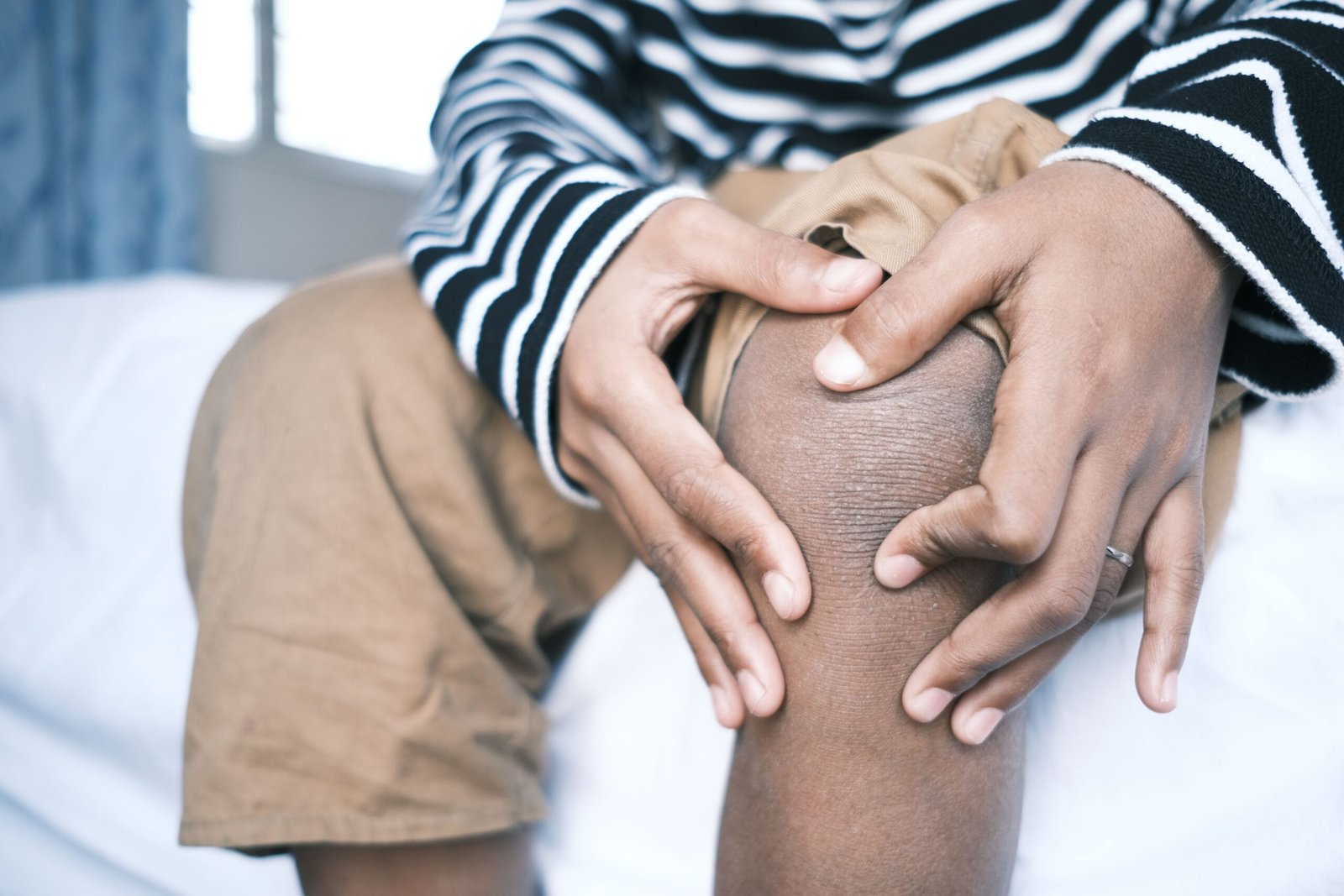
The moment your knee hurts can tell you as much as the spot where you feel it. An ache that starts halfway down a flight of stairs, a knee that swells after a twist, and a joint that’s stiff every morning can all send you searching for the same answer. But I wouldn’t put those three experiences in the same category. One may point toward irritation around the kneecap, another toward an injury inside the joint, and the third toward arthritis or another cause of stiffness. The first question I’d ask is less about rating the pain out of ten and more about what happened just before it started and what you can no longer do comfortably.
In this guide, I’ll walk through the patterns I find most useful, from pain going downstairs to swelling behind the knee. I’ll also explain when it’s reasonable to ease off an activity and see how the knee responds, when it’s worth booking an appointment, and when waiting isn’t a good idea. The goal isn’t to diagnose yourself by matching one symptom to one condition. It’s to describe what’s happening clearly enough to make a better next decision, whether that means changing tomorrow’s walk or getting the joint examined today.
First, I’d Check Whether the Knee Needs Urgent Attention
A knee that’s mildly sore after a longer-than-usual walk is different from a knee that suddenly won’t support you. Before sorting through the common causes, I’d check whether you can bear weight, whether the joint looks markedly swollen or out of shape, and whether it feels unusually hot. A serious injury or possible infection changes the next step, regardless of exactly where the pain sits. If any of the following fit, skip the product comparisons and home exercise experiments for now.
- Get urgent assessment after an injury if you can’t bear weight, the knee looks deformed, or it swells quickly and feels unstable. A hard fall, awkward landing, or forceful twist can injure bone, ligaments, or tendons. A knee that physically won’t straighten after an injury also needs prompt evaluation. Don’t force it straight or keep taking test steps to see whether it will hold.
- Seek urgent same-day care for a newly hot, swollen, very painful knee, particularly if you have a fever, chills, or feel unwell. An infection inside the joint can be serious, and a gout flare can look similar. Don’t wait for a fever to appear before asking for help if the joint is acutely hot and swollen, especially if you have an artificial knee, recently had a procedure, or have a weakened immune system.
- Get prompt medical help for unexplained swelling in one calf or leg, especially with warmth or tenderness. A blood clot can cause pain and swelling that you might initially write off as a knee or muscle problem. If you develop sudden shortness of breath, chest pain, coughing up blood, or fainting, call your local emergency number. Don’t wait to see whether the knee pain settles first.
If none of those applies, the most useful thing you can do next is put the pain in context. A mild ache that’s already improving after a clear change in activity leaves more room for observation. Pain that keeps increasing, makes you limp through ordinary errands, or comes with recurring swelling is worth getting checked sooner. I wouldn’t make that call based on how bravely you can get through a workday. What the knee is stopping you from doing is part of the story.
Where Does Your Knee Hurt? A Practical Comparison
I use location as a starting point, not as a diagnosis. Try describing the sore area with one finger. Is it right below the kneecap, along the crease where the thigh and shin meet, or deep behind the knee? If you need your whole hand to show where it hurts, that’s useful too. Pain spread around the kneecap tells a different story from a tender spot you can pinpoint. Then add the movement that brings it on. Location and movement are more informative together than either is on its own.
| Where you feel it | What tends to bring it on | Possible explanations | The detail I’d pay attention to |
|---|---|---|---|
| Around or behind the kneecap | Going downstairs, squatting, running, or getting up after sitting with the knee bent | Patellofemoral pain is a common possibility. Arthritis affecting the kneecap joint can produce a similar pattern. | A gradual ache across several bent-knee activities is different from sharp pain that began with a fall, came with rapid swelling, or makes the knee give way. |
| Just below the kneecap | Jumping, landing, or repeated forceful knee straightening | Irritation of the patellar tendon may cause pain in a small, local area. | A precise tender spot after repeated jumping is different from a sudden injury that leaves you unable to actively straighten the knee. The latter needs urgent assessment. |
| Along the inner joint line | Pivoting, deep bending, or ordinary walking if symptoms have developed gradually | A meniscus injury, irritation of the inner collateral ligament after trauma, or osteoarthritis can all be felt on the inner side. | Whether the pain followed a twist, a blow, or months of stiffness is more informative than the location alone. |
| Along the outside of the knee | Repetitive running or cycling, or a sideways force during an injury | Iliotibial band irritation may fit a repetitive pattern. An outer ligament or meniscus injury is also possible. | Pain that starts at a predictable point in a run differs from sudden pain with swelling or an unstable knee. |
| Behind the knee | Bending or straightening, prolonged standing, or activity that loads the surrounding muscles | A Baker’s cyst can cause fullness or tightness. Nearby muscles or tendons can also be the source. | New swelling, warmth, or tenderness in one calf or leg needs prompt assessment rather than an assumption that it’s a cyst. |
| Across the whole knee | Walking, getting up after rest, or sometimes just moving a visibly swollen joint | Osteoarthritis, inflammation, or fluid in the joint after an injury can be hard to localize. Infection and gout can also cause sudden, severe swelling. | A familiar ache with brief stiffness is different from a rapidly swollen, hot knee that’s hard to move. The second pattern needs urgent attention. |
What this table can’t capture is how much two similar complaints can differ in real life. Two people can report inside knee pain on stairs. If one twisted the knee yesterday and now can’t straighten it, while the other has had a gradual ache for six months, they don’t need the same next step. I’d use the table to find better words for what’s happening, not to pick a diagnosis and buy a brace for it.
Why Does My Knee Hurt When I Go Downstairs or Squat?
A broad ache around the kneecap
When someone describes a dull ache around or behind the kneecap that builds on stairs, during squats, or after sitting with the knee bent, patellofemoral pain is one of the possibilities I’d want them to know about. The term describes pain around the joint where the kneecap meets the thigh bone. Going downstairs requires the thigh muscles to control your descent while the knee bends under your weight. That helps explain why you might feel fine walking across a room but notice pain on every step down to the basement. Stairs are a clue to how the knee responds to load, not proof that cartilage is damaged.
I’d look back at the previous few weeks before blaming the stairs themselves. A new gym program, more downhill running, or a shift from a desk job to a role with constant stair trips can add up. A change doesn’t have to feel dramatic at the time. Finding one doesn’t rule out other causes, but it gives you a sensible place to start if the pain is mild and there are no warning signs. For diagnosed patellofemoral pain, a sports medicine best-practice guide puts education and knee-focused exercise, sometimes with hip-focused work, at the center of treatment. Taping or changes to running technique can be useful in selected cases, but they’re additions to a plan, not substitutes for one.
A small, tender spot below the kneecap
Pain you can point to just below the kneecap, especially after repeated jumps or landings, raises a different possibility. The patellar tendon connects the kneecap to the shin bone and helps transmit force when you straighten the leg. If the soreness is focused there and repeatedly appears during high-load movements, the tendon may be involved. That’s not the same pattern as a broad ache that appears after a long drive with the knee bent, even if both feel worse in the gym.
I’d pay particular attention to whether the pain came on gradually or all at once. A recurring sore spot after restarting a jumping sport is one thing. A sudden pop or sharp pain during a landing, followed by an inability to actively straighten the knee, is another and needs urgent evaluation. I wouldn’t use a patellar strap or a tighter sleeve to get through another practice when there’s a new loss of function. Whether you can still straighten the knee and control the leg matters far more than how much support the packaging promises.
Why Does My Knee Hurt After a Twist, Pop, or Awkward Landing?
The detail I’d write down first is what the foot was doing when the knee turned. A planted foot with the body rotating over it is worth mentioning, as is a direct blow or a landing that sent the knee sideways. After that, I’d note when swelling appeared. Swelling that develops quickly after an injury can raise concern for a significant injury inside the joint, while swelling noticed later still matters but doesn’t narrow the possibilities in the same way. A pop is worth reporting, but a pop by itself can’t tell you which structure was hurt.
A meniscus is a wedge of cartilage that helps distribute load between the thigh bone and shin bone. Pain along the joint line after a twist, with catching, swelling, or difficulty straightening, can suggest a meniscus injury. I’d distinguish a knee that hurts when you try to straighten it from one that seems physically blocked. Either is worth mentioning, but a true block after an injury merits prompt evaluation. I wouldn’t keep doing deep squats or twisting to reproduce a click. Those home experiments don’t give you the same information as an examination, and they can aggravate the knee.
A ligament injury enters the picture when the knee gives way after a pivot or landing, especially if the joint swells soon afterward. But “giving way” can mean different things. The knee may collapse briefly because a sharp pain makes you stop trusting it, or it may actually feel as if it shifts under you. I’d describe the real episode instead of trying to fit it to a label. Saying “I turned, felt a pop, and the knee swelled before dinner” gives a clinician more to work with than saying you think you tore something. Even being able to walk afterward doesn’t rule out every significant injury.
Why Does My Knee Hurt When I Wake Up or Stand After Sitting?
The first few steps are stiff, then the knee loosens
Knee osteoarthritis becomes a more plausible explanation when pain has developed gradually, is linked to activity, and comes with either no morning stiffness or stiffness that wears off fairly quickly. NICE uses a pattern of activity-related pain and morning stiffness lasting no more than 30 minutes as part of its clinical criteria for diagnosing osteoarthritis in adults aged 45 or older. That’s a useful distinction, but not a home stopwatch test. I’d pay more attention to whether the pattern is consistent and whether it gets in the way of everyday things like standing to cook or walking to the bus.
I’d also push back on the idea that an osteoarthritis diagnosis is a reason to stop using the knee. Exercise tailored to the person is a core part of care. It might involve strengthening the leg, walking at a manageable pace, or choosing another form of aerobic activity. Some discomfort can occur when starting, and a clinician or physical therapist can help adjust the plan if activity leaves you significantly worse. The useful goal isn’t to prove you can tolerate a long walk. It’s to find an amount of activity you can repeat and build on over time.
The stiffness lasts longer, or other joints are involved
A knee that stays stiff well into the morning, repeatedly swells without an obvious injury, or hurts alongside stiff or swollen hands, feet, or other joints tells a different story. Those details can raise the possibility of inflammatory arthritis or another condition that needs evaluation. I wouldn’t assume that age, exercise, or an old injury explains everything just because one of those factors is present. The timeline and symptoms elsewhere in the body can be more revealing than a single sore spot. If the knee becomes suddenly hot, swollen, and very painful, that’s a reason for urgent care rather than a routine appointment.
Why Does the Back of My Knee Hurt?
Pain at the back of the knee can feel like a tight band, a deep ache, or pressure that makes it uncomfortable to bend all the way. One possible explanation is a Baker’s cyst, a pocket of joint fluid that can collect behind the knee. Sometimes it develops alongside another issue inside the joint, such as arthritis. That’s why I wouldn’t focus only on making a lump go away without asking what else the knee has been doing. Tightness that follows a workout can also involve muscles or tendons, which is one reason the location isn’t enough to settle it.
The line I wouldn’t blur is the one between familiar tightness behind the knee and new swelling, tenderness, or warmth that extends into one calf or leg. A problem like a ruptured Baker’s cyst can resemble a blood clot, and appearance alone isn’t a reliable way to distinguish them. If the calf has suddenly swollen or seems noticeably different from the other side, get prompt medical help instead of massaging it or wrapping it tightly. If chest pain or shortness of breath occurs, treat it as an emergency.
What I’d Do at Home for Mild Knee Pain
Change the activity that’s aggravating it
If the knee is mildly sore, you can walk safely, and there’s no concerning injury or swelling, I’d change the activity that clearly provokes it before giving up movement altogether. If long downhill stretches started the problem, take a shorter, flatter route. If deep squats are the trigger, reduce the depth or weight, or temporarily switch to an activity you can do comfortably. I wouldn’t make five changes at once unless the pain requires it. When you change one variable, it’s easier to see whether the knee tolerates a lighter version of the same activity.
How the knee feels afterward is useful too. You might get through an entire walk comfortably only to find the stairs noticeably harder that evening or the knee more swollen the next morning. That doesn’t prove you’ve injured it again, but it suggests the previous level of activity wasn’t well tolerated. I’d keep the observations simple and practical. “Ten minutes on flat ground was fine, but twenty made me limp later” is enough information to adjust the next walk and useful detail if you end up seeing a clinician.
Use cold for short-term comfort if it helps
For mild soreness or swelling, an ice pack wrapped in a thin towel is a reasonable comfort measure. The NHS advises using it for up to 20 minutes at a time, with a barrier between the cold pack and your skin. A bag of frozen peas and a towel can do the job, so a dedicated wrap is optional. I’d set a timer instead of leaving it on while distracted. Avoid direct contact with bare skin, and ask a clinician before using cold on an area where you have poor circulation or reduced sensation.
The other point I’d keep in mind is that temporary relief isn’t a test result. If the knee stops aching while you sit with an ice pack but still buckles when you stand, it still needs attention. The same goes for pain relief from medication. If you’re considering a pain reliever, a pharmacist can help you check whether it’s appropriate with your other medicines and health conditions. NICE recommends a topical anti-inflammatory for many people with knee osteoarthritis when medication is needed, but that recommendation is for osteoarthritis, not every unexplained pain around the knee.
Three Amazon Products That Can Help With Knee Pain or Mobility
I’d shop for a specific problem rather than looking for the most supportive-looking product. If you want cold to stay in place while you sit, that’s a job for a wrap. If you want light support during errands, a sleeve may be enough. If walking feels difficult because weight-bearing is uncomfortable, a properly fitted walking aid does something entirely different. I selected the following options based on their design and intended use, not hands-on testing or evidence that one brand treats knee pain better than another. None is a substitute for assessment if the knee is newly unstable, locked, or severely swollen.
- Vive Knee Ice Pack Wrap — useful if a regular ice pack keeps sliding off. This reusable wrap has adjustable straps and removable gel packs. The advantage is convenience. You can hold the cold pack against a particular area while sitting, rather than having to balance a bag of ice on a bent knee. I’d consider it if you already know that cold helps after activity and you find an ordinary pack awkward. Check how the wrap fits with a cloth barrier, and keep the straps comfortably snug rather than cranking them tight to make the wrap stay put. If you can already position a regular ice pack comfortably, there’s no particular reason to buy a knee-shaped one. Its job is to make short sessions of cold easier, not to heal a tear or explain recurring swelling.
- Incrediwear Knee Sleeve — an option if you prefer a soft sleeve to a bulky brace. I’d consider this for someone who finds a close-fitting fabric sleeve comfortable on an ordinary walk or during errands. The practical test is whether you can move normally with it on, not how strongly it squeezes. Incrediwear specifies measuring the thigh about 4.5 inches above the top of the knee, so use its size chart rather than your usual clothing size. Remove the sleeve if it causes numbness, tingling, discoloration, or more pain. I would judge it on fit and comfort, not on claims about special fabric or faster recovery. A soft sleeve also won’t provide the same support as a clinician-selected brace, and knee osteoarthritis guidelines don’t recommend supports as a routine purchase for everyone.
- HurryCane Freedom Edition Folding Cane — worth considering when a clinician recommends a walking aid. A cane can reduce the load on a painful leg and help with steadiness when it’s fitted and used correctly. This model folds for storage, which is useful if you move between a car, public transit, and indoor spaces. I’d pay more attention to handle height and safe technique than to the folding feature. The handle should generally sit around wrist level when you’re standing upright, and for one affected leg the cane is usually held in the opposite hand. Get someone qualified to check the fit and show you how to use it, especially on steps or if you’ve had falls. If the knee gives way unpredictably, both legs are affected, or you can’t bear weight after an injury, a cane bought online may not be enough.
When I’d Book an Appointment and What I’d Bring
I’d book an assessment if the pain isn’t clearly improving within a few weeks, and sooner if it keeps returning, repeatedly swells, interrupts sleep, or limits normal walking. I wouldn’t wait for it to become severe if every attempt to resume a normal routine ends in the same flare. That’s useful information in itself. A primary care clinician can help sort through causes, and a physical therapist can assess movement and help build a plan when there’s no urgent medical concern. If the pain doesn’t behave like a straightforward activity-related problem, an exam is a better use of time than another round of online comparisons.
The most useful thing I’d bring is a short account of what changed. Note when the pain started, whether you fell or twisted the knee, how quickly it swelled, and which movement reliably brings it on. Explain what you mean by “unstable” or “locked” in plain words. It helps to give one concrete example of what you’ve stopped doing, such as walking the dog on the usual route or alternating feet on the stairs. If the swelling comes and goes, a photo from a day when it was noticeable can be helpful context. Tell the clinician about any previous knee injury, surgery, or injection as well.
Do you need an X-ray or an MRI?
Not every painful knee needs imaging straight away. After a fall or twist, a clinician may use the injury history and examination to decide whether an X-ray is needed to look for a fracture. An X-ray is often the first study when imaging is appropriate, but it doesn’t show the meniscus or ligaments in the way an MRI does. An MRI can be valuable when there’s a specific question about injury inside the joint and knowing the answer would change the plan. On the other hand, typical osteoarthritis can often be diagnosed clinically without routine imaging. The right test depends on what the clinician needs to find out.
If I were discussing imaging at an appointment, I’d want to know how the result would affect what happens next. Would it change whether the knee can take weight? Would it identify an injury that needs referral, or would the initial plan be the same either way? In a hot, swollen knee where infection or crystal arthritis is suspected, a clinician may need to sample joint fluid rather than start with an MRI. The point of getting assessed is to find the next useful step, not to collect the most detailed picture of the knee available.
My Takeaway
When I think through “Why does my knee hurt?”, I start with the onset, the swelling, and the movements that have become difficult. A familiar ache on stairs after a change in activity, stiffness that eases after getting moving, and a knee that suddenly won’t straighten after a twist aren’t different versions of the same complaint. The first may respond to changing the load. The second is worth discussing if it’s becoming a regular limitation. The third needs prompt assessment. What the knee can and can’t do helps determine how quickly to act.
If your knee is mildly sore and otherwise working normally, start with a manageable change and see whether you’re moving better over the next few days. If the pain keeps coming back, the swelling is increasing, or you’ve started reorganizing your day around the knee, book an assessment. And if you’re deciding whether to buy something, give the product a clear job. An ice wrap can make cooling easier. A sleeve can be comfortable. A well-fitted cane can help with walking. None can tell you what’s causing the pain, and finding that out is often the step that makes it easier to get back to what you want to do.
References
- Pendergraph B, Cheng J, and Garcia SD. Knee Pain in Adults and Adolescents: The Initial Evaluation. This 2026 clinical review in American Family Physician explains how clinicians use symptom history, physical examination, imaging, and joint fluid testing to evaluate knee pain.
https://www.aafp.org/afp/2026/0700/knee-pain-adults-adolescents - Neal BS, Lack SD, Bartholomew C, and Morrissey D. Best Practice Guide for Patellofemoral Pain Based on Synthesis of a Systematic Review, the Patient Voice and Expert Clinical Reasoning. Published in the British Journal of Sports Medicine, this guide synthesizes research and clinical perspectives on education, exercise, and additional interventions for kneecap-area pain.
https://doi.org/10.1136/bjsports-2024-108110 - National Institute for Health and Care Excellence. Osteoarthritis in Over 16s: Diagnosis and Management. This evidence-based guideline covers clinical diagnosis, therapeutic exercise, medication, walking aids, and when supports or imaging are appropriate.
https://www.nice.org.uk/guidance/ng226/chapter/Recommendations - National Health Service. Knee Pain. This clinical resource distinguishes symptoms that can often be managed initially at home from those that warrant urgent assessment and explains how to apply a cold pack safely.
https://www.nhs.uk/symptoms/knee-pain/ - Centers for Disease Control and Prevention. About Venous Thromboembolism (Blood Clots). This public health resource describes the warning signs of a deep vein thrombosis and pulmonary embolism, including when symptoms need immediate medical attention.
https://www.cdc.gov/blood-clots/about/
Disclaimer
This article is for general education and does not provide an individual diagnosis or replace medical care. Knee pain can have several causes that feel similar without an examination. If you have a severe injury, cannot bear weight, develop a hot and swollen joint, or notice symptoms of a possible blood clot, seek medical help promptly. The products mentioned are examples of comfort or mobility aids, not treatments for an undiagnosed condition. Follow advice from your healthcare professional, especially after an injury or surgery.