

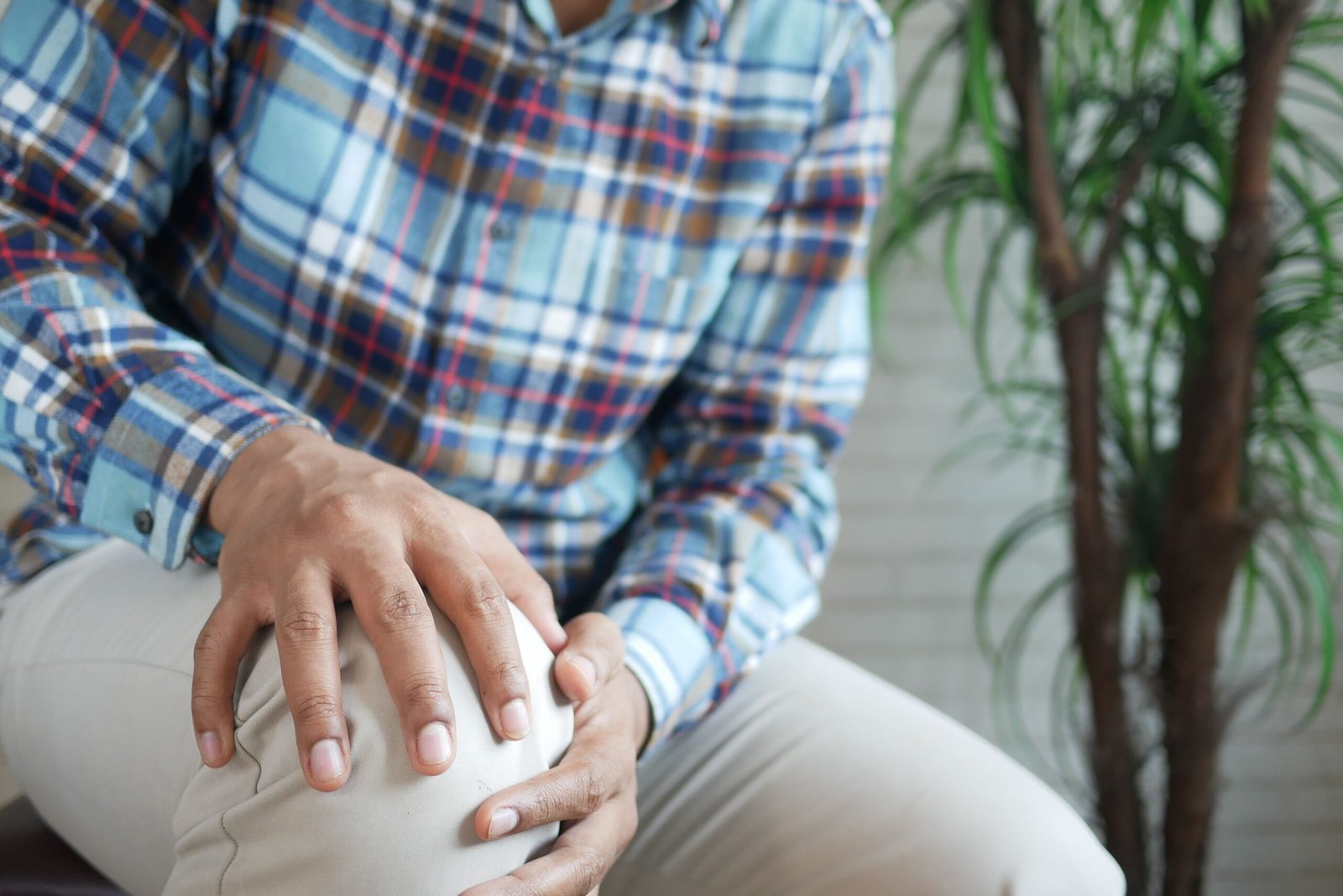
Joint pain can turn an ordinary habit into something you have to plan around. You grip a jar differently because the base of your thumb hurts. You pause at the bottom of the stairs to decide which leg goes first. Or you get up from the sofa and spend the first few steps waiting for your hip to loosen. When I look at joint pain relief, those everyday details tell me more than a promise on the front of a box. They show what the pain is getting in the way of and give you something concrete to measure as you try to feel better.
The most useful distinction I came across in the research is between relief that makes the next hour easier and treatment that can improve how you move over time. A warm pack might make stiff hands more comfortable before breakfast. A better jar opener can spare your thumb a painful twist every day. And for osteoarthritis, a well-chosen exercise program can improve pain and physical function, though the amount of improvement varies. Those options can work alongside each other because they solve different problems. But none of them is the first step for a joint that has suddenly become hot, swollen, and very painful.
I’ll explain how I’d choose among movement, heat and cold, medication, and practical aids. Most of the longer-term advice here focuses on osteoarthritis, where there’s good research to draw on. I’ll also cover the patterns that make me think a joint needs an assessment before you try to manage it yourself. A sore hip after a long walk and several swollen finger joints that stay stiff all morning shouldn’t get the same advice just because both hurt.
Before Looking for Relief, I’d Pay Attention to the Pattern
I’d start by looking back at when the pain appeared and what was happening around that time. An ache that has slowly become more noticeable during walks, on stairs, or when opening things can fit the pattern of osteoarthritis. So can brief stiffness after getting out of bed or standing up after sitting. NICE describes a typical pattern in adults aged 45 or older as activity-related joint pain with either no morning stiffness or stiffness lasting no more than 30 minutes. That’s a clue a clinician can use, not a rule for diagnosing yourself at home. The same joint can hurt for several reasons, and pain felt near a joint can also come from a nearby tendon or other tissue.
What makes me put less weight on the osteoarthritis explanation is persistent visible swelling, especially when several joints are involved or the small joints of the hands or feet are affected. If you’re spending a long stretch of the morning waiting for your hands to work normally and the knuckles look puffy, I’d book an appointment instead of changing creams again. Inflammatory arthritis is one possibility. NICE recommends prompt specialist referral when a clinician suspects persistent joint inflammation, particularly in those patterns, even if initial blood tests are normal. Feeling a little better after a warm shower doesn’t tell you what caused the swelling.
Then there’s pain that changes rapidly. A joint that was fine yesterday and is now hot, swollen, and hard to move deserves a different response from a familiar ache that settles when you get off your feet. Gout can cause sudden, severe pain, but infection can look similar and needs urgent treatment. I wouldn’t assume it’s a flare of something familiar without getting advice, especially if this episode feels different from what you’ve had before.
- Seek urgent same-day medical care for a newly hot, swollen, painful joint. This is especially important if you feel feverish, shivery, or generally unwell, or if you have an artificial joint or recently had a joint procedure. A fever doesn’t always occur with a joint infection, so I wouldn’t wait for your temperature to rise before getting help.
- Get emergency assessment after an injury if the joint looks out of place, you can’t bear weight, or you’ve lost feeling around it. Severe pain after a fall also warrants emergency care. A brace, a cold pack, or a few steps to “see how it goes” can’t tell you whether there’s a fracture or another serious injury.
- Book a medical appointment if symptoms keep coming back, disrupt sleep or normal activities, or aren’t improving after about two weeks of home care. I’d also get persistent swelling or prolonged morning stiffness checked rather than waiting for the pain to get severe. A manageable pain score doesn’t make an ongoing loss of movement or function unimportant.
Joint Pain Relief Options Compared
The first thing I’d decide is what I need to be easier. Getting dressed with stiff fingers calls for a different solution from walking farther without having to stop. And when the real issue is recurrent swelling, the next step may be an examination rather than a purchase. I’ve put the options side by side because it’s easier to choose when you know what each one can realistically do.
| Relief option | When I’d consider it | What it can realistically do | What I wouldn’t expect it to do |
|---|---|---|---|
| Tailored exercise | Ongoing osteoarthritis pain or difficulty with activities such as walking, stairs, or getting out of a chair | Build strength and make daily movement easier over time. The starting point can be adjusted to your ability and symptoms. | Give immediate relief or be appropriate before assessment of an acutely hot joint or serious injury. |
| Gentle heat | Familiar stiffness before activity, particularly when the joint isn’t newly hot or swollen | Make movement feel more comfortable for a while. A warm shower or warm pack can be enough. | Treat the cause of a newly inflamed or swollen joint. |
| A wrapped cold pack | Short-term comfort for a familiar sore or mildly swollen area after activity | Temporarily ease pain. It’s inexpensive to try without buying a specialized wrap. | Explain unexplained swelling, heal a structural injury, or replace medical care when there are warning signs. |
| A topical anti-inflammatory | Diagnosed knee osteoarthritis, or some cases of hand osteoarthritis, when a pharmacist or clinician confirms it’s appropriate | Deliver medication to the area with generally less whole-body exposure than an oral anti-inflammatory. | Be risk-free or work as well for a deep joint such as the hip. |
| An assistive tool | A specific task repeatedly hurts, such as twisting a lid or putting weight on a painful leg | A jar opener can reduce the grip needed for a task. A properly fitted cane can help with walking when it’s an appropriate aid. | Treat arthritis itself. A walking aid also needs to match your balance and support needs. |
| A clinical assessment | Persistent swelling, unexplained pain, activity limitations, or symptoms that don’t fit a familiar pattern | Help identify the cause and whether you need rehabilitation, medication, specialist care, or another approach. | Automatically require a scan. Typical osteoarthritis can often be diagnosed without routine imaging. |
I wouldn’t try everything in the table at once. If the pain is familiar and there are no warning signs, pick one daily activity you want to make easier. A useful goal might be getting up from a dining chair with less effort or walking to the corner shop without having to stop. Keep a simple note of how that task feels. That tells you more than asking whether the joint felt better for twenty minutes after using a warm pack. Both kinds of relief are worthwhile, but they’re not the same outcome.
The Part I’d Build Around for Osteoarthritis: Movement You Can Repeat
Exercise advice can sound detached from reality when it already hurts to stand up. What I find helpful in the evidence is that therapeutic exercise doesn’t have to start at the level you wish you could manage. A 2024 Cochrane review included 139 trials of land-based exercise for knee osteoarthritis. Overall, exercise improved pain and function in the short term compared with usual care, no intervention, or limited education. The size of the benefit depended in part on what exercise was compared with, and average gains weren’t always large enough to be clearly meaningful to everyone. I take that as a reason to try a workable plan and see what it does for your daily life, not as a guarantee that a particular routine will work.
Start with the activity you want back
If stairs are the problem, I’d be interested in the leg strength and control needed for stepping, not just in how far you can walk on flat ground. If it’s hard to rise from low seats, practicing from a higher chair may be a more sensible starting point than repeatedly trying the lowest one in the house. If walking is uncomfortable but a stationary bike or a pool is available and feels more manageable, either may offer a way to stay active. For hands, the approach looks different again. Making daily tasks less demanding can sit alongside exercises tailored to hand strength and movement. A physical or occupational therapist can help you choose a starting point that matches the joint and the task.
I’d keep the first adjustment small enough to see what it changes. Doing a longer walk, adding a new exercise, and tackling all the garden work on the same day makes it hard to work out what helped or aggravated symptoms. A shorter route or an easier version of the movement is more informative. I’d also notice what happens later that day and the next morning. A little discomfort at the start of a new program can occur, but repeated increases in swelling, limping, or loss of function are good reasons to reassess what you’re doing rather than pushing through.
Judge progress by what you can do, not just how the joint feels today
On a bad day, it’s easy to feel as if nothing has helped. That’s why I prefer a concrete measure over an end-of-day pain score alone. Maybe the joint still aches, but you can get through grocery shopping without leaning on the cart the entire time. Maybe the first few steps after sitting are still stiff, but you don’t have to avoid the upstairs bathroom. Those are meaningful gains even if you haven’t reached a pain-free day. In the same way, if a remedy dulls the ache but you’re walking less every week, I’d count that as a reason to review the plan. Research on osteoarthritis measures both pain and physical function because they aren’t interchangeable.
Treat weight management as one option, not a prerequisite for care
For people with osteoarthritis who are living with overweight or obesity, NICE recommends discussing weight management because weight loss can improve pain and function. I’d keep that conversation practical and in proportion. It’s not relevant to every reader, it isn’t the explanation for every painful joint, and you don’t have to reach a weight target before getting help with movement or pain. When walking already hurts, a plan that only tells you to walk more is missing the immediate problem. It makes more sense to discuss a manageable way to be active now and any longer-term changes that fit your circumstances.
Heat or Cold? I’d Choose Based on What the Joint Is Doing
For familiar stiffness, I’d try gentle warmth before the activity I want to do. Warm water can make it more comfortable to move stiff fingers before getting dressed or making breakfast. A warm pack might feel better around a stiff knee before a short walk. The useful part is that the effect can make the next task easier. I wouldn’t read too much into it if the ache returns later, and I wouldn’t assume a hotter pack will provide more relief. Joint guidelines treat heat and cold as optional measures for symptom relief, not as the main treatment for osteoarthritis.
Cold is the option I’d try for short-term comfort when a familiar joint feels sore or a little puffy after activity. The NHS suggests using a cold pack or a bag of frozen peas wrapped in a towel for up to 20 minutes at a time. The towel matters because direct contact can injure the skin. With either heat or cold, I’d check the skin, follow the product instructions, and avoid falling asleep with the pack in place. If you have reduced sensation or circulation problems in the area, ask a healthcare professional before using temperature therapy, since you may not notice when it’s too hot or too cold.
A useful distinction is whether you’re treating a sensation you recognize or a change you can’t explain. It’s one thing to cool a knee that’s mildly sore after a longer shopping trip and behaves the way it usually does. It’s another to keep applying cold to a rapidly swollen joint that’s hot to the touch, hoping it will look better by morning. The first can be reasonable self-care. The second needs prompt assessment. Even when a pack takes the edge off, that doesn’t tell you what caused the pain.
What I’d Know Before Using a Gel, Pill, or Supplement
Topical anti-inflammatories can be useful, but the joint matters
For knee osteoarthritis, a topical nonsteroidal anti-inflammatory drug, or NSAID, is a well-supported option when medication is needed. Diclofenac is one example. Guidelines also consider topical NSAIDs for some people with hand osteoarthritis. A gel is applied to the painful area, with generally less medicine reaching the bloodstream than with an oral NSAID. That can be an advantage, but less exposure doesn’t mean no risk. Check with a pharmacist or clinician if you take other medicines, have reacted to an NSAID before, are pregnant, or aren’t sure whether the product is safe for you. And don’t assume it’s fine to add a gel on top of an oral NSAID without checking.
I wouldn’t carry the evidence for knee gel straight over to hip pain. The hip joint sits much deeper, and the American College of Rheumatology guideline notes that topical NSAIDs are unlikely to benefit the hip joint itself. The painful spot you can reach with your hand isn’t always where the problem starts. If an ache in the groin or around the hip is changing how you walk, getting it assessed is more useful than comparing the cooling sensation or strength of different products.
Oral pain relief deserves a medication check
Oral NSAIDs can help some people with osteoarthritis, but the risks matter if you’re finding reasons to use them regularly. NICE advises weighing gastrointestinal, kidney, liver, and cardiovascular risks, as well as other medicines and individual health factors. A history of ulcers, kidney disease, heart problems, or use of blood thinners are all good reasons to talk through the options first. When NSAIDs are appropriate, the guideline advises using the lowest effective dose for the shortest possible time. I wouldn’t use a painkiller to keep repeating an activity that’s clearly leaving the joint worse.
Paracetamol, also called acetaminophen, is familiar enough that it can feel like the obvious fallback. But familiarity and effectiveness are different things. NICE doesn’t recommend it routinely for osteoarthritis because there isn’t strong evidence of benefit. It may still be considered for infrequent, short-term use when other options are unsuitable. If you take multiple over-the-counter products, ask a pharmacist to check for overlapping ingredients. I’d pay particular attention if the pattern has changed from occasional use to needing something most days just to get through ordinary tasks.
I wouldn’t make a joint supplement my first purchase
Joint supplements often promise several things at once, from less stiffness to better cartilage. I’d want to know whether a specific ingredient reliably improves a task that matters, such as walking, gripping, or sleeping, before committing to another recurring purchase. Glucosamine is a good example of the gap between marketing and recommendations. NICE advises against offering it for osteoarthritis, and the American College of Rheumatology recommends against using it for hand, hip, or knee osteoarthritis. That doesn’t mean nobody ever reports feeling better. It means the evidence doesn’t make it a reliable first choice. I’d put the time and money into an assessment, a workable exercise plan, or a tool that directly reduces strain on a task I do every day.
Three Amazon Products I’d Consider for Practical Joint Pain Relief
I looked for three products that solve recognizably different problems. One lets you try heat or cold with the same pack. One gives sore hands an advantage over a stubborn jar lid. The third is a portable walking aid for someone who’s been advised to use one. I compared their features and intended uses rather than treating them as clinically tested winners. The best purchase is the one that makes a specific task easier, and sometimes something you already own will do the job.
- TheraPearl Reusable Hot and Cold Sports Pack — my pick for trying both temperatures with one pack. The gel-bead design is flexible, so it can sit over a wrist or across part of a knee while you’re seated. I’d choose this if I wanted a convenient way to use warmth before an activity and cold after an activity, depending on what the joint is doing that day. The sports-size pack targets a smaller area, which makes it practical for spot use but less useful if you want broad coverage. Follow the heating or cooling directions for the exact pack you buy, test its temperature before use, and place a cloth between the pack and your skin. If you only ever use cold and have a bag of frozen peas that sits comfortably in place, the extra reason to buy this is convenience, not stronger treatment.
- OXO Good Grips Jar Opener with Base Pad — my pick for sore hands that struggle with twisting. This manual opener is useful because it addresses both parts of opening a stubborn jar. The nonslip pad helps stop the jar rotating underneath, while the handle gives you leverage on the lid. I’d consider it if I regularly have to squeeze hard with one hand to stabilize the jar and twist with the other, especially if that movement hurts at the base of the thumb. It won’t remove the need for grip altogether, but it can make the task less demanding. If both hands are painful or you can’t safely steady a glass jar, a manual model may still be the wrong fit. What I like about this category is that the outcome is easy to judge. Either it lets you open jars more comfortably and with more control, or it doesn’t.
- Vive Folding Walking Cane — my pick for portability when a cane is the right aid. The shaft is height-adjustable and folds for storage. That’s handy if you need a cane for longer outings but don’t want a full-length stick taking up space in a car or bag. For someone with lower-limb osteoarthritis who can safely use one, a cane can help reduce the load on a painful leg and provide a point of support. I’d prioritize fit and instruction over the folding feature. Have a physical therapist or another trained professional check the height and show you how to use it on turns, curbs, and stairs if needed. If both legs feel unreliable, the joint gives way unexpectedly, or you’ve had recent falls, ask whether a different walking aid would be safer. Portability matters only after the aid meets your support needs.
When Home Care Has Taken You as Far as It Can
I’d reconsider a home plan when I’m doing more to manage the joint but getting less of my day back. Maybe your usual walking route is now half as long. You’ve started avoiding pans you used to lift easily. Or the hip still wakes you at night even though you’ve cut back on the activities that seemed to trigger it. Those are useful signals to bring to an appointment. You don’t need to know whether the problem is arthritis or something else before you ask for help. You only need to be able to describe what has changed.
The notes I’d bring are simple. Write down which joints hurt, when the problem started, how long morning stiffness lasts, and whether there’s any swelling. Add a real example of a task that’s become harder, along with what you’ve tried and how long the benefit lasted. It also helps to have a list of medicines, gels, and supplements you use. If your hands are swollen first thing but look normal by the afternoon, a photo from the morning can help show what you mean. That gives the clinician more than a single pain score to work with.
The assessment doesn’t always lead straight to an X-ray. NICE advises against routine imaging when the symptoms and examination fit typical osteoarthritis, unless there are unusual features or another diagnosis is suspected. If persistent joint inflammation is suspected instead, the priority may be specialist assessment, even before all the blood test results are back. That difference is worth knowing because it stops the appointment becoming all about getting one particular test. I’d rather leave knowing what the clinician thinks is happening, what I can safely do next, and when we’ll revisit the plan if it isn’t helping.
My Take on Getting Joint Pain Relief That Lasts
For familiar osteoarthritis pain, I’d build around movement I can keep doing and practical changes that make daily tasks easier. I’d use warmth or cold if it helps, and ask about medication if pain is making it difficult to stay active. I wouldn’t judge the plan by whether a gel feels cooling or by whether a pack makes the joint feel good until I stand up again. I’d judge it by whether I can do more of something that matters, like getting a meal on the table, walking with a friend, or going up the stairs without having to think about every step.
If the pain is new, progressing, or changing how you live, the most useful next step may be finding out what’s behind it. Persistent swelling and prolonged stiffness deserve an assessment. A suddenly hot, swollen joint or a serious injury needs urgent help. And if the problem is smaller and more specific, the best solution can be equally specific. There’s no need to buy an entire set of joint products when what you really want is to open a jar without hurting your thumb.
References
- National Institute for Health and Care Excellence. Osteoarthritis in Over 16s: Diagnosis and Management (NG226). This evidence-based clinical guideline covers diagnosis, therapeutic exercise, weight management, walking aids, imaging, and medication choices for osteoarthritis.
https://www.nice.org.uk/guidance/ng226/chapter/Recommendations - Kolasinski SL and colleagues. 2019 American College of Rheumatology/Arthritis Foundation Guideline for the Management of Osteoarthritis of the Hand, Hip, and Knee. Published in 2020, this guideline distinguishes recommendations by joint and explains the evidence behind topical medication, temperature therapy, assistive devices, and supplements.
https://pmc.ncbi.nlm.nih.gov/articles/PMC11488261/ - Lawford BJ and colleagues. Exercise for Osteoarthritis of the Knee. This 2024 Cochrane systematic review compares land-based exercise with several control approaches and examines its effects on pain and physical function.
https://pubmed.ncbi.nlm.nih.gov/39625083/ - National Institute for Health and Care Excellence. Rheumatoid Arthritis in Adults: Management (NG100). This guideline explains when persistent joint inflammation warrants specialist referral and why normal initial test results shouldn’t delay referral when clinical concern remains.
https://www.nice.org.uk/guidance/ng100/chapter/recommendations - National Health Service. Joint Pain. This clinical resource provides practical advice on managing mild symptoms and distinguishes routine, urgent, and emergency reasons to seek care.
https://www.nhs.uk/symptoms/joint-pain/
Disclaimer
This article is for general education and is not a diagnosis or a personalized treatment plan. Joint pain can come from several different conditions, and advice for osteoarthritis doesn’t necessarily apply to an injury, infection, or inflammatory arthritis. Ask a qualified healthcare professional before changing medication or using a new treatment if you have a medical condition or take other medicines. The products are examples of comfort and accessibility aids, not substitutes for medical assessment or care.