

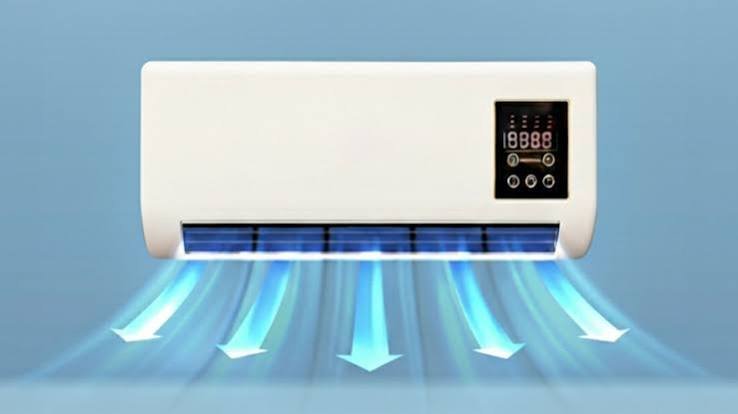
The first thing I look for in an air conditioner ad isn’t the price, the star rating, or the person in the video pulling on a sweater. I look for where the heat goes. If a little box claims it can cool a closed bedroom but the pictures show only a USB cable and a water tank, I’m probably looking at a personal evaporative cooler, not a portable air conditioner. That doesn’t make the device useless. It does mean I wouldn’t buy it to do the job of a window unit. The difference is easy to miss when every product in the search results calls itself some version of “mini AC.”
There are really two purchases to think about when you’re trying not to fall for a fake air conditioning product scam. One is the product itself. Does it cool the room, offer a breeze, or do something in between under the right conditions? The other is the transaction. Is the seller who they say they are, will they ship the model pictured, and what happens if it never shows up? You can find a real air conditioner on a fake storefront. You can also buy a real, working fan from a seller whose ad made it sound like something much more capable. I’d check both before paying.
I wrote this guide for the moment when the house is hot and the ad has started to sound reasonable. I’ll show you which specifications I look for, how I read reviews without getting distracted by the average rating, and what I’d save in case the purchase goes wrong. I’ll also compare three Amazon fans for people who only need supplemental airflow. There’s no shame in buying a fan. The mistake is paying for an air conditioner and discovering that a fan is what you bought.
Follow the Heat Before You Follow the Discount
A conventional air conditioner uses refrigeration to take heat from inside and release it somewhere else. On a window unit, the back of the machine faces outdoors. A floor-standing portable AC typically uses one or more ducts connected to a window kit or another manufacturer-approved outlet to send heat outside. With a mini-split, the indoor unit is connected to outdoor equipment. This is why “no window needed” isn’t the same as “no way for heat to leave.” Some designs don’t need a traditional window opening. What they still need is a way to reject heat outside the space they’re cooling.
An evaporative cooler works differently. It moves air across water or through a wet pad, and evaporation can lower the temperature of the air coming out while adding moisture. That can be useful in dry conditions, especially with appropriate ventilation. The effect is more limited when the air is already humid, and small portable models generally offer only modest cooling. A cool stream of air right at the outlet isn’t evidence that the entire room will cool by the same amount. In a warm, humid room, I’d be particularly skeptical of a little reservoir-powered device advertised as a substitute for refrigerated AC.
I don’t reject an appliance just because it’s small or uses water. Some real portable ACs collect condensed water or have instructions for draining it. That’s different from adding water to a tank so the appliance can blow air across a wet filter. The quickest way I’ve found to separate the two on paper is to open the manual and look at the setup page. Does it tell me to connect an exhaust hose and fit a window panel, or does it tell me to soak a cartridge and refill a tank? That page usually tells me more than the front of the box.
What You’re Actually Buying When the Listing Says “Cooler”
Words like portable, personal, and whole room can be accurate and still leave room for a misunderstanding. A fan advertised as a whole-room circulator is meant to move air around the room. It isn’t claiming the ability to hold that room at a thermostat setting unless the seller goes a step further. In the other direction, a genuine portable air conditioner can be portable in the sense that it rolls between rooms, but it still has to be set up to vent wherever you use it. I’d compare the type of device before comparing its advertised reach, noise, or power consumption.
Here’s the comparison I’d want in front of me before opening a dozen shopping tabs. The most useful column isn’t necessarily the one that describes how each category cools. It’s the one that tells me what I can verify before I buy. If a listing doesn’t give me enough information to place the device in the right row, I’d look up its exact model independently or move on to another listing.
| Product type | What it does | What I’d verify before paying |
|---|---|---|
| Window air conditioner | Uses refrigeration to cool the room and releases heat through the side that faces outdoors. | The exact model, rated cooling capacity, window measurements, building restrictions, electrical requirements, and installation hardware. |
| Floor-standing portable air conditioner | Uses refrigeration and sends heat outside through an exhaust duct or a manufacturer-approved equivalent setup. | The tested cooling capacity, available hose and window kit, window compatibility, and drainage instructions. |
| Portable evaporative cooler | Uses water evaporation for cooling. It adds moisture and is better suited to dry air than to a humid, closed room. | The manufacturer’s description of the cooling method, recommended conditions, ventilation instructions, and reservoir maintenance. |
| Desk, floor, or air circulator fan | Moves existing air. The breeze can make a person feel more comfortable, but the fan alone doesn’t refrigerate the room. | Dimensions, tilt or speed controls, outlet compatibility, and where the fan can sit without getting in the way. |
| USB “mini AC” with a wet pad or mist feature | Usually delivers a small stream of air or mist near the user. If there’s no refrigeration or other documented heat-rejection system, I wouldn’t count on it for room cooling. | The manual, input power, the purpose of the water tank, and whether the seller backs up any room-cooling claim with credible test data. |
I’d use the table to reject bad comparisons as much as bad products. For example, a tiny personal cooler may draw far less power than a window AC. That’s a perfectly believable difference in power consumption. It isn’t proof that the smaller device can do the same cooling job for less money. If I need a breeze at my desk, I’d compare fans. If I need to bring a bedroom down to a comfortable temperature and keep it there, I’d compare air conditioners that can actually be installed in that bedroom.
Read the Model Number and Cooling Rating Together
My first stop after seeing a promising ad is the manufacturer’s page for the exact model number. I don’t mean the name the seller put in large letters across the picture. I mean the string of letters and numbers that should match the specifications, manual, and rating plate. Look-alike units can have different capacities or installation requirements. Even one product page may bundle multiple versions in the same listing. Before putting one in my cart, I’d make sure the model I researched is the one I’ve actually selected.
On a real air conditioner, I’d look for cooling capacity given in BTU per hour. On U.S. portable models, I’d look for SACC, short for seasonally adjusted cooling capacity. The U.S. Department of Energy’s portable AC test procedure accounts for effects such as heat from the duct and heat associated with air infiltration. If an ad shows two different capacity figures, I wouldn’t simply circle the bigger one. I’d find out which figure is based on which test and compare one model’s SACC with another model’s SACC. An airflow figure, a fan wattage, or a big number with no test method isn’t an equivalent measure of how much heat the appliance can remove.
Then I’d put the numbers back into the context of the room. I’d measure the floor area and think about how much direct sun the room gets, whether it opens to another room, and where the unit will go. A shaded bedroom and a sunny room with a large window can have different cooling needs even if their floor areas match. I’d use a sizing guide appropriate to the equipment, then check the manual for physical fit. The right size isn’t always the biggest one I can afford. And no capacity rating compensates for a window kit that won’t fit or a building rule that won’t allow the installation.
Don’t Let an Outlet Temperature Pass for a Room Test
Imagine an ad showing a thermometer dropping rapidly while someone holds it right in front of a vent. I’d want to know where the thermometer started, where it ended up, and how long the test ran. I’d also want to know whether the device was just filled with ice water. A temperature measured near the outlet in those conditions can tell you something about the air right there at that moment. It doesn’t tell you what will happen across a furnished room with sunlight on the windows and warm air coming in from elsewhere.
The same goes for a claim like “cools up to 350 square feet.” On its own, that line leaves nearly everything I’d want to know unanswered. I’d look for a capacity rating and documentation for the model. If I were reading an independent test, I’d look for room size, starting conditions, where the temperature was measured, and whether the device kept the room cooler over time. For an evaporative device, I’d also check the humidity during the test. A short demonstration can show that a fan blows, a tank mists, or a vent feels cold. It’s a big leap from any of those observations to dependable cooling on a hot night.
I’d also read the quiet part of the page, usually near the bottom. Sometimes the headline promises a drop in room temperature, while the manual describes a personal air cooler intended to sit close to the user. That inconsistency is more valuable to me than a promise that the device is “engineered” to cool a certain area. When the ad and the manual tell different stories, I trust the documented setup and specifications over the headline. If it takes guesswork to establish which document belongs to the model in the ad, I’m not ready to pay.
Check Who Gets Your Money and Who Handles the Return
I separate the shipping service from the actual seller. On a marketplace, the name I see at the top may be the platform or the brand, not the merchant taking the order. On a standalone shop, I’d search for the business independently instead of relying on the contact information in a social media ad. I’d compare the web address with the brand’s known site, look for usable support information, and search for the seller’s name alongside terms such as “refund” or “complaint.” A secure connection is useful, but a padlock only tells me the connection is encrypted. It doesn’t tell me the store is legitimate.
My next stop is the return policy, before I enter a card number. I want to know when the return window starts, whether an opened appliance can be returned, who pays for shipping, and whether a restocking fee applies. On an international purchase, I’d also find out whether the return goes to a local address or overseas. A return promise that looks generous in a banner can be inconvenient in practice if I have to ship a heavy appliance across a border at my own expense. I’d look separately at the warranty, too. The person who takes the return in the first few weeks may not be the one who handles a problem several months later.
Finally, I’d use a payment method with a dispute process where available and keep the conversation and payment on the marketplace when buying through one. A seller who asks me to switch to a bank transfer, gift card, cryptocurrency, or an off-platform payment so I can keep a special discount has given me a good reason to leave. I’d also skip a seller who won’t confirm what model will ship or who makes the accurate return policy hard to find. A heat wave makes a deadline feel convincing. It doesn’t make a bad seller easier to reach next week.
Read Reviews for Details a Sales Page Would Leave Out
The first reviews I read are the ones that explain what arrived and how it was installed. A vague five-star comment doesn’t give me much, but a review that names the variant and describes the hose connection or window panel can help me spot a practical issue. I read recent critical reviews the same way. I’d take a pattern of buyers receiving a water-tank device when the listing promised refrigerated cooling more seriously than one complaint about a remote control. The useful question is whether the reviews describe the same model, the same seller when that’s clear, and the same kind of use I have in mind.
I don’t treat a polished influencer clip, an affiliate review, or a verified-purchase badge as proof of what an air conditioner can do. I’d look for something I can check against the manual. Does the reviewer show the rating plate? Do they show the whole installation, including what goes out the window? Does the video cover an ordinary afternoon or just a few seconds after switching the device on? Photos can help reveal a mismatch, too. If the advertisement shows a floor-standing unit next to a sofa and buyers’ photos show something the size of a mug, I’d check whether the page has mixed different variants or the listing is misrepresenting what ships.
There are three clues I’d give particular weight, even if the overall rating looks excellent. None proves fraud on its own. Taken together, they can make it clear that the listing isn’t worth more of my time.
- The technical details change from one part of the listing to another. If the title says “portable AC” and the manual describes a misting fan, I’d assume the narrower description applies unless the manufacturer can document otherwise. I wouldn’t rely on the larger promise just because it appears first.
- The room-cooling claim has no testable basis. A temperature shot at the vent or a bare square-footage figure doesn’t replace a capacity rating and instructions for installing the exact model. I’d give more weight to verified specifications than to the number of times a claim has been repeated.
- The seller makes it hard to verify the purchase or recover your money. A model number they won’t provide, a vague return address, and pressure to pay away from the marketplace are enough for me to walk away. I don’t need to prove someone is running a scam before I decide not to buy from them.
Where Supplemental Cooling Helps, Plus Three Amazon Options
For this topic, I’m using supplements to mean products that supplement your cooling setup, not anything you take. A fan can be a sensible purchase if the room is already reasonably comfortable but feels stuffy where you sit, or if you want to move air from an air-conditioned part of the room toward a spot that feels warmer. It’s also a useful comparison if you were about to buy a “personal AC” and all you really wanted was a breeze while you work. In those cases, I’d rather know I’m buying airflow than pay extra for a cooling claim I can’t verify.
I checked three popular Amazon listings with distinct uses. I haven’t tested these models side by side, so I’m comparing their form and listed features, not ranking their noise or cooling performance. None of these fans refrigerates a room. I’d choose based on where the fan needs to sit, how I’d aim it, and how much space I’m willing to give it. If buying from another country’s marketplace, I’d check the plug, voltage, and warranty for the exact listing before assuming it matches the version sold locally.
- Honeywell TurboForce HT-900. This is the one I’d look at for a desk or a small table. It has three speeds and a pivoting head, which is useful when the fan has to sit to one side of a monitor or face upward from a lower surface. I’d buy it for an adjustable breeze close to where I sit, not because I expect the temperature on the other side of the room to change.
- Vornado 630 Medium Air Circulator. I’d compare this one when the job is circulating air beyond a single chair. It has three speeds and an adjustable tilt, which gives me options if I want to direct airflow across a room instead of straight at my face. “Whole room” here describes the intended air circulation. It doesn’t mean the fan creates colder air.
- Lasko Wind Machine 3300. This 20-inch floor fan has three speeds and a pivoting head. I’d consider it for an open area with space for a larger fan, particularly if I want to direct air from floor level. I’d check the footprint first. A model that fits a workshop or a spacious living area can be awkward next to a narrow bed or in a busy walkway.
There’s an important limit here. I wouldn’t make a fan my only plan for a dangerously hot home. Moving hot air around isn’t the same as lowering the indoor temperature, and public health guidance warns against relying on fans in very hot indoor conditions. If the home is becoming unsafe, the priority is getting to an air-conditioned place or following local heat guidance, not waiting for a parcel advertised as emergency cooling. That distinction alone is a good reason to be skeptical of any tiny device marketed as a heat-wave solution.
If You’ve Already Ordered, Save the Ad Before It Changes
I’d start by saving the evidence that shows what I thought I was buying. That includes the original listing and its room-cooling claim, the exact option selected, the seller name, the stated delivery and return terms, and the order confirmation. If the product arrives, I’d photograph the box, model label, accessories, and the manual. A simple comparison like “the advertisement describes a refrigerant-based room air conditioner, but the manual identifies this as a water-tank cooler” gives the seller or marketplace something specific to investigate. I’d keep the original packaging until I know whether it’s needed for a return.
I’d contact the seller or marketplace using its official channels and choose the explanation that actually fits. An order that never arrived, an item materially different from the listing, and a transaction you didn’t authorize are different problems. If something arrived but it doesn’t match what was advertised, I’d say that directly and attach the evidence. If I didn’t authorize a charge or suspect my payment details were compromised, I’d contact the issuer immediately rather than wait to see what the seller says. In either case, I wouldn’t send extra money to release a refund or share one-time security codes with someone who contacts me about the order.
If the seller doesn’t resolve the problem, I’d ask the marketplace and card issuer or payment provider about their dispute processes promptly. I wouldn’t assume the return window, platform deadline, and payment dispute deadline are the same. I’d keep any written response and case number, and report suspected fraud to the appropriate consumer protection agency. In the United States, that includes the Federal Trade Commission. Elsewhere, I’d follow local reporting and payment-dispute procedures. A refund isn’t guaranteed, but good records give me a much better account of what happened than a saved order number on its own.
My Bottom Line Before I Click Buy
When I need to lower a room’s temperature, I look for a model I can verify independently, a documented way to reject heat outside the room, and a cooling rating that makes sense for the space. Then I check whether I can actually install it. A real AC can still be the wrong purchase if its window panel won’t fit, the electrical requirements don’t match, or the building doesn’t allow the installation. Finding that out before checkout is easier than trying to return a heavy box.
If all I want is a breeze, I buy a fan on its own merits. I’d consider an evaporative cooler only when the climate and ventilation make it a reasonable fit and the seller describes its limits clearly. I wouldn’t compare those products with an AC just because the marketplace puts them in the same list. Decide whether you need cooler air or simply more air movement first. Once you’ve made that choice, it gets much harder for a dramatic demonstration to sell you the wrong appliance.
My last check is whether I’d still buy the item if I took away the discount, the countdown, and the video. If all that’s left is a verifiable appliance from a seller I can reach, I have something worth comparing. If what’s left is a product with no manual, a room-size claim I can’t confirm, and a return policy I wouldn’t want to use, I close the tab. I don’t need to know precisely how bad the deal is. I only need to know it hasn’t earned my money.
Disclaimer
This article provides general consumer information and is not legal, electrical, or HVAC installation advice. References to U.S. testing methods, consumer guidance, and dispute processes may not apply in other countries. Check the manual, electrical requirements, building rules, and applicable consumer protections where you live.
The three Amazon examples are included to illustrate different fan formats. They aren’t based on personal hands-on testing or presented as substitutes for air conditioning. Product listings, sellers, specifications, and warranty terms can change, so confirm the exact model and seller before making a purchase.
If your home is dangerously hot, prioritize getting to a cooler, air-conditioned place and follow local public health guidance. Don’t rely on a personal fan, misting device, or an unverified mini cooler as your only protection from extreme heat.
References
- U.S. Department of Energy. Energy Conservation Program: Test Procedure for Portable Air Conditioners. This technical rule documents how portable AC capacity is measured and how the procedure accounts for effects such as duct heat transfer and air infiltration. It provides the basis for comparing like-for-like SACC ratings instead of picking the largest number in an ad.
https://www.energy.gov/sites/default/files/2023-05/pac-tp-fr.pdf - U.S. Department of Energy, Energy Saver. Evaporative Coolers. This technical guide, preserved by the Library of Congress, explains where evaporative cooling works well, how humidity affects performance, and what buyers can realistically expect from small portable units. It helps distinguish legitimate evaporative cooling from misleading claims of refrigerated room cooling.
https://webarchive-beta.loc.gov/playback-services/general/20240224010919mp_/https%3A/www.energy.gov/energysaver/evaporative-coolers - ENERGY STAR. Room Air Conditioners. This buying guide explains how room dimensions and conditions affect the cooling capacity you need. It also covers installation and sealing considerations and explains why choosing an oversized unit isn’t necessarily an upgrade.
https://www.energystar.gov/products/room_air_conditioners - **U.S. Federal Trade Commission