

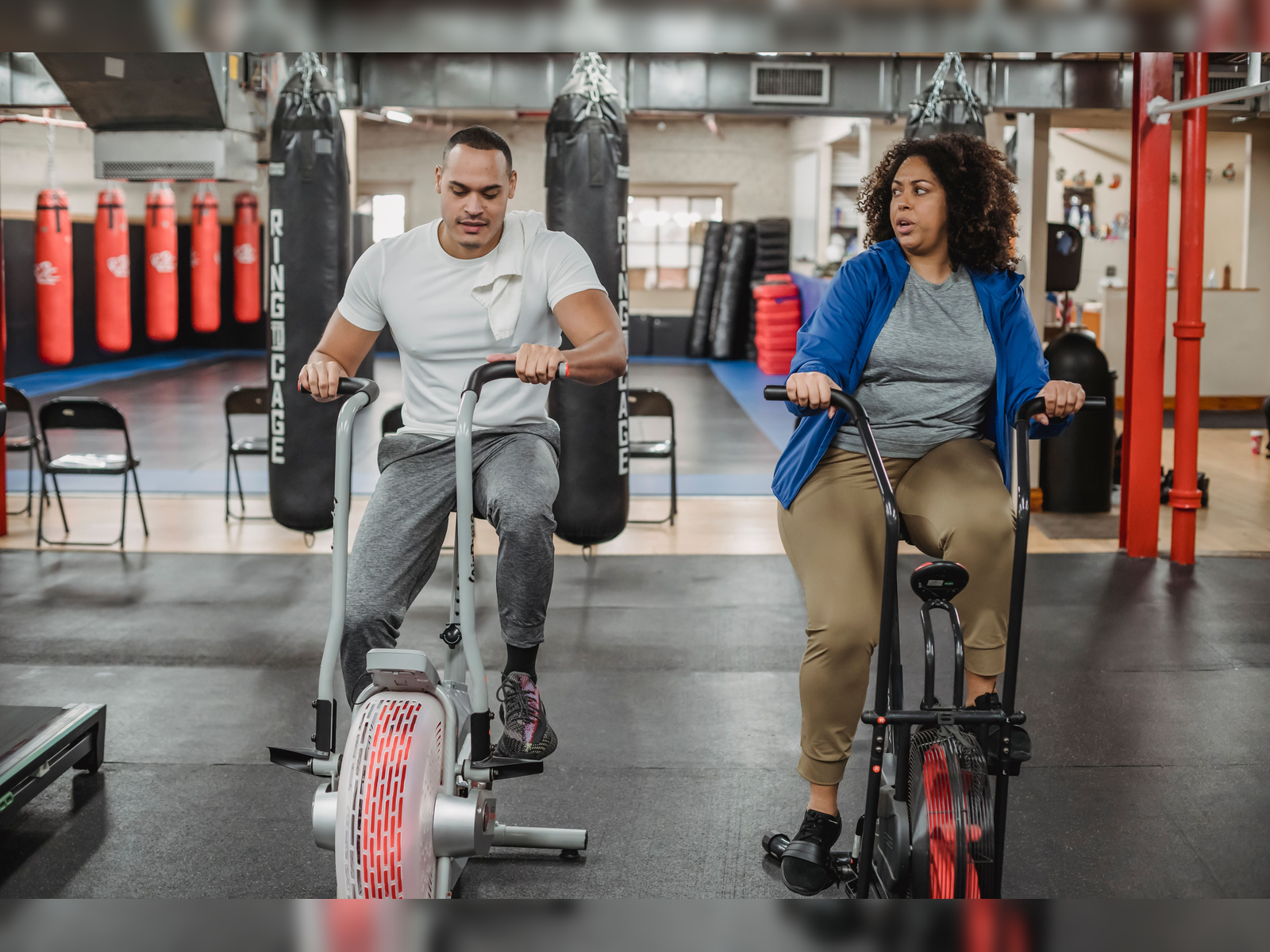
Losing weight is often presented as a complicated process involving trendy workout programs, expensive equipment, restrictive meal plans, and endless hours at the gym. In reality, successful weight loss usually comes down to a few fundamentals practiced consistently: eating in a way that supports a manageable calorie deficit, moving more throughout the day, getting enough sleep, and following an exercise routine that can be maintained over time.
Cardiovascular exercise can play an important role in that process.
Cardio increases energy expenditure, strengthens the heart and lungs, improves endurance, and can make everyday physical activity feel easier. It can also support better sleep, mood, blood sugar control, and overall health. However, the best cardio exercise for weight loss is not automatically the one that burns the highest number of calories in a single session. It is the one you can perform safely, regularly, and with enough effort to produce meaningful progress.
A demanding sprint workout may burn calories quickly, but it will not be useful if it leaves you exhausted, injured, or unwilling to exercise again for a week. Meanwhile, a brisk walking routine that you genuinely enjoy may produce better long-term results because you can repeat it five or six days per week.
That is why this guide does more than rank exercises by intensity. It explains how different types of cardio work, which activities may be appropriate for beginners, how often to exercise, and how to combine cardio with strength training and nutrition for sustainable fat loss.
How Cardio Supports Weight Loss
Body weight is influenced by the relationship between the energy you consume and the energy your body uses. When you consistently use more energy than you consume, your body must draw on stored energy, including body fat, to make up the difference.
Cardio contributes to this process by increasing the number of calories your body uses.
Depending on the activity, your body weight, the duration of the workout, and how intensely you exercise, a cardio session may burn anywhere from a modest number of calories to several hundred. Running, cycling, rowing, swimming, stair climbing, and interval training can all produce significant energy expenditure when performed at an appropriate intensity.
However, calorie burn is only part of the story.
Regular cardio can improve your ability to perform longer workouts, recover between bouts of activity, walk farther, climb stairs more comfortably, and stay active during the rest of the day. These improvements may help increase your total daily movement instead of limiting physical activity to a single workout.
Cardio can also support weight maintenance after weight loss. The Physical Activity Guidelines for Americans notes that many adults may need to perform more than 150 minutes of moderate aerobic activity per week to lose weight or prevent weight regain. The appropriate amount varies considerably from person to person, particularly because food intake, metabolism, body size, health status, and daily activity levels are different for everyone.
It is important to remember that cardio does not cancel out unlimited eating. A hard workout may burn several hundred calories, but those calories can be replaced quickly by high-calorie drinks, oversized restaurant meals, frequent snacks, or larger portions.
For most people, the most effective approach combines regular physical activity with a balanced, calorie-conscious eating pattern.
How Much Cardio Should You Do?
For general health, the Centers for Disease Control and Prevention recommends that adults perform at least 150 minutes of moderate-intensity aerobic activity each week, 75 minutes of vigorous-intensity activity, or an equivalent combination of the two.
Adults are also advised to complete muscle-strengthening activities involving the major muscle groups on at least two days per week.
Moderate-intensity exercise includes activities such as brisk walking, recreational cycling, water aerobics, or steady dancing. At this intensity, your breathing becomes noticeably faster, but you can usually continue speaking in short sentences.
Vigorous exercise includes activities such as running, fast cycling, swimming laps, jumping rope, or demanding interval workouts. During vigorous activity, speaking more than a few words at a time becomes difficult.
For additional health benefits, adults may gradually work toward 150 to 300 minutes of moderate-intensity aerobic exercise per week. Reaching the higher end of that range may be particularly useful for weight management, although beginners should not try to jump immediately from inactivity to several hours of intense training.
A practical progression might look like this:
- Begin with three 20- to 30-minute sessions per week.
- Add five minutes to one or two sessions each week.
- Increase frequency before dramatically increasing intensity.
- Include at least one easier recovery day.
- Combine moderate steady-state workouts with one or two shorter, harder sessions when your fitness improves.
The goal is to build a routine that challenges you without causing excessive fatigue, joint pain, or loss of motivation.
What Makes a Cardio Exercise Effective for Fat Loss?
People often assume that the best cardio workout is simply the one that burns the most calories per minute. Calorie expenditure matters, but several other factors determine whether an exercise will help you achieve lasting results.
Sustainability
Can you realistically perform the exercise several times per week for months rather than days?
An enjoyable activity that fits your lifestyle will usually outperform a supposedly perfect workout that you dread. Consistency allows calorie expenditure and fitness improvements to accumulate over time.
Appropriate intensity
Harder exercise generally uses more energy per minute, but high intensity also creates more fatigue. You must balance challenging workouts with sessions that are easier to recover from.
Low injury risk
An exercise is not helpful if it repeatedly aggravates your knees, ankles, hips, shoulders, or lower back. Low-impact options such as cycling, swimming, rowing, elliptical training, and incline walking may be better choices for people with joint concerns.
Progression potential
A good cardio exercise should allow you to gradually increase the challenge. Depending on the activity, you might progress by increasing speed, resistance, incline, distance, workout duration, or interval density.
Accessibility
The easier it is to begin a workout, the more likely you are to do it. Walking requires little equipment and can be performed almost anywhere. A rowing workout may be effective, but it will be less practical if you do not have access to a rowing machine.
The ideal routine often includes a combination of accessible, moderate-intensity exercise and occasional higher-intensity training.
The 12 Best Cardio Exercises for Weight Loss
1. Brisk Walking
Walking may not appear as impressive as sprinting or high-intensity interval training, but it is one of the most practical and sustainable forms of cardio available.
It requires no gym membership, little technical skill, and no complicated programming. Most people can adjust the pace and distance to match their current fitness level. Walking also places less stress on the joints than running, making it especially suitable for beginners, older adults, people returning after a long period of inactivity, and individuals carrying excess body weight.
A brisk pace should feel purposeful. Your breathing should become faster, and your body should feel warmer, but you should still be able to speak.
Mayo Clinic notes that adding approximately 30 minutes of brisk walking to your routine may burn around 150 additional calories per day, although actual calorie expenditure depends on body weight, speed, terrain, and other factors.
To make walking more effective:
- Walk at a pace that noticeably raises your heart rate.
- Choose routes with hills.
- Use a treadmill incline.
- Gradually increase your distance.
- Add short bursts of faster walking.
- Take a longer walk on weekends.
- Increase everyday steps by walking during phone calls or after meals.
A beginner might start with 20 minutes, four days per week. Over time, that routine could progress to 40 or 50 minutes on most days.
Walking is particularly valuable because it does not usually create the same recovery demands as intense running or interval training. That means you may be able to perform it frequently without interfering with strength workouts.
2. Running
Running is one of the most time-efficient traditional cardio exercises. It requires very little equipment, can be performed outdoors or on a treadmill, and usually burns more calories per minute than walking because of its higher intensity.
It also provides a clear path for progression. You can run faster, cover more distance, increase the treadmill incline, shorten rest periods, or prepare for a specific event such as a 5K.
However, running is not automatically the best option for everyone. The repeated impact may irritate the ankles, knees, hips, or lower back, particularly when training volume increases too quickly. New runners also have a tendency to perform every session at a difficult pace, which can lead to excessive fatigue.
Beginners should consider using a walk-run approach.
For example:
- Walk for three minutes.
- Jog comfortably for one minute.
- Repeat the cycle for 20 to 30 minutes.
As fitness improves, the jogging intervals can become longer while the walking intervals become shorter.
Most running sessions should not feel like races. A comfortable pace that you can maintain consistently provides cardiovascular benefits without creating unnecessary exhaustion. Faster intervals can be included once or twice per week after developing a basic level of conditioning.
Proper footwear, gradual progression, rest days, and strength training for the legs and hips can help make running more sustainable.
3. Incline Treadmill Walking
Incline treadmill walking provides many of the accessibility benefits of regular walking while creating a greater cardiovascular and muscular challenge.
Raising the incline forces the legs and glutes to work harder. It can increase exercise intensity without requiring you to run, making it a useful option for people who want a demanding workout with less impact.
A productive incline workout does not require holding the treadmill rails while leaning backward. Holding the rails removes some of the workload and may encourage an unnatural posture. Use a speed and incline that allow you to walk upright with controlled steps.
A simple workout could include:
- Five minutes of easy walking to warm up.
- Five minutes at a moderate incline.
- Two minutes at a steeper incline.
- Three minutes at a lower incline.
- Repeat the incline changes three or four times.
- Finish with five minutes of easy walking.
Incline walking can also be used for steady-state cardio. After warming up, choose an incline and speed that allow you to maintain moderate effort for 20 to 40 minutes.
The exact incline is less important than your posture, breathing, and ability to complete the workout safely.
4. Cycling
Cycling is an excellent low-impact cardiovascular exercise that can be performed outdoors, on an upright stationary bike, or on a recumbent bike.
Because the bicycle supports much of your body weight, cycling may feel more comfortable than running for people with sensitive joints. Resistance and speed can be adjusted precisely, allowing beginners and experienced exercisers to train on the same type of equipment at completely different intensities.
Cycling also works well for both steady-state exercise and interval training.
For a steady workout, pedal at a moderate resistance for 30 to 60 minutes. For intervals, alternate between hard efforts and easier recovery periods.
A beginner interval workout might look like this:
- Warm up for five minutes.
- Cycle moderately for two minutes.
- Increase resistance or speed for 30 seconds.
- Return to a comfortable pace for 90 seconds.
- Repeat eight times.
- Cool down for five minutes.
Outdoor cycling has the additional advantage of being recreational. Exploring trails, parks, and neighborhoods can make the session feel less like formal exercise.
Safety should remain a priority. Outdoor cyclists should use an appropriate helmet, remain visible, follow traffic rules, and choose routes suited to their experience.
5. Swimming
Swimming offers a full-body cardiovascular workout with very little impact on the joints. The water supports the body while providing resistance in multiple directions, allowing the arms, shoulders, back, core, and legs to contribute to the movement.
This makes swimming a valuable option for people who find land-based cardio uncomfortable. It may also provide variety for runners and cyclists who want to increase activity without adding more impact.
The intensity of swimming can vary enormously. Easy recreational swimming may be gentle, while continuous lap swimming can be extremely demanding.
Beginners do not need to swim nonstop for 30 minutes. A better approach may involve alternating swimming with rest or easy water movement.
For example:
- Swim one length at a comfortable pace.
- Rest for 20 to 30 seconds.
- Repeat for 10 to 20 rounds.
- Gradually reduce the rest time as endurance improves.
Water walking and aqua aerobics are useful alternatives for people who are not comfortable swimming laps.
The main limitation is access. Swimming requires a safe pool or supervised swimming environment, and people who lack confidence in the water should seek appropriate instruction.
6. Rowing
Rowing is often described as a full-body cardio exercise because it involves the legs, hips, core, back, shoulders, and arms.
When performed correctly, most of the power begins with the legs rather than the arms. The legs push, the torso opens slightly, and the arms finish the pull. The movement is then reversed in a controlled manner.
Because so many muscle groups contribute, rowing can elevate the heart rate quickly. It is also relatively low impact, although poor technique may place unnecessary stress on the lower back.
A common mistake is setting the resistance as high as possible and pulling with short, uncontrolled strokes. Higher resistance does not automatically create a better workout. Smooth technique, consistent rhythm, and appropriate effort are more important.
A beginner rowing session could include:
- Five minutes of easy rowing.
- One minute of moderately hard rowing.
- Two minutes of easy rowing.
- Repeat six to eight times.
- Cool down for five minutes.
As technique and conditioning improve, you can increase the length of the working intervals or reduce recovery time.
People with a history of back problems should consider receiving instruction from a qualified professional before making rowing a major part of their routine.
7. Elliptical Training
The elliptical machine provides a smooth, low-impact cardio workout that resembles a combination of walking, running, and stair climbing.
Because the feet remain in contact with the pedals, the elliptical produces less landing impact than running. This may make it more comfortable for people with joint sensitivity or those who are gradually building their fitness.
Many machines include movable handles, allowing the upper body to contribute. However, the workout becomes less effective when users lean heavily on the handles or allow momentum to move the pedals.
To get more from the elliptical:
- Maintain an upright posture.
- Keep light control of the handles.
- Push and pull with the arms when movable handles are available.
- Use enough resistance to prevent uncontrolled spinning.
- Change the incline or resistance throughout the workout.
- Avoid allowing your feet to lose stable contact with the pedals.
Elliptical training is useful for longer moderate-intensity workouts, recovery sessions, and intervals. It can also replace a running workout when your joints need a break from impact.
8. Stair Climbing
Stair climbing is a demanding form of cardio that heavily involves the quadriceps, glutes, calves, and cardiovascular system.
It can be performed on actual stairs, stadium steps, a stair-climbing machine, or a stepmill. Because you repeatedly lift your body upward, the exercise can become intense even at a relatively slow pace.
For beginners, five to ten continuous minutes may be surprisingly challenging. There is no need to begin with a long workout. Short blocks can be combined with another activity.
For example:
- Five minutes of stair climbing.
- Ten minutes of walking.
- Another five minutes of stair climbing.
- Ten additional minutes of walking.
This creates a substantial workout without requiring 30 uninterrupted minutes on the stairs.
Avoid placing most of your body weight on the machine handles. Lightly holding the rails for balance is reasonable, but excessive leaning reduces the demand on the lower body and may encourage poor posture.
Stair climbing may not be ideal for people with painful knees or significant balance concerns. Incline walking, cycling, or swimming may provide a more comfortable alternative.
9. Jump Rope
Jumping rope is inexpensive, portable, and capable of raising the heart rate very quickly. It also develops coordination, rhythm, foot speed, and lower-leg endurance.
The exercise is highly efficient, but it is also high impact. Beginners often attempt too much too soon and end up with sore calves, shins, feet, or Achilles tendons.
Start with extremely short intervals.
A suitable beginner session might involve:
- 20 seconds of easy jumping.
- 40 seconds of rest.
- Repeat for five to ten rounds.
Keep the jumps low and controlled. The rope only needs enough space to pass under the feet. Large jumps waste energy and increase impact.
As coordination improves, increase the jumping interval to 30 or 45 seconds. More advanced exercisers can add alternating feet, high knees, side-to-side movement, or faster rope speeds.
Jump rope works best as part of a mixed workout rather than as a high-volume daily activity, especially when you are new to it.
10. High-Intensity Interval Training
High-intensity interval training, commonly called HIIT, alternates challenging work periods with easier recovery intervals.
HIIT is not a specific exercise. It is a training structure that can be used with cycling, running, rowing, swimming, stair climbing, bodyweight movements, or an elliptical machine.
The main benefit is time efficiency. Because the working intervals are difficult, a shorter session can create a substantial cardiovascular challenge.
However, HIIT is frequently misunderstood. Every interval does not need to be an all-out sprint, and beginners do not need to collapse on the floor for the workout to count.
A more sustainable approach is to perform the hard interval at approximately eight out of ten effort. You should be working hard, but still maintain safe technique.
A simple bike-based HIIT workout might include:
- Five-minute warm-up.
- 30 seconds of hard cycling.
- 90 seconds of easy cycling.
- Repeat eight times.
- Five-minute cool-down.
HIIT may support reductions in abdominal fat and improvements in cardiovascular fitness, but it is not necessarily superior to every other form of exercise for every person.
Because interval training creates considerable fatigue, most recreational exercisers only need one or two HIIT sessions per week. Performing intense intervals every day may increase the risk of burnout, declining performance, and overuse injuries.
11. Dancing
Dancing is one of the most enjoyable ways to increase the heart rate and burn calories without following a conventional gym workout.
Options include Zumba, aerobic dance classes, hip-hop routines, salsa, dance-based video workouts, or simply dancing energetically at home.
The effectiveness of dancing depends on how continuously and vigorously you move. A class that keeps you active for 30 to 60 minutes can provide a meaningful cardiovascular workout.
Dancing also offers an advantage that is difficult to measure: enjoyment. People are more likely to repeat activities that feel rewarding. Music, social interaction, and learning new movements can make exercise feel less repetitive.
Beginners should select routines that match their coordination and fitness level. There is no need to copy every movement perfectly. The primary objective is to keep moving safely.
Supportive footwear and a clear exercise space are important, especially when routines involve turning, jumping, or rapid directional changes.
12. Cardio Circuits
Cardio circuits combine several movements in one session. A circuit might include marching, step-ups, shadowboxing, jumping jacks, mountain climbers, cycling, kettlebell swings, or bodyweight exercises.
The variety keeps the workout mentally engaging and allows you to adjust exercises around your fitness level or available equipment.
A beginner-friendly low-impact circuit could include:
- Marching in place for 60 seconds.
- Bodyweight squats to a chair for 30 seconds.
- Step-ups for 60 seconds.
- Standing punches for 60 seconds.
- Easy walking for 60 seconds.
Repeat the circuit three to five times.
A more advanced circuit could use faster movements, heavier resistance, shorter rest periods, or more demanding exercises.
The key is maintaining good technique. A cardio circuit should not become so rushed that every movement turns sloppy. Choose exercises you can perform confidently, and stop the set when your form begins to deteriorate.
Steady-State Cardio Versus HIIT: Which Is Better?
Steady-state cardio involves maintaining a relatively consistent effort for an extended period. Brisk walking, easy running, continuous cycling, and moderate swimming are common examples.
HIIT alternates demanding efforts with recovery periods.
Both can support weight loss.
Steady-state cardio is easier to perform frequently and may be more suitable for beginners. It generally creates less fatigue, allowing longer sessions and better recovery. It can also provide a valuable mental break, particularly when performed outdoors.
HIIT is more time-efficient and can improve fitness with shorter workouts, but it is also more physically demanding. It may be difficult to recover from if combined with heavy strength training, inadequate sleep, or aggressive calorie restriction.
The best program usually includes both, with a greater proportion of moderate-intensity work.
For example, someone exercising five days per week might perform:
- Three moderate cardio sessions.
- One interval session.
- One longer, easy session.
There is no need to choose one style permanently. The appropriate balance depends on your goals, fitness level, joint health, schedule, and personal preferences.
A Practical Weekly Cardio Plan for Weight Loss
Here is a balanced example for someone with a basic level of fitness:
Monday: Brisk walking or incline walking
Complete 35 to 45 minutes at a moderate pace.
Tuesday: Strength training
Perform a full-body resistance workout. Add ten minutes of easy cycling afterward if desired.
Wednesday: Cardio intervals
Complete 20 to 25 minutes using a bicycle, rower, elliptical, or walk-run format.
Thursday: Recovery activity
Take an easy 20- to 30-minute walk or complete gentle mobility work.
Friday: Strength training
Perform another full-body resistance workout.
Saturday: Longer cardio session
Complete 45 to 60 minutes of walking, cycling, swimming, dancing, or hiking at a comfortable pace.
Sunday: Rest or light movement
Rest completely or take a relaxed walk.
This plan includes different intensity levels and leaves room for recovery. It also includes strength training, which is important for preserving and developing muscle while losing weight.
Muscle-strengthening exercise should not be treated as an optional extra. Current guidelines recommend training the major muscle groups on at least two days each week.
How to Progress Without Burning Out
A successful cardio routine should gradually become more challenging, but progression does not mean turning every workout into a punishment.
You can progress by changing one variable at a time:
- Add five minutes to your workout.
- Increase your walking or cycling speed slightly.
- Add a small amount of incline.
- Use slightly more resistance.
- Add one or two intervals.
- Reduce recovery time.
- Add one extra weekly session.
- Cover more distance in the same amount of time.
Do not increase everything simultaneously.
For example, avoid adding two additional workouts, increasing every session by 20 minutes, and introducing sprint intervals during the same week. Your cardiovascular system may adapt faster than your joints, tendons, and connective tissues.
Gradual progression lowers the likelihood of soreness, injury, and burnout. Mayo Clinic also advises increasing exercise intensity progressively rather than beginning too aggressively.
Pay attention to persistent pain, declining performance, sleep disruption, unusual fatigue, and loss of motivation. These may indicate that your body needs more recovery.
Why Strength Training Still Matters
Although this article focuses on cardio, relying exclusively on cardio is not necessarily the best weight-loss strategy.
During weight loss, the goal should not simply be to make the number on the scale smaller. Ideally, you want to reduce body fat while preserving as much lean tissue as possible.
Resistance training gives the body a reason to maintain muscle. It also improves strength, joint stability, posture, physical function, and confidence.
A practical routine might involve two or three full-body strength sessions each week. Exercises could include:
- Squats or leg presses.
- Hip hinges or Romanian deadlifts.
- Rows.
- Chest presses or push-ups.
- Pulldowns.
- Lunges or step-ups.
- Shoulder presses.
- Core exercises.
Cardio and strength training complement each other. Cardio improves endurance and increases energy expenditure, while strength training supports muscle retention and physical resilience.
The American College of Sports Medicine emphasizes that both aerobic and resistance exercise contribute to health, and the appropriate combination should reflect the individual’s goals.
Nutrition: The Part Cardio Cannot Replace
You can perform the most efficient cardio workout in the world and still struggle to lose weight if your calorie intake consistently exceeds your needs.
This does not mean you must follow an extreme diet. In fact, aggressive restriction can make exercise harder, increase hunger, reduce training performance, and make the entire plan difficult to sustain.
A more realistic eating approach emphasizes:
- Lean or minimally processed protein sources.
- Vegetables and fruits.
- High-fiber carbohydrates.
- Reasonable portions of healthy fats.
- Mostly water or low-calorie drinks.
- Meals that are satisfying enough to control hunger.
- Moderate rather than automatic portions.
- Planned flexibility for favorite foods.
Protein is particularly helpful because it supports muscle recovery and tends to be filling. Fiber-rich foods such as vegetables, fruit, beans, and whole grains can also increase meal volume and satisfaction.
Be cautious about eating back every calorie shown on a treadmill or fitness watch. Exercise machines and wearable devices provide estimates, not perfect measurements. Treat those numbers as general feedback rather than permission to consume an equivalent number of calories.
Weight loss interventions tend to be more effective when physical activity and nutrition are addressed together rather than relying on exercise alone.
Common Cardio Mistakes That Slow Progress
Doing too much too soon
Enthusiasm can lead beginners to train every day at high intensity. This often results in soreness, exhaustion, or injury.
Start with a manageable amount and build gradually.
Making every workout hard
Hard sessions have value, but easy and moderate workouts create the foundation of a sustainable routine.
Ignoring strength training
Excessive cardio combined with very low calorie intake may make muscle retention more difficult. Include resistance exercise at least twice per week.
Overestimating calorie burn
Exercise machines, online calculators, and watches can overestimate or underestimate energy expenditure. Avoid treating calorie estimates as exact.
Compensating with food
Some people become hungrier after exercise or reward themselves with large meals. A workout can be unintentionally cancelled out by additional snacks and drinks.
Choosing exercise based only on calorie burn
Theoretically efficient workouts are useless when you hate them and constantly skip them. Personal preference matters.
Neglecting sleep
Poor sleep can affect hunger, energy, recovery, and motivation. A strong weight-loss plan includes sufficient rest.
Expecting immediate scale changes
Body weight can fluctuate because of water retention, sodium intake, carbohydrates, digestion, hormones, and muscle soreness. Evaluate trends across several weeks rather than reacting to a single weigh-in.
How to Measure Your Cardio Intensity
You do not necessarily need a heart-rate monitor to judge workout intensity.
The talk test is one of the simplest methods.
During moderate exercise, you should be able to speak, but singing would be difficult. During vigorous exercise, you may only be able to say a few words before taking another breath.
You can also use a perceived exertion scale from one to ten:
- Two to three: Very easy.
- Four to six: Moderate.
- Seven to eight: Hard.
- Nine: Very hard.
- Ten: Maximum effort.
Most weekly cardio should fall somewhere between four and seven. The hardest levels should be used sparingly and only when appropriate for your experience and health.
Heart rate can provide additional guidance, but maximum heart-rate formulas are estimates. Medications, fitness level, temperature, hydration, stress, and individual physiology can all influence heart rate.
The goal is not to chase the highest possible number. The goal is to exercise at an intensity that matches the purpose of the session.
Safety Considerations Before Starting
Most people benefit from becoming more active, but exercise should be matched to personal health and physical ability.
Speak with a qualified healthcare professional before beginning a demanding program when you:
- Have known heart or cardiovascular disease.
- Experience chest pain or unusual shortness of breath.
- Have uncontrolled high blood pressure.
- Have diabetes that requires careful blood sugar management.
- Are recovering from surgery or a major injury.
- Experience dizziness or fainting.
- Have severe joint pain.
- Are pregnant and unsure which activities are appropriate.
- Have been advised to restrict physical activity.
People with diabetes may need to monitor blood sugar before, during, or after exercise depending on their condition and medication plan.
Always warm up before demanding exercise. A warm-up can include five to ten minutes of easy movement followed by a gradual increase in intensity.
Stop exercising and seek appropriate medical attention if you experience chest pressure, fainting, severe breathing difficulty, sudden weakness, or pain that feels sharp or alarming.
Frequently Asked Questions
What cardio burns the most fat?
There is no single cardio exercise that burns the most body fat for everyone.
Higher-intensity exercises such as running, jumping rope, rowing, and stair climbing often burn more calories per minute. However, lower-intensity activities can accumulate substantial calorie expenditure when performed for longer periods or more frequently.
The American College of Sports Medicine notes that higher intensity generally produces greater calorie expenditure, but a larger overall volume of lower-intensity activity can also contribute meaningfully to weight management.
The most effective option is usually one you can perform consistently without becoming injured or excessively fatigued.
Is 30 minutes of cardio enough to lose weight?
Thirty minutes can absolutely contribute to weight loss, particularly when performed regularly and combined with an appropriate eating pattern.
However, whether it is enough depends on the exercise intensity, frequency, food intake, body size, daily movement, and desired rate of progress.
Some people may lose weight with three or four 30-minute sessions per week. Others may need more activity, greater nutritional adjustments, or both.
Should I do cardio every day?
You can perform light or moderate cardio on most days if your body tolerates it well. Walking is particularly suitable for frequent activity.
Hard running, sprint intervals, jump rope, and demanding HIIT should generally include recovery days. Daily high-intensity training is unnecessary for most people.
Is walking or running better for weight loss?
Running usually burns more calories per minute, but walking is easier to recover from and can often be performed for longer or more frequently.
Someone who walks consistently may achieve better results than someone who runs occasionally and repeatedly becomes injured.
Should cardio be done before or after weights?
When strength and cardio are performed in the same session, do the activity that matches your main priority first.
For muscle and strength development, lift weights first and complete moderate cardio afterward. For endurance performance, cardio may come first.
Another option is to separate the workouts by several hours or perform them on different days.
Does fasted cardio burn more fat?
Exercising before breakfast may increase the proportion of fat used as fuel during that particular session, but this does not automatically create greater long-term fat loss.
Overall calorie balance, total activity, nutrition, training performance, and adherence matter more than whether cardio is performed on an empty stomach.
Some people enjoy fasted exercise. Others feel weak, dizzy, or unable to train effectively. Choose the approach that helps you exercise safely and consistently.
How long does it take to see results?
Fitness improvements may appear within several weeks. You may notice easier breathing, better endurance, increased walking speed, or faster recovery before seeing dramatic visual changes.
Fat-loss speed varies according to calorie deficit, starting body weight, consistency, sleep, health, and many other factors. Focus on gradual trends rather than expecting identical weekly changes.
Final Thoughts
The best cardio exercise for weight loss is not necessarily the most extreme one.
It is the activity that allows you to burn calories, improve your fitness, recover properly, and return for the next workout. For many people, that may be brisk walking. For others, it may be swimming, running, cycling, dancing, rowing, or a combination of several activities.
Start with your current ability rather than the fitness level you wish you had. Build duration and frequency gradually. Use high-intensity workouts strategically instead of treating every session like a test of toughness.
Most importantly, combine cardio with strength training, balanced nutrition, sleep, and everyday movement. Weight loss rarely depends on one magical exercise. It comes from creating a practical routine that can survive busy weeks, low-motivation days, vacations, and normal life.
A simple workout completed consistently will always be more valuable than an advanced program completed for only a few days.
References
- Centers for Disease Control and Prevention — “Adult Activity: An Overview”
https://www.cdc.gov/physical-activity-basics/guidelines/adults.html - Centers for Disease Control and Prevention — “Physical Activity and Your Weight and Health”
https://www.cdc.gov/healthy-weight-growth/physical-activity/index.html - Centers for Disease Control and Prevention — “What Counts as Physical Activity for Adults”
https://www.cdc.gov/physical-activity-basics/adding-adults/what-counts.html - Centers for Disease Control and Prevention — “Benefits of Physical Activity”
https://www.cdc.gov/physical-activity-basics/benefits/index.html - Office of Disease Prevention and Health Promotion — “Physical Activity Guidelines for Americans, 2nd Edition”
https://health.gov/sites/default/files/2019-09/Physical_Activity_Guidelines_2nd_edition.pdf - Office of Disease Prevention and Health Promotion — “Top 10 Things to Know About the Second Edition of the Physical Activity Guidelines for Americans”
https://odphp.health.gov/our-work/nutrition-physical-activity/physical-activity-guidelines/current-guidelines/top-10-things-know - Mayo Clinic — “Exercise for Weight Loss: Calories Burned in 1 Hour”
https://www.mayoclinic.org/healthy-lifestyle/weight-loss/in-depth/exercise/art-20050999 - Mayo Clinic — “Walking: Is It Enough for Weight Loss?”
https://www.mayoclinic.org/healthy-lifestyle/weight-loss/expert-answers/walking/faq-20058345 - Mayo Clinic — “Walking: Trim Your Waistline, Improve Your Health”
https://www.mayoclinic.org/healthy-lifestyle/fitness/in-depth/walking/art-20046261 - Mayo Clinic — “Exercise Intensity: How to Measure It”
https://www.mayoclinic.org/healthy-lifestyle/fitness/in-depth/exercise-intensity/art-20046887 - Mayo Clinic — “Exercise: How Much Do I Need Every Day?”
https://www.mayoclinic.org/healthy-lifestyle/fitness/expert-answers/exercise/faq-20057916 - American College of Sports Medicine — “Physical Activity Guidelines”
https://acsm.org/education-resources/trending-topics-resources/physical-activity-guidelines/ - American College of Sports Medicine — “Mythbusting: Weight Loss”
https://acsm.org/mythbusting-weight-loss/ - American College of Sports Medicine — “Aerobic vs. Resistance Exercise for Health and Longevity”
https://acsm.org/hot-topic-aerobic-vs-resistance-exercise-for-health-and-longevity/ - CDC Preventing Chronic Disease — “Weight Loss in Short-Term Interventions for Physical Activity and Nutrition Among Adults With Overweight or Obesity”
https://www.cdc.gov/pcd/issues/2024/23_0347.htm