

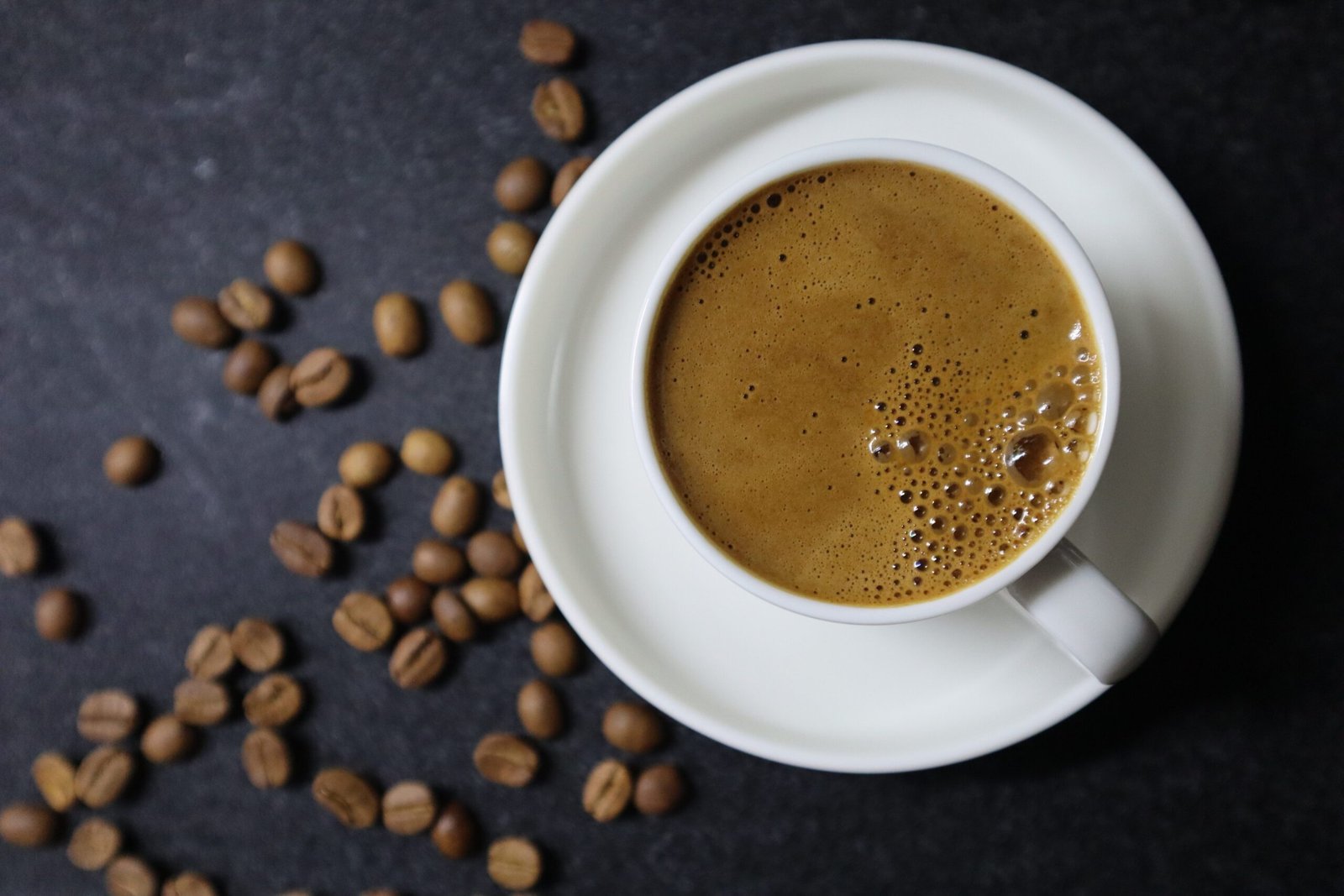
A caramel latte can become part of the morning without ever feeling like a food decision. You order it on the way to work, finish it before checking your email, and remember the caffeine more clearly than the syrup, milk, and whipped topping. That’s where I’d start if I wanted to use coffee to promote weight loss. I wouldn’t look for a stronger roast or a powdered ingredient to add. I’d ask whether I could make the drink I already enjoy a little less sweet without taking away the part I look forward to.
The distinction is easy to miss. Coffee can support a weight-loss effort, but it doesn’t reliably produce weight loss on its own. Caffeine can make some people feel more alert, and researchers have explored its potential effects on weight. But that isn’t a reason to drink extra cups, ignore hunger, or swap breakfast for a mug. The more practical opportunity is already there for many coffee drinkers. A less sweet version of a familiar order can reduce the calories that come from drinks without forcing a complete overhaul of breakfast, lunch, and dinner. [1, 4]
In this guide, I’ll explain what the research actually found, which coffee orders I’d compare, when I’d switch to decaf, and how I’d judge whether the new routine is helping. I’ll also cover three fiber supplements sold on Amazon and explain why I’d skip products marketed as coffee “fat burners.” My goal is to leave you with a routine you can use on a busy Tuesday, not a set of rules that only works when you have a quiet morning and a perfectly stocked kitchen.
What the Research on Coffee and Weight Actually Found
The most useful number I found was also the least dramatic. A 2023 study in The American Journal of Clinical Nutrition examined changes in coffee intake and body weight across three large U.S. cohorts. Increasing unsweetened caffeinated coffee by one cup per day was associated with about 0.12 kilograms, or roughly a quarter of a pound, less weight gain over four years. Increasing unsweetened decaf by the same amount was associated with essentially the same difference. That is a small finding over a long period, not evidence that adding a cup will make an individual lose weight. [1]
I’d emphasize less weight gain because it’s different from weight loss. The researchers observed what people drank and how their weight changed over time. They didn’t assign people to drink a particular coffee while holding the rest of their lives constant. They adjusted for many factors, but a study like this can’t separate coffee from every other difference in the routines of the people drinking it. The similar result for decaf doesn’t establish that decaf and regular are interchangeable in every respect. It does make me less inclined to treat more caffeine as the obvious route to better results. [1]
The paper also reported that an increase of one teaspoon of added sugar per day was associated with about 0.09 kilograms more weight gain over four years. That finding was about added sugar more broadly, not a controlled test of one teaspoon in a cup of coffee. Cream and nondairy whitener didn’t show a statistically significant association in the adjusted analysis. I wouldn’t turn those results into a rule against every teaspoon of sugar or read them as a reason to ignore how much sweetened creamer goes into a cup. A teaspoon measured at home and a large sweetened blended coffee are very different drinks. [1]
The National Institutes of Health takes a similarly measured view of caffeine in weight-loss supplements. Any weight effect is likely to be small, and regular use can lead to tolerance, which can diminish the effect. I wouldn’t count on an energy boost after coffee to tell me anything about my long-term weight. Feeling more awake is noticeable right away. A sustained change in body weight depends on what happens across weeks and months, including what the coffee replaces and whether a person compensates by eating or drinking more later. [4]
The Coffee Order I’d Change Before Anything Else
I’d start with the drink I buy or make most often, not the most indulgent cup I can remember. Someone who has a sweet mocha once a month probably has little to gain from changing it. But someone who gets a flavored latte on most workdays has a repeatable choice worth examining. I’d compare the usual recipe with a version I’d willingly order again. Changing one element, such as the number of syrup pumps, is often easier to judge than changing the size, milk, sweetness, and coffee strength all at once.
At home, I’d pay attention to what goes into the mug rather than treating “homemade” as automatically lighter. There’s a practical difference between a measured splash of milk and pouring flavored creamer until the drink looks right. If I liked my coffee sweet, I’d measure what I normally add once or twice before deciding what to change. That gives me a baseline and leaves room for a middle ground. Switching to plain milk, halving the usual syrup, or keeping the original recipe in a smaller mug might preserve more of what I enjoy than jumping straight to black coffee.
At a café, I’d use the menu’s nutrition information when it’s available and compare drinks in the same size. I’d also ask whether the base comes presweetened. “No extra syrup” doesn’t help much when the sweetness is already in a mocha sauce, chai concentrate, or bottled blend. An unsweetened latte still contains the calories in its milk, which may be exactly what I want if I enjoy a milky coffee. I’d judge that order against the drink it replaces, not against black coffee in the abstract. Here’s how I’d compare the options.
| Coffee order | What I’d check before ordering | When I’d choose it |
|---|---|---|
| Black brewed coffee or Americano | Make sure it comes without sweetener. For a large café serving, ask how many espresso shots it contains or check the posted caffeine amount. | When I like the taste plain and want a straightforward swap for a sweetened coffee, soda, or energy drink. |
| Coffee with a measured splash of milk | Choose a milk I actually like and measure my usual pour once. If I’m ordering plant milk, check whether the café uses a sweetened version. | When plain coffee tastes too sharp but I don’t need a full latte or liquid sweetener to enjoy it. |
| Plain cappuccino or unsweetened latte | Ask about added syrups and compare the actual sizes. The amount of milk can differ considerably across drinks and shops. | When the creamy texture is what I’d miss most about my usual caramel or vanilla drink. |
| Iced coffee or cold brew without syrup | Confirm it’s unsweetened and ask whether it’s made from a concentrate. Ice, cup size, and dilution alone don’t tell me how much caffeine I’m getting. | When I want a cold drink and know the caffeine fits my schedule, or when I can order a decaf iced option. |
| Decaf or half-caf with the same add-ins | Remember that decaf isn’t necessarily caffeine-free. Keep the other ingredients consistent when testing whether less caffeine helps my sleep. | When I want the taste and routine of coffee without the same stimulant load, especially later in the day. |
I’d save room for the coffee I buy purely because I enjoy it. There’s no need to replace a Saturday café ritual with an order that makes the outing less fun if the real opportunity is five routine coffees during the workweek. The useful distinction is between a drink I choose deliberately and a default I rarely think about. I’d work on the default first. A routine that still allows a favorite drink is easier to keep than one that makes every visit to the coffee counter feel like a test.
When I’d Drink Coffee and When I’d Switch to Decaf
If I had to choose between adding another coffee and getting a better night’s sleep, I’d protect the sleep. A systematic review and meta-analysis led by Carissa Gardiner found that caffeine reduced total sleep time by an average of 45 minutes across the included studies. It also reduced sleep efficiency and made it take longer to fall asleep. Those are pooled results from studies using different doses and timing. They don’t predict exactly what a specific cup will do, but they make a good case for checking whether an afternoon caffeine habit is quietly affecting the night. [2]
The same review estimated that a coffee containing roughly 107 milligrams of caffeine would need to be consumed about 8.8 hours before bedtime to avoid a reduction in total sleep time under its model. I’d use that as a starting point, not a rule to follow by the minute. If I usually went to bed at 11 p.m., for example, I’d try making the last regular coffee around 2 p.m. or earlier and see how I felt. If I was still lying awake or waking unrefreshed, I’d move the cutoff earlier or switch that second cup to decaf. A stronger drink or greater sensitivity can change what works. [2]
I wouldn’t assume the larger cup is harmless because it has the same name as the smaller one. The FDA cites 400 milligrams of caffeine per day as an amount not generally associated with negative effects for most adults. It’s not a goal or a safe amount for every person. Caffeine can vary substantially by drink and serving size, and daily intake includes tea, energy drinks, pre-workout supplements, and other sources, not just the morning coffee. Even decaf typically contains some caffeine. If a menu or bottle lists a number, I’d check whether it applies to the full drink or only one serving. [3]
For people who work nights or start before dawn, I’d anchor the decision to the next planned sleep period rather than impose a universal “no coffee after lunch” rule. A shift worker may have an entirely different waking day, and a mug near the end of the shift can still be decaf. If someone drinks several cups now, replacing one with half-caf or decaf is a gentler first move than suddenly cutting out all caffeine. That also lets them keep the routine while seeing how a lower caffeine intake feels. [3]
I’d Keep Coffee Alongside Meals, Not in Place of Them
I’d avoid building a weight-loss routine around the idea that coffee has to be taken on an empty stomach. The long-term coffee study doesn’t show that timing coffee before breakfast creates an advantage, and a temporary change in appetite isn’t a dependable substitute for eating. If someone prefers their coffee before breakfast and feels fine, that’s a preference. If it leaves them shaky, nauseated, or uncomfortably hungry later, I’d move it to breakfast or afterward and see whether that makes the morning more comfortable. [1, 3]
The kind of breakfast I’d suggest planning is one that suits the actual morning. Yogurt and fruit with oats work when there’s time to eat at a desk. Eggs and whole-grain toast might fit a slower morning. A leftover bean-and-egg wrap or another savory option makes more sense for someone who dislikes sweet breakfast food. I’m not prescribing a menu or suggesting everyone has to eat right after waking. I’m making room for food when hunger arrives, instead of expecting a second cup of coffee to carry someone through the hours when they’d normally eat.
Coffee can also sit next to a movement habit without becoming a pre-workout strategy. If a morning cup already fits my routine and I like taking a walk afterward, I’d let one remind me to do the other. The attraction is that coffee is already part of the morning, so I don’t have to find a new cue for getting out the door. I wouldn’t double the caffeine before exercise, stack coffee with a stimulant powder, or assume walking before breakfast is required. The walk should still feel worth doing on a day when I’d rather have water. [3, 4]
I’d use the same judgment with restaurant meals or weekends. If dinner was more substantial than usual, I wouldn’t try to make up for it with black coffee instead of breakfast the next day. And if a sweetened coffee was the thing I truly wanted during a long afternoon, I wouldn’t call that a failure. The routine I’m describing makes a typical choice easier. It doesn’t require treating normal appetite, special occasions, or changes in schedule as problems that caffeine is supposed to solve.
A Two-Week Coffee Routine I Could Actually Stick With
I’d give one change two weeks before deciding if it deserves to stay. Two weeks isn’t a deadline for the scale to move. It’s long enough to see whether I’ll still order the drink when I’m tired, whether I miss the flavor I cut out, and whether I end up buying something else later because the replacement was unsatisfying. The experiment is really a test of convenience and preference. A drink I like and can get without a long explanation at the café has a better chance of working than the lowest-calorie order on the menu if I quietly abandon it.
I’d begin with a quick sketch of a normal week. I’d note the time and type of my usual coffee, what I add, and which drink I order more out of habit than enjoyment. A note on a phone is enough. I wouldn’t change breakfast or start a new exercise program just to test the cup, because then it would be hard to tell which part of the morning was helping or getting in the way. Here’s the short version of how I’d run it.
- Days 1–3 — Write down what’s already happening. I’d record the cup size, flavoring, and time for my usual drinks. I’d also notice whether the sweet coffee is replacing another drink, coming with a snack, or filling in for a meal I didn’t have time to eat.
- Days 4–10 — Change one recurring order. If my usual drink was a flavored iced latte, I might keep the same milk and size but ask for less syrup. If late caffeine was the concern, I’d order the same style of drink made with decaf so I could compare the two without changing several ingredients.
- Days 11–14 — Keep what still works when life gets busy. I’d look at taste, convenience, hunger, and sleep. If I like the home version but it fails on early workdays, I’d pick a café equivalent. If the new drink sends me looking for a second treat, I’d try a more satisfying coffee or make time for an actual snack.
At the end of the two weeks, I’d judge the change by how repeatable it was. If I liked a half-sweet latte and naturally kept ordering it, I’d call that useful even if the scale looked the same. If my revised drink was so austere that I bought a different sweet beverage every afternoon, I’d take that as feedback about the swap. And if I was sleeping better after an earlier cutoff, I’d keep the cutoff regardless of my weight. A single weigh-in can’t tell me which ingredient in a daily cup is doing what.
There’s one more thing I’d look for before deciding I’d found my new regular order. The new drink should replace something, not simply join it. If I buy a plain iced coffee and still buy the same afternoon soda, I haven’t made the beverage swap I set out to test. That doesn’t mean either drink is off-limits. It means I’d have a clearer idea of where to focus next. The change I want is small enough to keep doing and specific enough that I can tell whether I’m doing it.
How Supplements Might Help and Three Amazon Options I’d Compare
I wouldn’t combine coffee with a weight-loss supplement simply because the label promises an extra push. The NIH notes that the evidence for many weight-loss supplement ingredients is limited and that products often combine ingredients in ways that make their effects hard to predict. A “coffee booster” can also contain caffeine from ingredients like guarana or green tea extract. A person who counts only the caffeine in their mug can easily miss what they’re getting from a capsule or scoop. I’d skip stimulant-heavy blends, pure or highly concentrated caffeine, and products that promise rapid fat loss. [3, 4]
If I had a genuine nutrition gap, the category I’d consider first is fiber, not a fat burner. Oats, beans, lentils, fruit, vegetables, and whole grains add fiber along with flavor, texture, and other nutrients. A supplement is an option if those foods aren’t providing enough fiber and the product is a good fit for the person taking it. Research on viscous fiber found a small average weight difference across trials, about one-third of a kilogram, and the authors called for more research on whether those changes last. That isn’t proof that each product below produces that result. These formulas use different ingredients, and I’d choose by what I need from the fiber, not by a weight claim on the packaging. [5]
These are three established options sold on Amazon that I’d compare for convenience, fiber type, and how easily they fit into a routine. It’s a shortlist, not a ranking of weight-loss effectiveness. I’d match the exact version on the listing to the label on the package, since the same brand might sell powders, gummies, and formulas with different ingredients.
- Metamucil Sugar-Free Orange Smooth Powder — flavored psyllium. Psyllium absorbs water and thickens. I’d mix this in a separate glass, follow the label’s liquid and mixing directions, and drink it promptly. It’s the option I’d look at if I specifically wanted psyllium and didn’t mind mixing a drink, but I wouldn’t buy it to make an ordinary cup of coffee more potent.
- Benefiber Original Prebiotic Fiber Powder — unflavored wheat dextrin. I’d compare this one if I wanted a powder that dissolves into a suitable drink or soft food without a strong added flavor. The ability to mix it into food or a drink is a convenience feature, not a weight-loss mechanism. I’d check the exact label if I needed to avoid wheat or had another dietary restriction.
- MiraFIBER Gummies — a chewable alternative to powders. I’d consider these if forgetting to mix a powder was the main obstacle. The advertised eight grams of fiber apply to a four-gummy serving, not a single gummy, and I’d verify the serving size on the exact bottle. A chewable format can make a routine easier, but it doesn’t have the same ingredient profile as psyllium powder.
I’d try only one fiber product at a time, follow its label, and avoid adding powder, gummies, and a high-fiber breakfast all at once just to see faster results. A sudden increase can be uncomfortable and makes it harder to tell what I tolerate. Psyllium needs the full amount of liquid directed on the label. Anyone who has trouble swallowing should seek professional advice before using it. Fiber can also affect the absorption of some oral medicines, so I’d ask a pharmacist about timing instead of guessing based on another brand’s instructions.
When I’d Cut Back or Skip the Caffeine
Caffeine sensitivity is a better guide to a daily routine than somebody else’s cup count. If a stronger coffee repeatedly leaves me jittery, gives me an upset stomach, brings on a pounding heartbeat, or disrupts my sleep, I’d stop using that serving as my default. A smaller cup, a half-caf order, or decaf can preserve the taste with less caffeine. If palpitations recur or other symptoms persist, I’d talk with a healthcare professional rather than trying to build tolerance or adding another product to counter the effects. [3]
I’d check with a clinician before deliberately increasing caffeine if I were pregnant, breastfeeding, trying to conceive, taking a medication that might interact with caffeine, or managing a condition that makes stimulants a concern. The FDA’s general figure for most adults isn’t the right personal benchmark in every one of those situations. I also wouldn’t use caffeine or weight-loss supplements as part of a weight-management plan for children or teenagers. People with a history of disordered eating may be better served by discussing weight goals with a qualified professional and keeping coffee separate from appetite suppression. [3, 4]
There’s also no reason to start drinking coffee for the sake of weight loss. If someone dislikes the taste or feels better without caffeine, sparkling water or plain water can replace a sweet drink without creating a new coffee habit. Someone who sleeps well, enjoys their existing coffee, and doesn’t want to change it may also decide the cup isn’t where they’d like to start. The useful principle is choosing a beverage that fits the rest of the day. Coffee is one way to apply that principle, not a requirement.
The Bottom Line I’d Take Into Tomorrow Morning
If I already liked coffee and wanted it to support a weight-loss effort, my first move would be one repeatable swap. I’d take the café order I buy most often and try it with less syrup, in a smaller size, or as an unsweetened drink with the milk I like. I wouldn’t automatically add another cup. The opportunity is in reducing what I was routinely drinking before, not trying to trigger a metabolic effect I can’t see or measure from day to day.
My second move would be to give regular coffee an earlier place in the day. If I wanted a cup later, I’d try decaf and keep the parts of the ritual I enjoy. I’d also reserve supplements for an actual need, such as difficulty getting enough fiber, and never use one as a reason to overlook sleep, skip meals, or ignore side effects. The products I’d pass on are the ones that turn an ordinary cup of coffee into the first item in a lineup of stimulants.
The best version of this routine leaves me with a drink I still look forward to, one less sweet beverage on an ordinary day, and no extra work at bedtime. It won’t make every day look the same, and it doesn’t have to. If coffee can do that much while fitting alongside meals and movement I’ll keep up, I’d count it as a useful part of the plan. If it can’t, I’d change the drink or move on without trying to make coffee carry the whole job.
References
- Henn M, et al. Changes in Coffee Intake, Added Sugar and Long-Term Weight Gain—Results from Three Large Prospective US Cohort Studies. This 2023 analysis in The American Journal of Clinical Nutrition examines how changes in caffeinated and decaffeinated coffee, sugar, and other add-ins were associated with weight over four-year intervals. It provides the basis for distinguishing less weight gain from demonstrated weight loss.
https://pmc.ncbi.nlm.nih.gov/articles/PMC10739774/ - Gardiner C, et al. The effect of caffeine on subsequent sleep: A systematic review and meta-analysis. This 2023 review in Sleep Medicine Reviews pools evidence on sleep duration, sleep efficiency, and the time it takes to fall asleep. Its dose-and-timing model informs the article’s guidance on trying an earlier caffeine cutoff.
https://pubmed.ncbi.nlm.nih.gov/36870101/ - U.S. Food and Drug Administration. Spilling the Beans: How Much Caffeine Is Too Much? The FDA explains how caffeine content varies by product and how sensitivity and medical circumstances affect tolerance. It also explains why a general daily intake figure isn’t a personal target.
https://www.fda.gov/consumers/consumer-updates/spilling-beans-how-much-caffeine-too-much - National Institutes of Health, Office of Dietary Supplements. Dietary Supplements for Weight Loss: Fact Sheet for Consumers. This evidence summary reviews ingredients promoted for weight loss, including caffeine and plant-derived stimulants. It helps distinguish modest or uncertain effects from the stronger claims often made for multi-ingredient products.
https://ods.od.nih.gov/factsheets/WeightLoss-Consumer/ - Jovanovski E, et al. Can dietary viscous fiber affect body weight independently of an energy-restrictive diet? A systematic review and meta-analysis of randomized controlled trials. This review in The American Journal of Clinical Nutrition quantifies the small average weight difference seen across trials of viscous fiber. Its findings apply to the types of fiber studied, not to every fiber supplement or to the specific products listed in the article.
https://pubmed.ncbi.nlm.nih.gov/31897475/
Disclaimer
This article is for general educational purposes. It isn’t individualized medical or nutrition advice, and it doesn’t promise that coffee, a beverage swap, or a supplement will change anyone’s weight. The routines and product comparisons are based on editorial analysis, not personal product testing.
The supplement names are included to illustrate the differences among fiber formats. They aren’t recommendations to treat a health condition or to replace a prescribed medication, adequate food, or a clinician-directed plan. Ingredients and directions can vary by formulation, so check the label on the product you actually buy.
If you’re pregnant, breastfeeding, sensitive to caffeine, taking medication, or managing a medical condition, ask a healthcare professional before making a substantial change to your caffeine intake or starting a supplement. If pursuing weight loss is affecting how you eat, sleep, or feel about food, a registered dietitian or another qualified clinician can help you find an approach suited to your circumstances.