

Forgetting a familiar name halfway through a conversation, struggling to concentrate on an important assignment, or rereading the same paragraph several times can become genuinely frustrating. Occasional forgetfulness is common, particularly when stress, poor sleep, and demanding schedules interfere with attention. However, the distinction between everyday mental fatigue and persistent cognitive difficulties matters because no supplement can replace identifying an underlying medical cause.
After years of examining wellness products and the promises surrounding cognitive performance, I’ve learned that ingredient transparency matters more than dramatic advertising. In this MemoHive review, I’ll investigate the five-ingredient formula, its scientific foundation, potential memory and concentration benefits, side effects, and practical limitations. I’ll also examine how its dosages compare with published research, whether the manufacturer provides reasonable purchasing protection, and which consumers might find it suitable. My goal is to help you make a confident, informed purchasing decision based on what the formula can realistically offer.
MemoHive Overview: The Essential Product Details
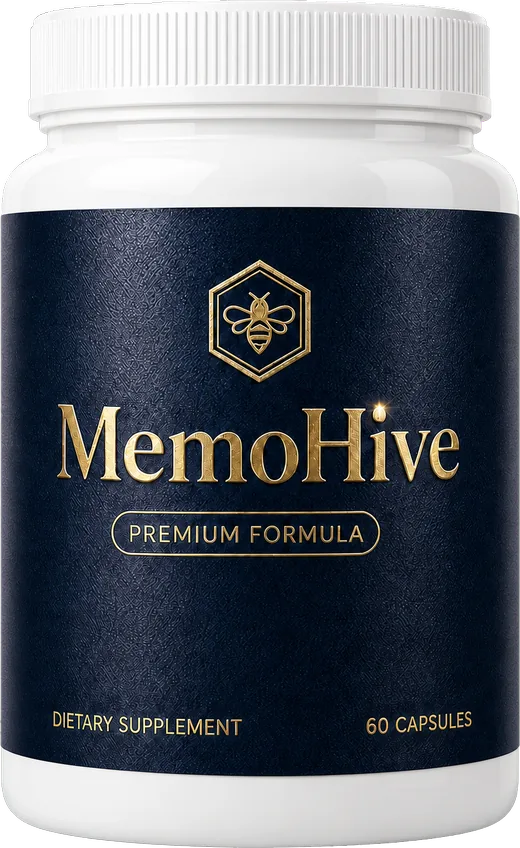
Before investigating individual ingredients, I like to establish exactly what a supplement contains and how it fits into an ordinary routine. MemoHive markets itself as a daily memory-support formula containing five individually disclosed ingredients, with a combined total of 1,030 mg per serving.
One detail I appreciate is the absence of a proprietary blend. Consumers can see precisely how much of each listed ingredient they’re receiving, although the disclosed amounts alone cannot establish effectiveness. Here is my overview of its main features.
| Product Information | Details |
|---|---|
| Product Name | MemoHive |
| Supplement Category | Memory, focus, and cognitive wellness support |
| Primary Purpose | Designed to support everyday memory, clearer thinking, and sustained attention |
| Formula Type | Five-ingredient botanical and amino acid formula |
| Total Active Ingredients | 1,030 mg per two-capsule serving |
| Main Ingredients | Branched Chain Amino Acids, Bacopa Monnieri, Rhodiola Rosea, L-Theanine, and Panax Ginseng |
| Proprietary Blend | None; individual ingredient amounts are disclosed |
| Recommended Serving | Two capsules once daily |
| Directions | Take with 8 oz of water, 20–30 minutes before a meal |
| Servings Per Bottle | 30 daily servings |
| Capsules Per Bottle | 60 |
| Supply Duration | Approximately 30 days |
| Manufacturing | Reportedly manufactured in an FDA-registered facility and assembled in the USA |
| Suitable For | Adults interested in general cognitive wellness, subject to medical suitability |
| Expected Results | Individual responses vary; meaningful cognitive improvements are not established for the finished formula |
| Money-Back Guarantee | Advertised 60-day guarantee for qualifying official-website orders; verify full terms before purchasing |
| My Editorial Rating | 4.6/5 — ★★★★☆ |
| Official Website | ✅ Click Here |
My 4.6/5 editorial rating reflects the product’s simplicity, labeling transparency, ingredient selection, and purchasing convenience. It should not be interpreted as a clinical effectiveness score. The scientific evidence for its individual ingredients is more encouraging in certain areas than the evidence available for MemoHive as a complete product.
What Exactly Is MemoHive?
MemoHive is a dietary supplement formulated to support cognitive wellness through a combination of botanical extracts and amino acids. Its positioning centers on everyday concerns such as maintaining attention, remembering information, and coping with mentally demanding routines.
The product uses a relatively straightforward approach. Rather than filling its label with numerous vitamins, minerals, and herbal compounds, it concentrates on five recognizable ingredients. Each serves a different proposed purpose, ranging from memory-related processes to stress adaptation and calm attention. The formula contains no listed caffeine, which may appeal to people who dislike the stimulating effects of conventional energy products.
Another distinguishing feature is its clearly stated dosage. Each serving contains 1,030 mg of combined active ingredients distributed across two capsules. That transparency is useful because consumers can compare individual quantities against clinical research instead of relying entirely on broad marketing claims.
Nevertheless, MemoHive remains a dietary supplement, not a medication for dementia, ADHD, Alzheimer’s disease, or diagnosed cognitive impairment. It is best evaluated as an optional addition to healthy daily habits rather than a solution for unexplained or worsening memory problems.
Examining the Science Behind MemoHive’s Formula
Scientific evidence is one of the first things I investigate when assessing any product that makes cognitive-support claims. With MemoHive, the most important distinction is between research supporting individual ingredients and research evaluating the complete supplement.
Bacopa Monnieri has some of the more relevant evidence. A systematic review of randomized controlled trials reported improvements in certain memory-recall measures after approximately 12 weeks of supplementation. However, the trials commonly used 300–450 mg of particular Bacopa extracts daily, whereas MemoHive provides 200 mg. Extract standardization also affects whether those doses are comparable.
L-Theanine has been researched for stress responses and attention. A systematic review found that doses around 200–400 mg daily may help people manage stress under certain conditions. MemoHive contains 100 mg, so the research should not be interpreted as proof that this specific formulation produces equivalent results.
Rhodiola Rosea and Panax Ginseng have also attracted research interest for mental fatigue and cognition. The findings are mixed, with differences in extract quality, dosage, study populations, and research methods. Meanwhile, branched-chain amino acids are better established in nutritional and exercise-related contexts than as direct memory enhancers.
My assessment is that the formula has a plausible scientific rationale, but clinical validation remains incomplete. I did not identify reliable published human trials testing MemoHive itself against placebo. That gap is important, particularly because ingredient combinations can behave differently from isolated compounds used in individual studies.
How MemoHive Is Designed to Work
The proposed mechanism behind MemoHive involves supporting several processes connected with cognitive performance. The formula appears designed to address both memory-related function and the everyday mental strain that can make concentration difficult.
Bacopa provides the primary memory-oriented component. Researchers have investigated its botanical compounds, known as bacosides, for possible effects involving neuronal signaling and oxidative stress. These mechanisms are promising research areas, although laboratory findings cannot automatically predict improvements in human memory.
L-Theanine contributes a different approach through its relationship with relaxation and attentional processes. It has been investigated for promoting a calmer mental state without the same stimulating profile associated with caffeine. Rhodiola and ginseng add potential support for fatigue and stress adaptation, while the branched-chain amino acids contribute nutritional building blocks involved in broader protein metabolism.
In practice, the intended outcome is steadier attention and better cognitive comfort during everyday activities. The formula does not have an established mechanism proving that it repairs neurons, reverses memory loss, or directly increases intelligence. Any effects would likely depend on the individual, the ingredient concentrations, and consistent use over time.
Inside MemoHive: Five Ingredients and Their Actual Dosages
Ingredient safety deserves attention before considering potential benefits. Botanical extracts can interact with prescription medications, affect sleep or blood sugar, and cause sensitivities even when they originate from familiar plants. Individual ingredient amounts are helpful, but the safety profile also depends on extract standardization, manufacturing quality, personal health conditions, and other supplements being used.
What distinguishes MemoHive is that its complete 1,030 mg serving is divided into five individually listed quantities. Below, I examine each ingredient separately, including the role it may play and the limitations that consumers should understand.
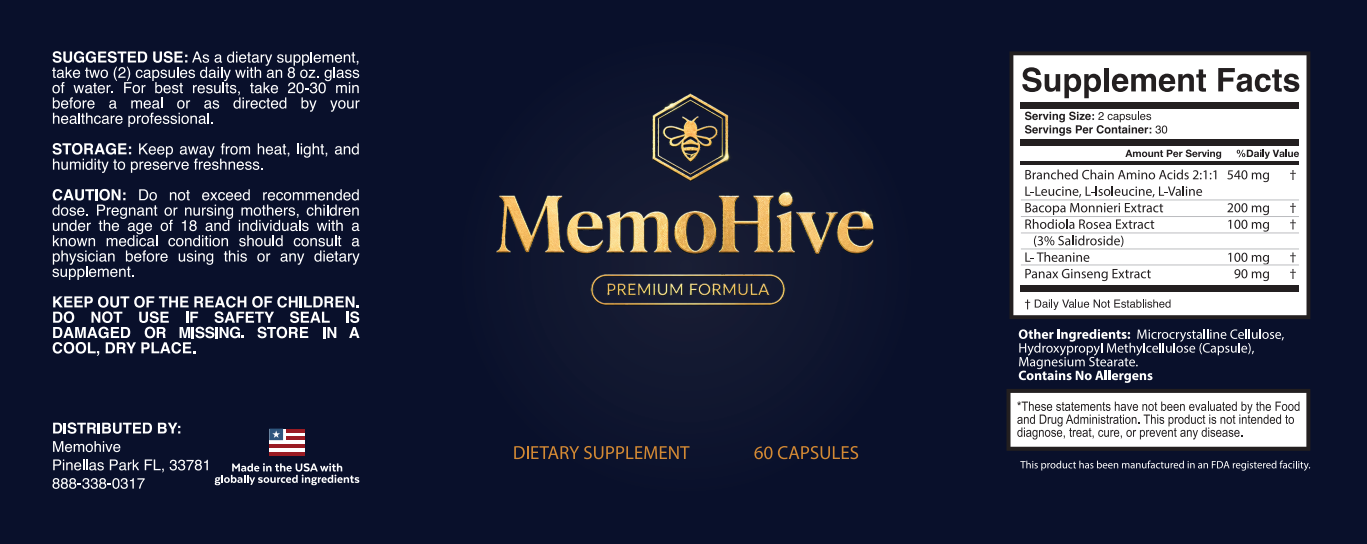
🍃 Branched Chain Amino Acids (2:1:1) — 540 mg
Branched-chain amino acids, commonly called BCAAs, include leucine, isoleucine, and valine. They are essential amino acids, meaning the body must obtain them from food or supplements. The 2:1:1 ratio indicates that leucine represents twice the proportion of either isoleucine or valine. In MemoHive, the combined BCAA amount is 540 mg, making this the largest ingredient contribution by weight.
These amino acids are widely associated with muscle protein metabolism and exercise nutrition. Their relationship with brain function is more complicated because amino acids can influence transport and competition across biological systems. There is insufficient convincing evidence that 540 mg of BCAAs independently improves memory or concentration in healthy adults. I therefore consider this a supplementary nutritional component rather than the formula’s strongest cognitive ingredient.
🍃 Bacopa Monnieri Extract — 200 mg
Bacopa Monnieri is a botanical traditionally used in Ayurvedic practices, particularly in connection with memory and learning. Its most discussed active compounds are bacosides, which have attracted scientific interest for their potential effects on cognitive processes. Human studies offer some support for specific aspects of memory performance, particularly when standardized extracts are taken consistently over several weeks.
MemoHive contains 200 mg of Bacopa extract per serving. This amount is below the 300–450 mg daily range evaluated in several influential clinical trials, although extract potency can substantially change how meaningful a milligram comparison is. Without knowing the precise bacoside percentage, I cannot establish whether MemoHive delivers a clinically comparable concentration. Bacopa is a credible ingredient choice, but the exact extract specifications matter.
🍃 Rhodiola Rosea Extract — 100 mg
Rhodiola Rosea is a flowering plant traditionally associated with physical and mental resilience. It is frequently described as an adaptogen, a term used for substances believed to support responses to stress. Researchers have examined Rhodiola extracts for symptoms of fatigue, stressful workloads, and subjective mental performance under demanding conditions.
MemoHive provides 100 mg of Rhodiola extract, which is a relatively modest quantity compared with many research protocols. Some studies have investigated higher amounts or preparations standardized for compounds such as rosavins and salidroside. Research findings remain inconsistent, so I would avoid promising a noticeable improvement in mental energy. Its inclusion makes conceptual sense for a stress-oriented cognitive formula, although the evidence does not establish a reliable benefit at MemoHive’s specific dose.
🍃 L-Theanine — 100 mg
L-Theanine is an amino acid found naturally in tea leaves. It has gained attention for its potential relationship with relaxation, attention, and the ability to remain composed during demanding tasks. Unlike stimulant-based products, L-Theanine is commonly investigated for mental calmness rather than a direct increase in physical energy.
The 100 mg amount in MemoHive falls below the 200–400 mg range featured in some research examining stress responses. Even so, lower amounts have been investigated in particular cognitive contexts, and individual responses may differ. I find its presence interesting because stress-related distraction can make everyday thinking feel more difficult. A possible benefit is calmer focus, although the actual effect of this complete formula remains unproven.
🍃 Panax Ginseng Extract — 90 mg
Panax Ginseng, also known as Asian Ginseng, has a long history of traditional use for vitality and general well-being. Its best-known constituents include ginsenosides, compounds being studied for various physiological effects. Research has explored possible improvements in certain attention and cognitive tasks, although findings have not been consistent across populations or studies.
MemoHive supplies 90 mg of ginseng extract daily. That quantity should be interpreted cautiously without the percentage of active ginsenosides or additional extract details. Ginseng may also influence sleep, blood sugar, and medication responses in susceptible individuals. Its inclusion adds another potential cognitive-support pathway, but it should not be treated as a guaranteed memory booster simply because it is a well-known medicinal plant.
Six Potential Benefits of MemoHive for Everyday Cognitive Wellness
When examining the possible advantages of MemoHive, I separate reasonable ingredient-based possibilities from outcomes that have actually been established through clinical testing. This matters because memory-related supplements often receive credit for dramatic improvements that could also reflect changes in sleep, stress, diet, or daily routines.
The following six benefits explain what MemoHive is designed to support, how its ingredients might contribute, and where the evidence still has limitations.
★ 1. Supporting Everyday Memory and Information Recall
One of MemoHive’s principal aims is helping users maintain everyday memory function. Memory recall includes remembering names, following conversations, retaining recently learned details, and retrieving information during ordinary activities. Bacopa Monnieri is the ingredient most directly connected with this area because researchers have examined its influence on different measures of memory performance.
Certain clinical trials have reported improvements in memory-related tests after sustained Bacopa supplementation. However, these studies generally evaluated specific standardized extracts at doses different from MemoHive’s 200 mg. I see potential support for normal memory processes as a reasonable research-based possibility, while recognizing that actual improvements from the finished supplement have not been demonstrated.
★ 2. Encouraging More Consistent Focus During Work
Mental concentration is particularly valuable when dealing with activities requiring sustained attention. Reading lengthy documents, studying, managing complex projects, or completing repetitive tasks can become harder when distraction and fatigue accumulate. MemoHive’s inclusion of L-Theanine makes this benefit especially relevant to its intended positioning.
Research suggests L-Theanine may influence certain measures of attention, particularly at studied doses that are often higher than MemoHive’s. The potential appeal is a more composed approach to demanding tasks without relying on added caffeine. People interested in calmer concentration may appreciate the formulation, but they should not expect it to function like a prescription attention medication or produce an immediate, measurable productivity increase.
★ 3. Helping Manage Stress-Related Mental Fatigue
Stress and mental fatigue often overlap. During demanding periods, people may notice that information becomes harder to process and routine decisions require more effort. Rhodiola Rosea is included in MemoHive partly because of its history of use in stress-related wellness products and its investigation in studies of fatigue.
Although several clinical trials suggest possible benefits, research reviews have identified inconsistent results and methodological weaknesses. The 100 mg amount also limits how confidently findings from other preparations can be applied. I view support for stress-related mental comfort as a possible secondary advantage, particularly when combined with sensible workload management, adequate rest, and other established self-care habits.
★ 4. Promoting Calm Attention Without Added Caffeine
Some people want cognitive support without the nervousness, rapid heartbeat, or sleep disruption that can accompany excessive stimulant consumption. MemoHive’s listed formula contains no caffeine, and L-Theanine provides a potential route toward relaxation-oriented attention support.
This distinction may make MemoHive appealing to people who already consume coffee or prefer avoiding another stimulant source. However, the product is not necessarily free of sleep-related effects because ginseng and other botanicals can affect individuals differently. Its caffeine-free ingredient panel is a practical formulation advantage, though the absence of caffeine should not be mistaken for proof of complete tolerability.
★ 5. Supporting a Broader Cognitive Wellness Routine
Cognitive performance does not depend on a single nutrient or biochemical pathway. Nutrition, stress regulation, cardiovascular health, physical activity, and sleep all influence how people think and function. MemoHive takes a multi-ingredient approach by combining botanical extracts with amino acids rather than depending on one isolated compound.
The theoretical attraction is that its components address different areas of cognitive wellness. Still, multiple ingredients do not automatically create synergy, and more ingredients are not necessarily better. I regard MemoHive as a potentially convenient addition to an established wellness routine, rather than an independent replacement for healthy habits or medical treatment.
★ 6. Making Supplement Consistency Easier
A benefit that receives less attention in supplement advertising is practical convenience. Complicated routines involving several bottles, different serving times, and multiple dosage instructions can become difficult to maintain. MemoHive reduces that burden by placing its five listed active ingredients into a single two-capsule daily serving.
One bottle provides 30 servings, allowing consumers to plan purchases and track how consistently they use the product. Although convenience does not establish physiological effectiveness, it makes the routine easier to evaluate. A straightforward serving schedule and fully disclosed ingredient amounts are genuine usability advantages, especially for consumers who prefer a simpler approach to supplementation.
MemoHive vs. Popular Memory Supplements: A Detailed Comparison
The cognitive-supplement market includes everything from basic single-herb capsules to expensive multi-ingredient blends. When comparing MemoHive with other popular options, I think the most useful questions concern disclosure, practicality, ingredient selection, and evidence rather than advertising language.
The comparison below uses a general category of conventional multi-ingredient memory supplements, not a specific competing brand. Features vary across products, so the comparison explains where MemoHive offers a clear advantage and where other formulations may provide something different.


| Comparison Factor | MemoHive | Typical Popular Memory Supplements |
|---|---|---|
| Ingredient Disclosure | Lists all five active ingredients with individual amounts, allowing direct examination of the formula. | Transparency varies. Some publish precise amounts, while others combine ingredients into proprietary blends. |
| Formula Simplicity | Contains five active ingredients with a combined 1,030 mg serving, making the composition relatively easy to understand. | Some contain substantially more ingredients, which can complicate evaluation of meaningful doses and interactions. |
| Memory-Oriented Ingredient | Contains 200 mg Bacopa Monnieri extract, an ingredient with some human clinical research involving memory. | May contain Bacopa, ginkgo, phosphatidylserine, choline compounds, or other nutrients depending on the formulation. |
| Attention Support | Includes 100 mg L-Theanine, selected for its potential role in attention and relaxation-related processes. | Some focus on stimulant combinations, while others use non-stimulant ingredients or nutritional compounds. |
| Stress-Related Support | Combines Rhodiola Rosea and L-Theanine, giving the formula a stress-related wellness component. | Stress-related ingredients may be included, but some products focus almost entirely on memory-associated compounds. |
| Caffeine Content | No caffeine is listed among the five active ingredients. | Some include caffeine or stimulating botanicals; others are completely caffeine-free. |
| Daily Convenience | Two capsules once daily with water, following the product’s recommended schedule. | Serving instructions vary from one capsule daily to multiple doses throughout the day. |
| Scientific Evidence | Individual ingredients have varying levels of evidence, but finished-product clinical trials have not been established. | Some individual products may have better-studied doses or standardized extracts; others have similarly limited evidence. |
| Manufacturing Claims | Reportedly produced in an FDA-registered facility and assembled in the USA. | Manufacturing standards vary, with some brands publishing independent testing or third-party certification. |
| Purchasing Protection | Advertises a 60-day money-back guarantee for qualifying official-site orders. | Refund terms differ significantly, and some sellers provide limited return periods or final-sale restrictions. |
| Best Practical Advantage | Clear ingredient quantities combined with a relatively uncomplicated daily routine. | Potential access to different formulations, research-backed individual doses, broader retail availability, or third-party testing. |
Why I Find MemoHive Competitive
My strongest reason for considering MemoHive competitive is its transparency. Knowing the exact milligram amounts makes it easier to evaluate the formula objectively, and I prefer that over impressive-sounding ingredient collections with no meaningful dosage information.
The main limitation is that a transparent formula is not necessarily an optimally dosed formula. Several of MemoHive’s ingredients appear at quantities below commonly studied ranges, and its extract standardization details deserve closer attention. Consequently, I would choose MemoHive over a poorly disclosed alternative for clarity and convenience, but I would not claim it outperforms every competing cognitive supplement.
My MemoHive Rating: What Earned Its 4.6/5 Score?
After considering formulation quality, ingredient disclosure, ease of use, and the scientific limitations, I’ve assigned MemoHive an overall editorial rating of 4.6 out of 5.
This is a judgment of its product concept and consumer-facing features, not the result of a personal clinical trial or verified measurement of memory improvement.
Overall Editorial Rating
4.6/5 — ★★★★☆
| Rating Category | Score | My Assessment |
|---|---|---|
| Ingredient Transparency | ★★★★★ 5.0/5 | Individual quantities are disclosed without a proprietary blend, making the ingredient list easier to examine. |
| Formula Design | ★★★★☆ 4.5/5 | A recognizable combination of botanical extracts and amino acids, although some dosages may be relatively modest. |
| Daily Convenience | ★★★★★ 5.0/5 | Two capsules once daily create a straightforward routine requiring minimal preparation. |
| Scientific Rationale | ★★★★☆ 4.0/5 | Some ingredients have meaningful research interest, but evidence does not establish effectiveness for MemoHive itself. |
| Manufacturing Information | ★★★★☆ 4.4/5 | FDA-facility registration is a useful stated detail, although independent quality verification would strengthen confidence. |
| Purchase Protection | ★★★★★ 4.8/5 | The advertised 60-day refund period is appealing, provided the seller’s written conditions are honored. |
| Overall Editorial Score | ★★★★☆ 4.6/5 | A transparent, convenient supplement whose practical strengths exceed the current level of finished-product clinical proof. |
My rating emphasizes the aspects that can be evaluated from available product information. The lack of published clinical testing on the complete formula and the uncertainty around botanical standardization prevent me from assigning the same confidence to its claimed cognitive benefits.
How to Take MemoHive Correctly
According to the supplied product directions, MemoHive is intended for once-daily use. I recommend verifying the instructions on the physical bottle when it arrives, as the manufacturer’s current label should govern use.
Recommended directions: Take two capsules once daily with an 8 oz glass of water, approximately 20–30 minutes before a meal.
Consistency makes it easier to determine whether a supplement is agreeing with you. Taking the serving at a similar time each day can also help prevent missed doses. However, there is no guarantee that taking it before food improves absorption or results, and anyone experiencing stomach discomfort should ask a healthcare professional whether taking it with food is appropriate.
Do not exceed the recommended amount in an attempt to accelerate cognitive improvements. Since studies of Bacopa commonly involve several weeks of supplementation, consumers should avoid expecting dramatic overnight changes. A simple record of sleep quality, concentration, and any adverse effects can be useful during an initial evaluation period.
MemoHive Pros and Cons: The Strengths and Trade-Offs
No supplement is equally suitable for everyone. With MemoHive, I see several appealing design decisions alongside limitations that deserve equal attention.
| Advantages | Disadvantages |
|---|---|
| 1. Clearly disclosed ingredient quantities. Every active ingredient has its own printed amount, making it possible to compare the formula with existing research rather than accepting vague marketing descriptions. | 1. Limited evidence for the finished product. Studies involving individual ingredients do not prove that MemoHive itself improves memory, attention, or measurable cognitive performance. |
| 2. Relatively simple composition. A five-ingredient formula is easier to understand than extremely complicated blends containing dozens of botanical compounds with unclear concentrations. | 2. Several ingredients have modest doses. Bacopa, L-Theanine, and Rhodiola appear below amounts used in a number of commonly cited clinical studies, limiting confidence in expected effects. |
| 3. Convenient daily schedule. Two capsules taken once per day eliminate the need to manage several different supplements or repeatedly prepare drinks and powders. | 3. Botanical standardization needs clarification. Knowing the milligrams is helpful, but the precise bacoside, ginsenoside, and Rhodiola active-compound concentrations are not established from the provided details. |
| 4. Contains ingredients with relevant scientific interest. Bacopa and L-Theanine have human research related to memory and attention, giving the product a more understandable rationale than formulas relying entirely on obscure compounds. | 4. Results remain unpredictable. Some consumers may notice little or no benefit, and individuals using medications or managing health conditions must also consider ingredient interactions. |
| 5. No listed caffeine. This may suit individuals who prefer cognitive-support supplements without an additional caffeine source, particularly those already consuming coffee or tea. | |
| 6. Advertised purchasing protection. A 60-day money-back policy can provide an opportunity to reconsider a purchase, assuming the transaction qualifies and the seller’s return requirements are followed. |
Overall, MemoHive’s strongest selling points are its transparent label and simple routine. Its most significant weakness is the uncertainty surrounding whether the combination and exact doses provide clinically meaningful cognitive benefits.
What Side Effects Could MemoHive Cause?
MemoHive contains ingredients that are commonly used in dietary supplements, but naturally derived compounds are not automatically free from adverse effects.
Bacopa has been associated with digestive discomfort, including nausea, stomach cramps, and changes in bowel habits. Rhodiola may cause dizziness, agitation, or sleep-related complaints in some users. Ginseng can occasionally contribute to insomnia, headaches, gastrointestinal symptoms, and other reactions, particularly in sensitive individuals.
L-Theanine is generally well tolerated in the doses examined in research, although individual reactions remain possible. BCAAs may also produce gastrointestinal discomfort, and specific medical conditions can change whether supplemental amino acids are appropriate.
Stop using the product and seek medical advice if unusual or persistent symptoms occur. Signs of a serious allergic reaction, such as difficulty breathing or swelling of the face or throat, require immediate medical attention. Long-term safety data for the complete MemoHive formula have not been established.
Is MemoHive Safe for Daily Use?
For generally healthy adults, several ingredients in MemoHive have histories of use in supplements and have been examined in human research. Nevertheless, there is insufficient product-specific clinical evidence to guarantee that the complete formula is safe for everyone.

The manufacturer’s claim that MemoHive is made in an FDA-registered facility is relevant to manufacturing identification, but FDA registration does not mean the FDA has approved or certified MemoHive’s effectiveness, safety, or quality.
My recommendation is to follow the labeled serving instructions and consult a healthcare professional before starting if you have medical conditions, take regular medication, or are uncertain about ingredient sensitivities.
Can MemoHive Be Taken Alongside Prescription Medications?
Medication interactions deserve careful attention because MemoHive contains several botanicals with potential physiological effects.
Panax Ginseng may interact with blood sugar medications, anticoagulants, and certain other prescriptions. Research concerning ginseng and warfarin has produced mixed findings, which makes professional advice particularly important. Potential interactions involving blood pressure treatments and some antidepressants have also been raised.
Rhodiola and other herbal ingredients may require caution when combined with medications affecting mood, alertness, or neurological function. Consumers should also consider the combined exposure created by other herbal supplements they take.
Do not stop, replace, or adjust prescribed medication to use MemoHive. A pharmacist or prescribing clinician can review the entire ingredient list and advise whether the combination is appropriate for your circumstances.
Who Might Benefit From MemoHive, and Who Should Avoid It?
The right audience for MemoHive consists primarily of adults seeking optional support for normal cognitive wellness. The product is less appropriate for people expecting treatment of a diagnosed neurological condition or requiring urgent investigation of memory symptoms.
Who Might Consider MemoHive
- Adults interested in maintaining everyday cognitive wellness. People seeking a straightforward supplement containing familiar botanical compounds may appreciate its relatively uncomplicated formula, provided they understand that results are uncertain.
- Individuals who prefer transparent labels. Consumers who compare ingredient quantities and examine clinical research may value the absence of a proprietary blend.
- People who dislike caffeine-heavy products. Since the active ingredient panel does not list caffeine, MemoHive may appeal to consumers seeking a different formulation approach.
- Adults comfortable with gradual evaluation. Those willing to assess their experience over several weeks, without expecting guaranteed improvement, are better positioned to make an informed decision.
Who Should Avoid It or Obtain Medical Clearance First
- Pregnant or breastfeeding individuals. The safety of several herbal ingredients during pregnancy and lactation is inadequately established, making avoidance the more prudent option.
- Children and adolescents. The supplied product details do not establish appropriate pediatric dosing or safety, so it should not be used in these groups without specialist guidance.
- People taking medications with interaction concerns. This includes consumers using anticoagulants, diabetes medications, certain psychiatric drugs, or other treatments that may interact with herbal products.
- Individuals with unexplained or worsening memory loss. Persistent confusion, significant cognitive changes, or problems affecting daily independence warrant professional assessment rather than self-treatment.
What I Didn’t Like About MemoHive
Although I appreciate several features of MemoHive, a responsible review should explain the areas where its formulation or supporting documentation could be improved.
- The lack of finished-product clinical trials. The most important limitation is that scientific interest in individual ingredients cannot confirm that this particular combination delivers measurable benefits. A well-designed placebo-controlled trial would substantially strengthen the product’s credibility.
- The Bacopa dosage raises questions. The included 200 mg may or may not provide a meaningful quantity of active compounds depending on the extract’s concentration. Without clear standardization, consumers cannot confidently compare the formula with research using higher doses.
- BCAAs account for a large part of the formula. More than half of the listed 1,030 mg serving comes from branched-chain amino acids. Their role in general nutrition is established, but evidence specifically supporting memory enhancement at this dose is limited.
- More manufacturing documentation would be useful. Independent laboratory testing, contaminant screening, and publicly accessible quality certifications would give consumers additional reassurance beyond facility-registration claims.
- The guarantee needs careful review. A 60-day refund promise is attractive, but important details such as return shipping, eligibility, bottle requirements, and refund processing should always be confirmed before payment.
These criticisms do not automatically make MemoHive a poor product. They identify the information I would want clarified before treating it as a scientifically established cognitive-support solution.
Is MemoHive a Scam or a Legitimate Supplement?
I would not label MemoHive a scam simply because its cognitive benefits are not conclusively proven. The supplied formula contains identifiable ingredients, openly lists their amounts, and describes a practical daily serving. These characteristics are positive signs of product transparency, although they do not independently verify manufacturing quality, customer service, or clinical effectiveness.
The more useful question is whether its claims match the available evidence. MemoHive appears to be positioned as a conventional dietary supplement, but buyers should remain cautious about exaggerated memory-improvement promises. I would verify the seller’s contact details, final purchase price, current ingredient label, and written refund conditions before ordering.
Other Memory-Support Supplements Worth Considering
If you’re comparing MemoHive with alternatives commonly available through Amazon, several established supplement lines offer different approaches to cognitive wellness. Availability and formulations can change, so examine the current product label and seller details rather than relying on older descriptions.
1. NOW Foods Bacopa Extract
NOW Foods offers Bacopa-focused supplements for consumers interested primarily in that botanical ingredient. A single-ingredient approach can be helpful when someone wants to examine a specific herb rather than begin a multi-component formula.
The advantage is formulation simplicity, while the disadvantage is that it does not recreate MemoHive’s combination of Bacopa, L-Theanine, Rhodiola, ginseng, and BCAAs. Check the exact Bacopa strength and standardization on the selected listing.
2. Jarrow Formulas Neuro Optimizer
Neuro Optimizer is positioned as a broader cognitive-nutrition supplement featuring ingredients associated with cellular and neurological function. Its formulation philosophy differs from MemoHive’s concentrated five-ingredient approach.
Consumers considering this option should review the current serving size, ingredient composition, and whether any included compounds overlap with other supplements they already use.
3. Life Extension Cognitex
Life Extension’s Cognitex line targets cognitive wellness through combinations of nutrients and plant-derived ingredients. Depending on the current formulation, it may appeal to consumers seeking a different balance of cognitive-support compounds.
I would compare its label with MemoHive’s individual doses rather than assume a more elaborate formula delivers superior results. Independent testing information, ingredient suitability, and total monthly cost are relevant factors.
4. Doctor’s Best Natural Brain Enhancers
Doctor’s Best has marketed brain-support formulations containing different cognitive-focused ingredients. These options may interest shoppers who want to compare conventional nutrition-oriented approaches with MemoHive’s botanical blend.
Because brand formulations and product availability can change, confirm the exact product name, listed quantities, and current Amazon seller before purchasing. None of these alternatives should automatically be considered more effective than MemoHive without direct comparative evidence.
MemoHive’s 60-Day Money-Back Guarantee Explained
Purchasing a cognitive-support supplement involves uncertainty because individual results can differ significantly. For this reason, the advertised refund policy is one of the practical factors I consider when evaluating MemoHive.
MemoHive is advertised with a 60-day money-back guarantee for qualifying orders placed through its official website. This is intended to provide buyers with an opportunity to assess whether the product meets their expectations. However, a guarantee should be understood as a contractual purchasing policy rather than proof that the supplement will work.
The advertised official-site guarantee should not be assumed to apply to purchases from Amazon, unauthorized resellers, or unrelated third-party storefronts. Before purchasing, I recommend reviewing the official return policy, confirming when the 60-day period begins, and checking whether opened bottles qualify. It is also sensible to verify whether shipping charges are refundable and whether return postage is the buyer’s responsibility.
Keep your order confirmation, receipt, and any correspondence with customer service. If the product does not meet your expectations, contact the official seller within the stated eligibility window and follow the required refund procedure. I consider the 60-day period a useful consumer protection feature, provided the written conditions are clear and the company honors them.
Frequently Asked Questions About MemoHive
Q: How long does MemoHive take to work?
A: There is no clinically established timeline for noticeable results from MemoHive itself. Some ingredients have been investigated for relatively short-term effects on attention, while Bacopa research frequently involves approximately 12 weeks of daily supplementation. These findings cannot be directly transferred to MemoHive because the ingredient doses and extract concentrations differ.
I recommend approaching any trial with realistic expectations and recording changes in concentration, memory-related tasks, sleep, and side effects. If meaningful cognitive problems persist, a medical evaluation is more useful than extending supplementation indefinitely.
Q: Can MemoHive improve memory in older adults?
A: MemoHive contains Bacopa and ginseng, both of which have attracted research interest for cognitive performance. However, current evidence does not establish that the finished formula can reverse age-related cognitive decline or reliably improve memory in older adults.
Older consumers also have a higher likelihood of using medications that could interact with herbal ingredients. Anyone experiencing progressive forgetfulness, confusion, or difficulty managing familiar activities should seek professional assessment before considering a supplement.
Q: Does MemoHive contain caffeine or other stimulants?
A: Caffeine is not listed among MemoHive’s five active ingredients. That may appeal to people who prefer to avoid common caffeine-related effects such as jitteriness or disrupted sleep.
However, the formula includes Panax Ginseng and Rhodiola Rosea, which can affect alertness or sleep in some individuals. A caffeine-free label does not guarantee that every user will experience the supplement as completely calming.
Q: Can I use MemoHive every day?
A: The manufacturer’s suggested routine is two capsules once daily, providing a 30-day supply from each bottle. Daily supplementation is therefore consistent with the product’s intended instructions.
Long-term safety for the exact combined formula has not been established through dedicated clinical trials. Anyone planning extended use should consider their medical history, concurrent medications, and whether they are experiencing any adverse effects.
Q: Is MemoHive suitable for students and working professionals?
A: Adult students and professionals may be interested in MemoHive because its formula is marketed around focus, memory, and mental clarity. Its straightforward serving schedule may also fit reasonably well into a regular morning routine.
Still, there is no evidence demonstrating that MemoHive improves examination scores, workplace productivity, or learning outcomes. Sleep, effective study techniques, regular exercise, and appropriate stress management remain more dependable foundations for cognitive performance.
Q: Why does MemoHive contain five ingredients instead of a much larger blend?
A: A limited ingredient list can make a supplement easier to evaluate. MemoHive’s five-component design allows consumers to identify the exact quantity of each active ingredient rather than guessing about its composition.
The number of ingredients is not a reliable indicator of product quality by itself. A smaller blend can be well designed or poorly dosed, while a larger blend can contain useful components or unnecessary additions. The actual evidence, concentrations, and manufacturing standards remain more important.
Q: Can MemoHive replace medications for memory or concentration problems?
A: MemoHive should not replace prescribed medication or medical management for ADHD, dementia, depression, thyroid disorders, nutritional deficiencies, or other conditions that may affect cognitive function.
Changes in memory and attention can have many causes. Appropriate treatment depends on identifying those causes, and self-medicating with a supplement can delay effective care. Anyone experiencing substantial or worsening symptoms should speak with a qualified healthcare professional.
Q: Where should I purchase MemoHive to qualify for the refund policy?
A: The manufacturer’s advertised 60-day money-back guarantee is associated with qualifying purchases through the official sales channel. I recommend using the official ordering page and confirming that its written refund conditions are displayed clearly before completing payment.
Purchases through independent marketplaces or unauthorized sellers may fall under different return arrangements. Retaining the receipt and checking the return deadline can help prevent complications if you later decide to request a refund.
My Final Verdict: Is MemoHive a Sensible Choice?
After examining its ingredients, daily serving, and scientific background, I see MemoHive as a reasonably transparent cognitive-wellness supplement with an uncomplicated formula. Its strongest attributes are the individually disclosed ingredient amounts, caffeine-free active ingredient list, and convenient two-capsule routine. Those features make it appealing to consumers who value clarity when choosing supplements.
Nevertheless, I would keep expectations measured. Some ingredients have encouraging research behind them, but MemoHive itself has not been clinically established to improve memory or focus, and several ingredient doses differ from those commonly investigated in published trials. My 4.6/5 editorial assessment reflects its overall consumer-facing design and transparency, rather than guaranteed cognitive results.
For healthy adults interested in an optional supplement alongside good sleep, nutrition, exercise, and sensible stress management, MemoHive may be worth considering after checking medical suitability. If its formula matches your preferences, visit the official MemoHive ordering page, review the current terms and 60-day guarantee, and make your purchase only when you’re comfortable with the evidence and limitations.
References and Scientific Sources
- Pase, M. P., et al. (2012). The Cognitive-Enhancing Effects of Bacopa Monnieri: A Systematic Review of Randomized, Controlled Human Clinical Trials. Examines evidence for Bacopa and specific memory-related outcomes in adults.
PubMed — PMID: 22747190 - Kongkeaw, C., et al. (2014). Meta-Analysis of Randomized Controlled Trials on Cognitive Effects of Bacopa Monnieri Extract. Evaluates human clinical research into cognition and attention-related performance.
PubMed — PMID: 24252493 - Williams, J. L., et al. (2020). The Effects of Green Tea Amino Acid L-Theanine Consumption on the Ability to Manage Stress and Anxiety Levels: A Systematic Review. Reviews human research into L-Theanine and stress responses.
PubMed — PMID: 31758301 - Ishaque, S., et al. (2012). Rhodiola Rosea for Physical and Mental Fatigue: A Systematic Review. Assesses clinical evidence and important limitations surrounding Rhodiola supplementation.
PubMed — PMID: 22643043 - National Center for Complementary and Integrative Health (NCCIH). Asian Ginseng: Usefulness and Safety. Provides evidence-based information about potential cognitive effects, adverse reactions, and interactions involving Panax Ginseng.
NCCIH — Asian Ginseng
Disclaimer
This article is provided for educational and informational purposes and reflects an independent editorial assessment of the available ingredient information and published research. It is not medical advice, and MemoHive is not intended to diagnose, treat, cure, or prevent disease. Results vary, and readers should consult a qualified healthcare professional before beginning supplementation, especially when taking medication or managing a medical condition. This article contains affiliate links, which may generate a commission at no additional cost to the purchaser.